



By Lawal Sale
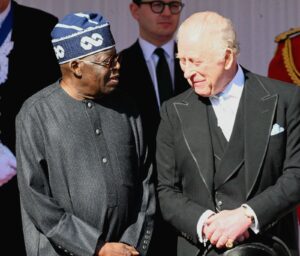
President Bola Ahmed Tinubu and King Charles III have reaffirmed the enduring partnership between Nigeria and the United Kingdom during a state banquet held at Windsor Castle.
The banquet, hosted by the British monarch and Queen Camilla in honour of the Nigerian president, formed part of Tinubu’s state visit to Britain and highlighted the historical, cultural and economic ties linking the two countries.
Speaking at the event, Tinubu described Nigeria–UK relations as rooted in shared history, democratic ideals and expanding people-to-people connections. He noted that addressing the gathering at Windsor Castle — the first by a Nigerian president — carried historic significance, describing the royal residence as a symbol of continuity that has witnessed the evolution of governance and public institutions.
Tinubu highlighted Britain’s influence on democratic governance, referencing the legacy of the Magna Carta and the intellectual contributions of thinkers such as Thomas Hobbes, John Locke and Edmund Burke. He also cited writers including William Shakespeare and Charles Dickens as figures whose works helped shape the English language and intellectual tradition.
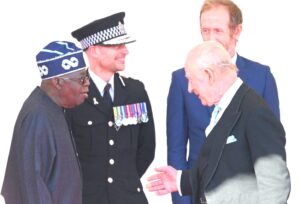
He noted that Nigeria’s legal, parliamentary and civil service institutions have drawn from these traditions while adapting them to the country’s national context.
He also praised the Nigerian diaspora in Britain for their contributions across sectors such as healthcare, sports and business, highlighting athletes of Nigerian heritage including Maro Itoje, Bukayo Saka, Eberechi Eze and Anthony Joshua as symbols of the deep human connections between both countries.
President Tinubu further emphasised Nigeria’s role within the Commonwealth of Nations and stressed the importance of continued cooperation with Britain in addressing regional security challenges, particularly terrorism linked to instability in the Sahel region.
Reflecting on Nigeria’s democratic journey, he expressed gratitude to Britain for providing refuge to pro-democracy activists during the era of military rule, recalling that he personally found safety in the country during that period.
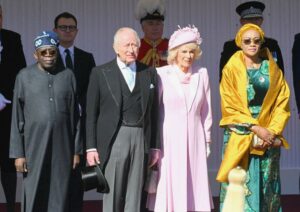
In his remarks, King Charles praised Nigeria’s growing global influence and the contributions of Nigerians living in Britain.
He described Nigeria as a dynamic nation with a youthful population capable of addressing global challenges and noted that more than half a million people of Nigerian heritage in the United Kingdom serve as a “living bridge” strengthening ties between both countries.
The monarch also highlighted Nigeria’s cultural influence in Britain, pointing to the global popularity of Afrobeats and the expanding international reach of Nollywood, alongside the presence of Nigerian footballers in the Premier League.
The King also noted the growing economic cooperation, including the presence of Nigerian banks operating in London and Nigerian companies increasingly listing on the London Stock Exchange.
He acknowledged that aspects of the shared history between Britain and Nigeria carry painful memories, but emphasised the importance of learning from the past while building a future based on partnership, hope and mutual respect.
The monarch also highlighted collaboration in education, technology, security and humanitarian support, particularly efforts to address challenges in northern Nigeria and promote interfaith harmony between Christian and Muslim communities.
Both leaders underscored the role of the Commonwealth as a platform for strengthening cooperation, trade and investment among member states.
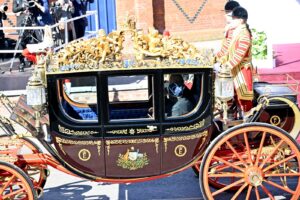
Quoting African proverbs from Yoruba, Hausa and Igbo traditions, King Charles expressed expressing confidence that Nigeria and the United Kingdom would continue deepening their partnership and working together toward a more prosperous future. (GSF)


Comments