


Commentary: by – Lawal Sale
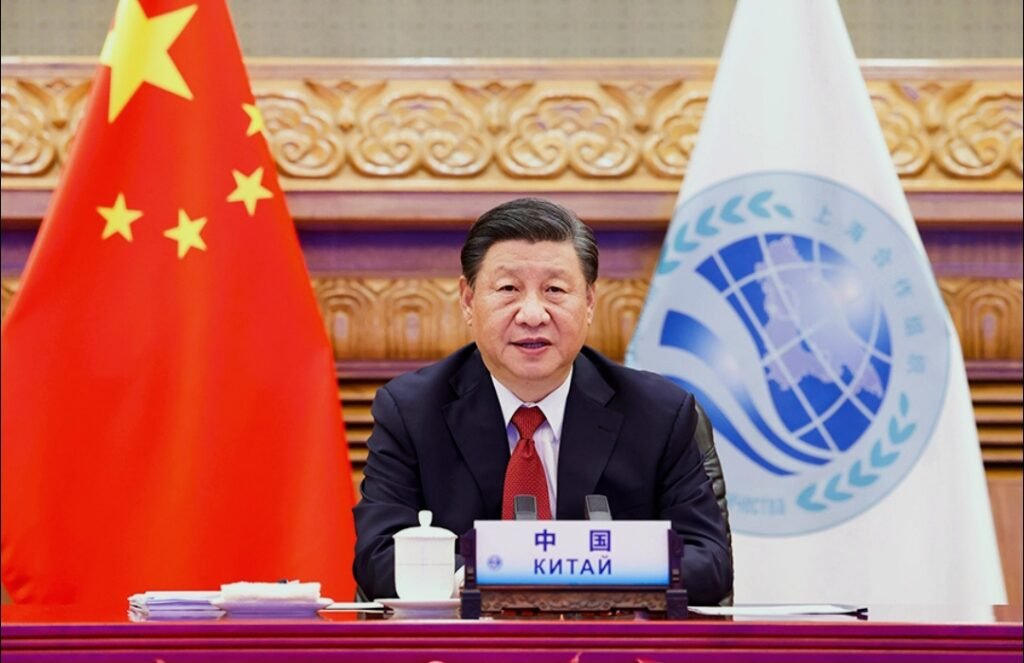
This September marks the first year since the unveiling of the Global Governance Initiative (GGI) by the Chinese President, Xi Jinping. GGI was as part of the series of his initiatives aimed at promoting global development, security and civilization.
Global Governance Initiative (GGI) was introduced during the 25th Shanghai Cooperation Organization (SCO) Summit in Tianjin, China in September, 2025, which also coincided with the 80th commemoration of the victory in the world war against fascism that preceded the founding of the United Nations (UN).
The initiative, which was put forward by President Xi, is anchored on five core principles, which include “adhering to sovereignty, equality, abiding by international rule of law, practising multilateralism, advocating the people-to-people central approach and fostering real actions”.
President Xi’s proposal was against the backdrop of mounting crises and uncertainties in the global governance system, where protectionism, unilateralism and growing power politics are increasingly suppressing international cooperation, thus creating unnecessary turbulence and uncertainties.
This is because it has somewhat become a common phenomenon to experience incessant geographical tensions; with ongoing armed conflicts in Ukraine, the Middle East and Sudan, among other places, thereby exacerbating economic fragmentation and causing headwinds in some countries, while erecting barriers, severe industrial supply disruptions and imposing unilateral tariffs on countries.
GGI AS GOVERNANCE SYSTEM STABILZER
The GGI was primarily designed to offer Chinese solutions to the pressing issues affecting governance system and how it can be improved through the five core concepts of the initiative, by addressing the root causes of conflicts and challenges that are affecting the world and the Global South in particular.
GGI also provides a perfect guide for building a robust, just and equitable global governance system for the shared future of mankind.
Since its introduction, GGI has garnered widespread acceptance across the world, as it has gained appreciable support from over 160 countries and international organizations, with more than 60 others joining the Group of Friends of Global Governance and embracing the initiative.
The initiative has since metamorphosed from a Chinese proposal into an international programme, and observers note that it has increasingly proven to be a practical solution to the growing global hegemonies, while spearheading the practice of true multilateralism, as espoused by China, in building a global community with a shared future.
Global South experts particularly note that China’s commitment, openness and win-win cooperation have largely promoted institutional cooperation in its Belt and Road Initiative (BRI), largely executed under the principles of advancing multilateral cooperation, policy coordination, infrastructure development and connectivity; while facilitating unimpeded trade and closer people-to-people exchanges for shared benefits.
GGI AND OTHER TRANSFORMATIVE GLOBAL INITIATIVES
It is pertinent to note that the commitment and vision of President Xi for humanity have earlier been encapsulated and presented in three other important global initiatives — the Global Development Initiative (GDI) in 2021, the Global Security Initiative (GSI) in 2022 and the Global Civilisation Initiative (GCI) in 2023.
Perceptive analysts have applauded President Xi for unveiling these initiatives along with GGI, describing them as a coherent, well-structured strategy by the Chinese leadership to reshape and stabilize a global system that is currently threatened by certain leaders who erroneously believed that they could dictate the processes of the world order.
The analysts insist that the four initiatives serve as the cornerstone of the contemporary foreign policy of China, which is anchored on its vision for a safer and prosperous global order. Altogether, the GDI, GSI, GCI and GGI are designed to stimulate development stability and sovereign equality, particularly across the Global South.
In a remark, the United Nations General Secretary, Antonio Guterres, noted that the four Chinese initiatives were totally compatible with the UN Charter. According to him, many countries have also viewed the initiatives as pragmatic and constructive solutions to contemporary global challenges.
At the just-concluded SCO Bishkek Summit, President Xi called on leaders to stay committed to dialogue, consultation and strive for more equitable and orderly governance, emphasizing that the leaders should always insist on equal rights for all countries, irrespective of their sizes.
Xi also stressed that regional affairs should be discussed by all countries to bridge differences and build consensus, while resolving the perceptible differences through dialogue and consultation, and meeting common challenges via multilateral collaboration.
Besides, Xi expressed China’s support for the Samarkand Solidarity Initiative for Common Security and Prosperity, proposed by President Mirziyoyev of Uzbekistan, as well as the Initiative on World Unity for Just Peace, Harmony, and Development, proposed by President Kassym-Jomart Tokayev of Kazakhstan.
The Chinese president also voiced support for the cooperation model, proffered by the SCO regarding the execution of the Global Governance Initiative.
He maintained that the SCO Plus Meeting, held this year in Kyrgyzstan, was also aimed at strengthening the role of the United Nations and building a multi-polar world for shared future of mankind.
On Ukraine, the Middle East, and other conflict zones, Xi expressed China’s readiness to strengthen communication and coordination with all parties, while reinforcing the efforts to tackle both the symptoms and root causes of the conflicts and promoting their political settlement.
Reinforcing the president’s viewpoints on the five concepts of the GGI, Chinese Foreign Affairs Minister Wang Yi noted that the GGI came at the right time when the world was fraught with myriad challenges, including incessant regional unrest, retarded economic growth and upsurge in anti-globalisation agitation.
Wang maintained that the initiative was in line with the common purposes, aspirations and principles of the UN Charter, stressing that the GGI was also aimed at firmly supporting the central role of the United Nations in international affairs, while encouraging countries to participate in the reform of the global governance system by relying on multilateral mechanisms such as the UN.
Sharing similar sentiments, Global South experts note that some countries have remained entrenched in the outdated belief that “might is right”.
The analysts moan that such countries have chronic hegemonic mindset and practices that have frequently stalled the reform of global rules, while weakening the world’s collective capacity to act in the face of an ineffective global governance system.
As a principle, the GGI advocates for rules that evolve with time, taking into account countries’ different stages of development and legitimate national interests.
GGI THROUGH PRACTICAL ACTIONS AND CONCRETE PROGRESS
In response to persistent global power imbalances, China, through the GGI concepts, has been promoting the needed governance system reforms in major multilateral institutions involved in economic and financial governance, while supporting developing countries in amplifying their concerns and participation in global governance.
China is also advancing the expansion of cooperation mechanisms such as BRICS, the Shanghai Cooperation Organization, Forum on China-Africa Cooperation, Association of South East Asian Nations, China-CELAC Forum, thus injecting fresh vitality into the reshaping of the global governance landscape and fostering South-South cooperation.
In its commitment for safe and peaceful coexistence, China has continued to support the United Nations by increasing its investment in the China-UN Peace and Fund, steadily advancing related cooperation. It is also on record that China has facilitated the establishment of the International Organization for Mediation, thereby contributing to efforts to maintain global peace and stability under the rule of law.
Recently, President Xi hosted world leaders in Shanghai to launch the World Artificial Intelligence Cooperation (WAICO) to advance and regulate digital governance rules, while ensuring that no one has a monopoly of knowledge in AI matters.
China has also inaugurated the Global Initiative on Data Security, the Global AI Governance Initiative and the Global Cross-Border Data Flow Cooperation Initiative, which are expected to improve and refine the digital governance framework, so that the technological innovation would not become “a game for the rich only”.
President Xi also pledged to provide training in AI for 5,000 specialists across the Global South, with the aim of developing AI application in cooperation with ASEAN, League of Arab Nations, AU, CELAC. Also, about 40 countries are incorporated to use MAZU AI-powered meteorological early warning system that integrates sattellise and ground based forecast data, generating over 200 types of weather service products to safeguard homes globally.
GGI AS BEDROCK FOR AFRICA’S SELF-DRIVEN DEVELOPMENT
By most accounts, the introduction of the Global Governance Initiative (GGI) has become a veritable tool for repositioning African countries as pragmatic players in the nascent global governance system.
Experts, however, note that majority of African nations are already participating in other regional and institutional mechanisms such as FOCAC, BRI and BRICS.
In terms of multilateral cooperation, China, as the largest trading partner of Africa, has already heavily invested in African countries, while assisting these countries to develop their infrastructure via BRI and FOCAC platforms.
Chinese investment and developmental projects cut across several sectors, including railways development, airport terminal constructions, roads and bridges, seaports, renewable energy and green technology as well as climate-related projects. These are some of the development opportunities that could also be accessed through the GGI.
Notwithstanding, African leaders are expected to embrace the initiative, as some nations often advocate for reforms in global governance and may find the particular emphasis of GGI on fairness and inclusion as apt and appealing because it aligns with their own demands for equity on the global stage.
Accordingly, if carefully approached, the initiative is in line with the continental approach and priorities such as the African Union’s Agenda 2063 and could, therefore, become a pragmatic tool for progress.
GGI AS GROWTH ENGINE FOR NIGERIA
Going from the general to the specifics, Nigeria, being Africa’s most populous country and one of the largest African economies, remains a critical growth engine on the African continent and a influential representative of the Global South. The West African nation is also a key strategic partner for China in Africa.
After the launching of the GCI by the Chinese President, Xi Jinping, Nigeria joined other countries to endorse the Initiative and its five concepts. The endorsement was through the Ministry of Foreign Affairs.
Nigeria particularly voiced approval for the initiative’s emphasis on five foundational principles, as put forward by the Chinese President.
As one of Africa’s leading economies and an active participant in multilateral diplomacy, Nigeria views the GGI as a valuable platform for advancing shared priorities, including reform of the United Nations (UN), inclusive governance in emerging domains such as artificial intelligence, cyberspace and outer space, as well as the promotion of equitable development.
Nigeria further recognizes the potential for alignment between the GGI and its national development objectives, principle of strategic autonomy as well as the African Union’s Agenda 2063.
In this regard, Nigeria remains committed to working, in concert with other partners across the Global South, to foster far-reaching consensus and strengthen regional cooperation, while contributing meaningfully to the evolution of a sustainable and equitable global order.
Succinctly put, experts have acknowledged that Nigeria, as an influential member of the Global South, could leverage President Xi’s GGI to improve on the extant trade cooperation, financing and investment patterns.
During President Bola Ahmed Tinubu’s state visit to Beijing on the occasion of FOCAC summit in Beijing in 2024, the Nigerian President and the Chinese President jointly announced the upgrade of China-Nigeria relations to a Comprehensive Strategic Partnership.
At the meeting, the two leaders also voiced a commitment to building a high-level China-Nigeria community with a shared future.
Nigeria is the largest engineering contracting partner, the second largest exporting market and the third largest trading partner as well as an important investment destination for China.
It is somewhat logical to conclude that the Nigeria-China relations have burgeoned over the years and have stimulated rapid growth across all sectors.
In a recent comment on the bilateral relations between Nigeria and China, the Chinese Ambassador to Nigeria, Yu Dunhai, stressed that the two countries are setting an exemplary model for South-South cooperation, which is aligned with President Xi’s Global Governance Initiative.
— Sale is Global South Affairs Analyst based in Abuja. (lawalmaida1@yahoo.com)

Comments