


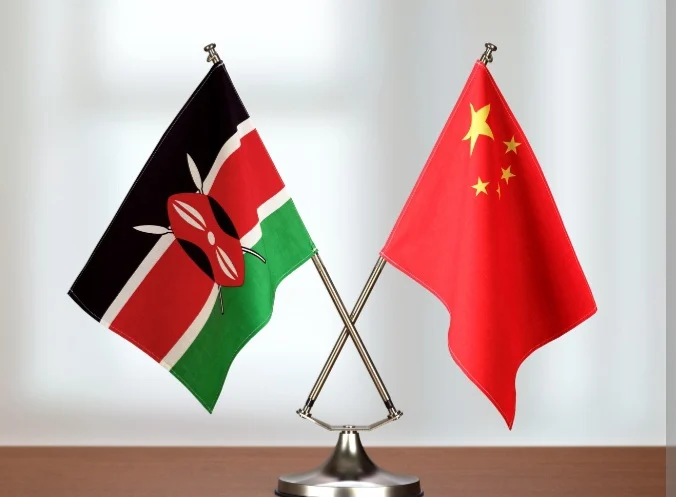
Kenya is looking to China’s zero-tariff treatment for eligible products to expand exports and attract investment in value-added production, as the country seeks to turn greater market access into manufacturing growth and jobs.
Lee Kinyanjui, cabinet secretary for investments, trade and industry, said the opportunity presented by the Chinese market comes as Kenya steps up efforts to expand agricultural processing, improve export certification and attract investment into manufacturing.
Speaking at the inaugural Africa Commerce and Industry Summit in Nairobi on Wednesday, Kinyanjui said Kenya’s ability to take advantage of international markets would also depend on stronger regional trade and more competitive local industries.
Africa must tackle persistent barriers that make it expensive and difficult to move goods across borders, he said, noting that intra-African trade accounts for only about 17 percent of the continent’s total trade, compared with around 60 percent in Europe.
The focus on converting market access into productive capacity was echoed by Regina Ombam, principal secretary for trade, who said Africa must move away from a trading pattern dominated by exports of raw materials and imports of manufactured goods.
The challenge now is to ensure that Africa’s regional integration and its partnerships with countries such as China reinforce each other, allowing the continent to process more of what it produces and retain a greater share of the value, Ombam said.
Kenya needs to diversify beyond traditional exports such as tea, coffee and horticultural produce by developing processed foods, essential oils, cosmetics and other higher-value products, she said.
Kenyan businesses are already expanding their presence in China and in search of buyers, investors and manufacturing partnerships driven by opportunities brought by China’s zero-tariff treatment.
Erick Rutto, president of the Kenya National Chamber of Commerce and Industry, said the chamber’s permanent representative office in Changsha, Central China’s Hunan province, has supported more than 1,000 Kenyan business leaders, exploring opportunities in trade, manufacturing, technology transfer and investment.
Established in 2023, the office has helped organize business missions and connect Kenyan companies with potential partners in China.
“China remains one of Kenya’s most important trading partners. The KNCCI is committed to supporting initiatives that increase Kenyan exports, diversify our export basket and create sustainable market linkages for our businesses,” Rutto said.
Qin Xiaoying, vice-president of the China Council for the Promotion of International Trade, said growing commercial links between Kenya and Hunan were already creating opportunities in both directions.
She cited Kenyan flowers and coffee entering China through Changsha, while machinery produced in Hunan is reaching African markets.
“Practice has shown that as long as we make full use of platforms, build strong corridors and deepen business matching, mutually beneficial cooperation between Hunan and Kenya will enable greater contributions to building a China-Africa community with a shared future in the new era,” Qin said.
Cynthia Essonam, director of private sector engagement and communications at the African Continental Free Trade Area Secretariat, said faster implementation of the AfCFTA would allow businesses to build regional production networks and give Africa a stronger base to engage with international markets. (CD/GSF)


Comments