


By Okoh Aihe
A couple of years ago, a flight miss up at the airport in Benin City, Edo State, occasioned the unplanned punishing journey from Benin to Abuja by road. The roads were bad, very bad.
It was the time of COVID-19, and flights were scarce and very unpredictable. There was no doubt that our seats were sold; money for the tickets was never refunded because, at the time, the few airlines able to put a plane in the air simply became lords in a kingdom where there were no rules.
I felt sorry for my wife because she had not planned to make the journey by road. Not only for the sake of insecurity which has since worsened but just for the simple reason for one to keep his or her sanity in a world where everything seemed to be caving in.
But there is a reason for everything. In every bad situation, there is a good end just around the corner. Although I had reported communications for a very long time and had even worked in a regulatory agency, my experience that day changed my concept of the industry and I was made to share, although vicariously, in the pain the operators carry daily.
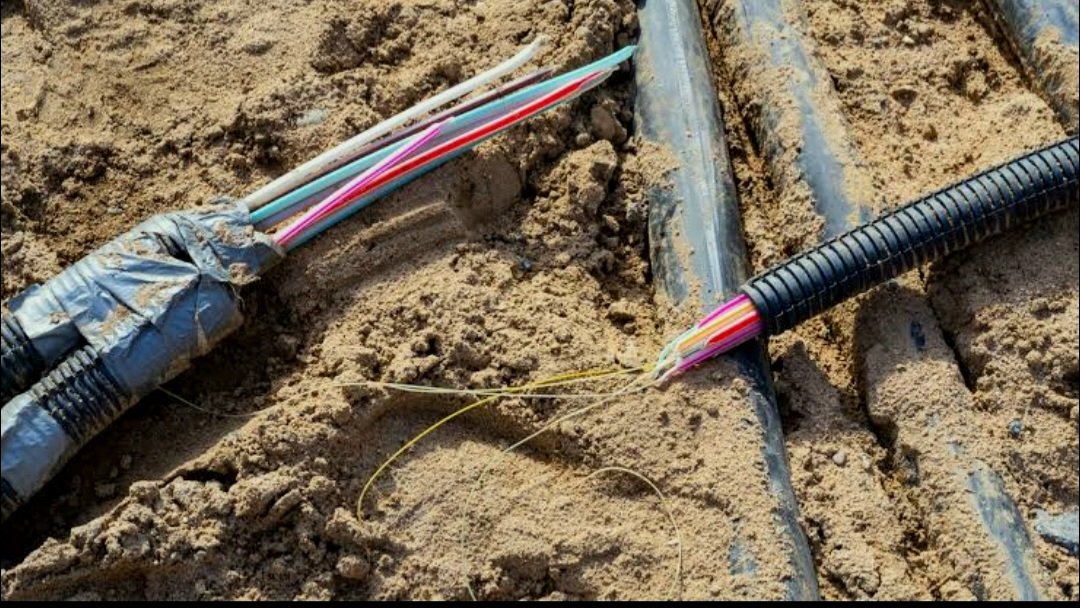
Somewhere in that journey, before Lokoja where a road construction was ongoing, lots of cables were dug up from the ground. That would mean nothing to most people but it meant a lot to the operators. My wife was the first to point my attention to it. “Are these not telecommunications cables?”, she asked.
Yes, they were. Their being uprooted means outages on the networks in that area and even beyond. It could affect as many as three or four states and the subscribers in that environment would suffer even more. And the operators would take the blame for wilful vandalism by the state.
What a chaotic life? A level of arbitrariness and power exhibitionism that hurts those who are supposed to be reaping the dividends of democracy. Unfortunately, and which is the troubling reality, some of the subscribers in that area live in the margins, unrecognised and unaccommodated by the word, democracy, which more or less, has become a fraud in our world.
The Dig-Once Policy (DOP) for which the Nigerian Communications Commission (NCC) presented a consultancy study last week, the second in the series, would seem to put an end to all that chaos, all that unstructured digging, restore order and sanity that can bring benefits and profits to all the stakeholders, while unleashing industry growth much needed for accelerated telecommunications infrastructure build out and service delivery.
It would need more structured planning and engagement with all the stakeholders to buy into a shared vision and industry practice that could stave off needless headaches.
According to the regulator, “The Dig-Once initiative is designed to reduce the cost, duplication, and complexity of network deployment by encouraging coordinated civil works and shared infrastructure. In practical terms, it seeks to ensure that when roads or public-rights-of-way are opened for infrastructure works, telecom infrastructure can be laid or accommodated in a coordinated manner, reducing repeated excavation and improving deployment efficiency.”
What is being proposed, which earned consultancy attention because of its significance, is that instead of the various operators digging the ground to lay cables, just one duct will be enough to carry all the cables. The idea has been in the making; it is the execution that has been elusive.
However, much of the discussion centred on monetising the process. How will owners of the ducts and the operators make business out of a seeming new enterprise in the telecommunications industry, and how does it affect the subscribers?
In fact, making business out of Dig-Once Policy was one of the cardinal reasons for the meeting: To present and validate findings from the consultancy study on transparent, equitable and cost-based pricing framework for shared duct infrastructure under the Dig-Once Policy.
In his keynote address on the Development of a Cost-Based Pricing Framework for Shared Duct Infrastructure Under Nigeria’s Dig-Once Policy, Dimension Data’s Olugbenga Olabiyi, observed that “without equitable access framework, owners of shared infrastructure may inadvertently or deliberately create barriers to entry through excessive pricing, restrictive commercial conditions, or discriminatory access practices. Such outcomes would undermine the objectives of the Dig-Once initiative and discourage investment rather than promote it.
“A transparent and objective pricing methodology will provide confidence to investors, infrastructure companies, mobile network operators, Internet Service Providers, fibre operators, and all participants within the communication ecosystem,” he said
Olabiyi further suggested that the stakeholders must develop a framework that is: Cost-oriented and evidence-based, Fair to infrastructure investors, Affordable for access seekers, Transparent and non-discriminatory, Flexible enough to accommodate future technologies, Capable of encouraging continued private-sector investment, Consistent with international best practices, and supported by effective governance and service-level accountability.
His punchy summary is as follows: Build Once. Share Many Times. Connect Everyone.
Stakeholders gathered were of the opinion that the success of Dig-Once Policy would accelerate the growth of broadband infrastructure and promote the pervasive deployment of 5G technology, which both represent the technology of the present and the future.
Consultant on the project, Silicon Base Limited, made a compelling business case for Ducts sharing under the Dig-Once policy, stating projected acceptable costs and benefits to the various stakeholders, including government – federal and states, operators and subscribers.
It would seem as if the acceptance of the Dig-Once policy which is still going through a draft is fait accompli. But not so fast. Some stakeholders present pointed to the importance and menace of the sub-nationals who would always see telecommunications as low-hanging fruits to quickly harvest. Some of the states impose high right of way (RoW) charges and other hidden costs, where disagreement would always lead to project delay or no rollout at all.
“There must be commitment from states and local governments that have become a problem. NCC must be able to bring all parties together,” some said.
Another stakeholder told the regulator to work closely with the Governors’ Forum to enable concerned parties resolve a number of things to get things going on a good project.
I have no doubt that the Dig-Once policy will work, not only because it can support faster and more cost-efficient broadband infrastructure deployment, and thus, contribute to improved connectivity, reduced deployment delays, better infrastructure coordination, and a more sustainable digital communications ecosystem, but for lots more which it brings to the table.
The Dig-Once policy will open the door to fresh business opportunities. I am pretty sure that very soon the regulator will be issuing new infrastructure licenses to those who want to operate in the sector. Their addition to the value chain in the telecommunications ecosystem will not only create wealth for investors but it will make infrastructure rollout and service delivery much better for the stakeholders and reduce the headache embedded in the various intersections of relationships.

Comments