


By our Correspondent
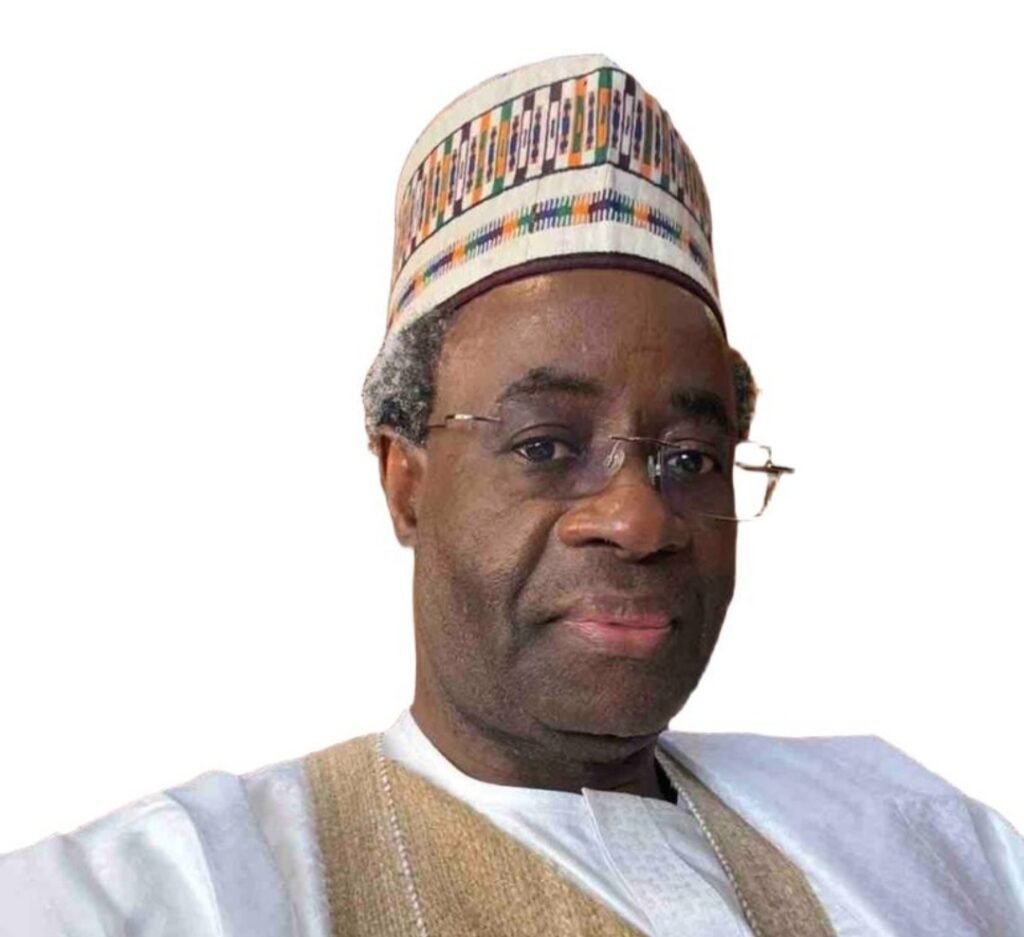
The Director-General of the Budget Office of the Federation, Tanimu Yakubu, has dismissed allegations that the ₦12.83 trillion Service-Wide Vote in the 2026 budget is a “slush fund” at the disposal of the Presidency, describing such claims as a fundamental misreading of the nation’s fiscal framework.
In a detailed statement issued on Wednesday, Yakubu argued that critics had stripped the appropriation of its structure by isolating the aggregate figure from the specific obligations it represents.
“The charge against the 2026 Service-Wide Vote begins with a number: ₦12.83 trillion. The number is then separated from the obligations that produced it,” Yakubu said, adding that once this is done, an appropriation becomes a purse, ceiling becomes cash, and a central budget heading becomes evidence of secret power. This method does not examine the budget. It strips the budget of its structure.”
According to the Budget Office, the ₦12,827,451,533,171 total is categorised into three distinct components:
· Personnel Cost: ₦2.18 trillion
· Other Recurrent Costs: ₦1.52 trillion
· Capital Expenditure: ₦9.12 trillion
The DG stressed that each component consists of identifiable provisions, making the total a “record of obligations that belong to the state as a whole” rather than an unrestricted cash reserve.
In terms of obligations to workers and retirees pprovision, Yakubu explained that ₦995.28 billion was for salaries and wage adjustments, covering ₦150 billion in promotion and salary arrears, as well as ₦845.3 billion for minimum-wage-related adjustments involving tertiary institutions, health workers, and other public employees.
Similarly, the vote allocates ₦1.049 trillion in social benefits, comprising ₦882.79 billion for pensions, ₦55.50 billion for gratuities, and ₦110.78 billion for death benefits.
“To describe these provisions as discretionary wealth is to erase the workers, retirees and bereaved families to whom the obligations are owed,” Yakubu stated.
On security, health and social interventions, Yakubu said the recurrent component, totalling ₦1.52 trillion, finances functions that cut across multiple institutions.
These include:
· ₦263.51 billion for GAVI and immunisation support
· ₦233.71 billion for the pension protection fund
· ₦115 billion for the Presidential Amnesty Programme
· ₦100 billion for military operations
· ₦50 billion for police operations
He said Central placement does not remove their identity,” Yakubu said, emphasising that these are clearly identifiable claims upon the budget.
Regarding legacy debts, he disclosed that the capital component, at ₦9.12 trillion, is largely driven by inherited obligations that includes:
· ₦3.500 trillion for 2025 outstanding legacy obligations
· ₦1.300 trillion for 2024 outstanding contractors’ liabilities
Together, these legacy debts account for approximately ₦4.80 trillion of the capital vote, he added.
Explaining further, he said the capital component also contains ₦1.367 trillion for grant- and donor-funded projects and ₦482.76 billion for counterpart funding for the Nigeria-United States health-sector intervention.
Therefore, the total contains the present cost of government, the social claims of citizens, and liabilities inherited from earlier periods,” Yakubu noted.
“Calling the whole amount a slush fund does not expose these obligations. It conceals them.” He noted.
Addressing concerns about fiscal direction, Yakubu clarified that appropriation grants spending authority up to a ceiling, but does not place the entire sum in cash at the disposal of any single office.
He stressed that revenue must first materialise, releases must fit the cash plan, legal authority to incur expenditure must be issued.
“Procurement and commitment rules must also be observed, claims must be checked, payment must pass through the treasury system,” he explained.
He added that reporting, reconciliation, audit, and legislative oversight follow at every stage.
“No single institution owns the entire process. The Budget Office coordinates estimates and budget implementation. The Presidency does not receive the Service-Wide Vote as its institutional income, hold it as a single fund, or possess a general power to spend it at discretion,” Yakubu emphasised.
On comparison with 2025 vote, he said Service-Wide Vote rose from ₦9.305 trillion in 2025 to ₦12.827 trillion in 2026—an increase of 37.8 per cent.
He attributed this growth to specific changes in provisions, including legacy liabilities, personnel adjustments, pensions, security spending, health counterpart funding, donor-funded projects, and national interventions.
“A percentage without this composition cannot establish waste or discretion,” he said. “It can only establish that the total has changed. Fiscal judgment begins after that fact, not before it.”
While acknowledging that no public expenditure should be beyond scrutiny, Yakubu urged that oversight must follow the money as it is classified, authorised, released and paid.
“The ₦12.83 trillion figure is the sum of named obligations. It is not a secret reserve. It is not cash held by the Presidency. It is not a licence for the Presidency, or any other institution, to spend outside the Appropriation Act,” he concluded.
Yakubu declared that the Budget Office of the Federation will continue to explain the composition and execution of the vote, as the public is entitled to the facts.
However, those facts should not be replaced by an aggregate emptied of its meaning. He said. (GSF)

Comments