



Article: by Lawal Sale
As the 18th BRICS Summit in New Delhi, India, came to an end on September 13, 2026, China is set to take over the baton of chairmanship of the influential emerging world’s economies, the BRICS Plus (BRICS+) and partner countries come 2027.
China’s chairmanship of the 19th BRICS Summit is coming at a time when the world is facing increasing turbulence and uncertainties due to certain actions of some powers which strikingly violated the ethics and values of the United Nations (UN).
China as one of the “four pioneers” of BRICS — a leading compass of the Global South, the second largest global economy and an important member of the UN Security Council – is expected to maintain and reinforce its status as a global power and stabilizer of the global system by aligning itself with the development aspirations of each and every developing country, no matter its size or population.
BRICS AS GLOBAL UNIFIER
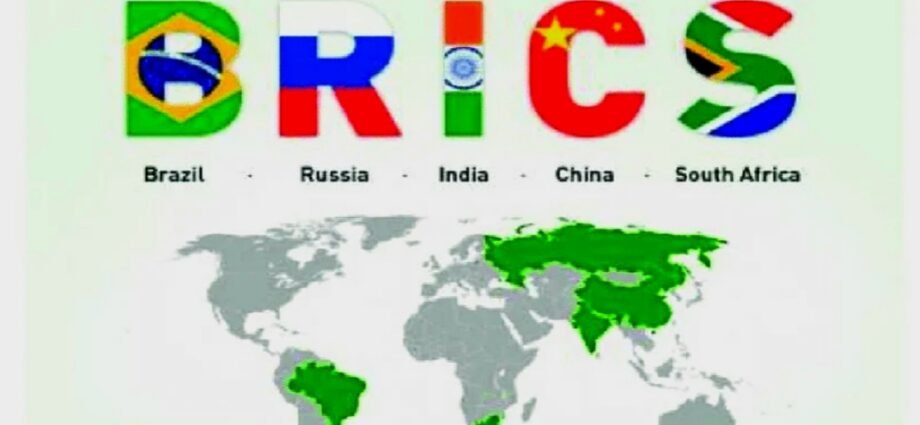
BRICS itself did not come by accident. The term is an acronym coined in 2001 by Jim O’Neil, an economist with Goldman Sachs, while describing the initial four members of the group — Brazil, Russia, India and China — as the fastest growing emerging economies and predicting that they would dominate global economy by 2050.
Since then, the bloc has continued to gain momentum with more countries, indicating interest to join. South Africa joined the bloc in 2011, followed by Egypt, Ethiopia, Iran, Saudi Arabia, the United Arab Emirates (UAE) and Indonesia during the 16th BRICS Summit in Kazan, Russia in 2024. Currently, there are also 11 BRICS partners and potential members of the group.
In his historic address at the 18th summit in New Delhi, President Xi made a thought-provoking speech in which he called on BRICS countries to strengthen unity among the Global South and play an active, stabilizing and positive role in global affairs.
He also outlined concrete proposals to further strengthen the greater BRICS cooperation, with a particular focus on emerging areas, including Artificial Intelligence (AI), trade, digital industries and smart manufacturing.
President Xi described the Global South, with its collective rise and influence, as a key driver of multipolar world order at the time the global landscape was fraught with risks and challenges.
He stressed that as part of efforts to stabilize the global stage and make it a better place; BRICS countries must seize the historical initiative, rally the Global South and advance the well-being of the people.
Global South experts have noted that the five initiatives proposed by President Xi aptly demonstrated China’s firm resolve to share the opportunities of its modernisation and reflections of the spirit of openness, inclusiveness and mutual benefit that underpin BRICS and Global South cooperation.
Charles Onunaiju, Director of the Centre Study Centre in Nigeria, said that Global South cooperation, led by China, was a solidarity that unlocked partnerships, unlocked democratisation, of the international system and unlocked an open international system, while unlocking an inclusive international system.
Meanwhile, in the last two decades of its existence, BRICS has recorded tremendous achievements in advancing regional development, multilateral trading systems, climate control, and lately, cooperation in areas of AI and technology talent development.
Available statistics indicate that the BRICS bloc represents about 41% of global Gross Domestic Product (GDP) by Purchasing Power Parity, nearly half of world’s population; about 40% of the land surface and almost half of world’s goods export.
BRICS AS ENGINE OF GROWTH
Going forward, BRICS established the New Development Bank (NDB) based in Shanghai, China in 2014 alongside other financing mechanisms such as the Contingency Fund, Asia Infrastructure Bank, and MSMEs initiatives.
For instance, the instruments of NDB provide larger financing for its members to finance infrastructure upgrades and also for cross-border transactions among its BRICS-affiliated members. So far, the bank has approved more than $43 billion-funding in local currencies to its members, most of which were expended on transportation and energy efficiency. The facility was to provide funding to members to particularly facilitate the reduction of their dependency on the U.S. dollar and other Western financial institutions.
Trade in local currency among BRICS members has increased over the years with countries like India paying for Russian oil in Rupees, while trade between Brazil and China is also transacted in their local currencies.
CHINA CHAIRING FOR BRICS THE 4TH TIME
All the same, China is not new to hosting BRICS members and partners; as the hosting of the BRICS Summit is rotational. Therefore, China has, in the past, held the BRICS chairmanship three times, with the outcomes of each hosting engendering landmark achievements and tangible results.
China first chaired the BRICS summit in 2011 in Sanya where South Africa formally joined the bloc, thus adding “S” to the acronym, thereby completing the first expansion that metamorphosed the block into a five-nation cooperation framework known today as “BRICS”.
The 3rd BRICS Summit was organized in Sanya, China, in 2011 with a theme “Partnership for Brighter Future” and the deliberations were focused largely on advocating reform of global economic governance and increasing the voice of emerging economies in the international financial systems; thus boosting the bloc’s influence around the globe significantly.
After the 2011 Sanya Summit, the next BRICS summit chaired by China was its 9th edition held in Xiamen in 2017. The 9th Summit opened BRICS’ second “Golden Decade” — establishing the “three-wheel drive” cooperation architecture of economic and trade financial systems, political and security affairs, and people-to-people and cultural exchanges.
It was also at the Xiamen Summit that the idea of “BRICS Plus” cooperation model was established.
Besides, the launch of the New Industrial Revolution Partnership and a large number of practical projects were carried out and executed, thus advancing the influence of the BRICS bloc cooperation.
The 14th BRICS Beijing Summit in 2022, chaired by President Xi, took place at a period that was plagued by perceptible turbulence and multiple crises across the world. The theme of the 2022 Summit was to “Foster High-Quality BRICS Development, Usher in New Era for Global Development”.
During the 2022 Beijing Summit, several declarations were proclaimed, including the Beijing Declaration on High-Level Dialogue on Global Development, linking BRICS cooperation with the global development cause.
At the gathering, member nations also agreed to strengthen coordination on food security, energy, supply chain and public health; reinforcing cooperation mechanisms such as the New Development Bank (NDB) and the BRICS Contingent Reserve Arrangement.
Global South experts are of the view that the chairing of BRICS by China on three different occasions is a lucid indication of its commitment to providing guidance for BRICS via the communal spirit, consolidating the foundation of cooperation institutions and mechanisms, while adhering to openness and expansion in the enlargement of the bloc.
NEW HORIZONS FOR AFRICA
Experts argue that African countries, particularly African BRICS members and partners, should leverage the BRICS cooperation model in efforts to develop their infrastructure, expand trade and investment, while strengthening international partnerships for the benefit of their citizens.
Through such cooperation, BRICS African partners would gain access to financing for their major infrastructure projects through the New Development Bank (NDB), while having access to a $100-billion pool of currency reserves via the BRICS Contingent Reserve.
Africa was represented at the event by the full members, South Africa, Ethiopia and Egypt, and by partner countries, including Nigeria and Uganda, as well as the African Union (AU), led by the President of Burundi.
For Africa, BRICS offers an unique opportunity to move from the ranks of a recipient of foreign aid to that of an active participant in global politics and the economy.
Experts insist that Africa’s participation in the bloc will spur cooperation in trade, food security, technological development, infrastructure financing and the reform of governance system; thereby broadening the continent’s scope in influencing decisions on the global stage in a more pragmatic way.
Nigeria, for instance, has a comparative advantage in terms its demographic and economic resources, while Ethiopia, on the other hand, plays a unique role in the scheme of things as Africa’s diplomatic hub. Addis Ababa is the headquarters of the African Union.
It is pertinent to note that for African countries, cooperation with BRICS is not only limited to political declarations on a multipolar world order, but it also opens up their access to funding on conditions which are not stringent in nature.
In his remarks in New Delhi, Nigeria’s Vice-President Kashim Shettima emphasised that Abuja would welcome BRICS cooperation in the fields of trade, agriculture, food and energy security, infrastructure, industry, healthcare and the extraction of critical minerals.
Shettima emphasized that one of the key demands of African countries centred on the need for them to move away from the archetypal model in which the continent only exported raw materials, while the bulk of the added value remained outside its borders.
Sharing similar sentiments, South African President Cyril Ramaphosa noted that developing economies had for too long remained predominantly suppliers of raw materials within the global supply chains, while technology and high-tech manufacturing were concentrated in other regions.
Ramaphosa underlined the need for an expanded BRICS not to replicate this model; saying that tangible investment should be channelled into products processing, industrial production, energy, infrastructure and logistics, while companies should establish manufacturing capacity on the continent and develop local expertise.
Other takeaways by Africa at the Summit include several approved initiatives that directly facilitate the growth of the African BRICS members and partners.
As China prepares to assume the 19th BRICS chairmanship, expectations are high that the Global South that China will consolidate on feats of the bloc’s expansion, improve the integration mechanism and optimize the operating rules of the expanded BRICS cooperation, while ensuring unity and efficient operation of the big BRICS+ family for the shared future of mankind.
— Sale is an Global South Affairs Analyst based in Abuja, Nigeria (lawalmaida1@yahoo.com)