


Commentary by Lawal Sale
Founded in 1921, the Communist Party of China (CPC) marked its 105th anniversary in 2026. Since its establishment, the Party has played a central role in shaping China’s development trajectory, providing political leadership and guiding the country’s transformation into a major global economic and political force.
With a membership of more than 100 million, the CPC has built a political and institutional framework through which it pursues national development, governance reforms and social transformation. Over the decades, the Party has also placed considerable emphasis on self-reform, institutional discipline and the ability to identify and correct internal weaknesses. Its emphasis on self-governance and continuous improvement has remained central to its leadership philosophy.
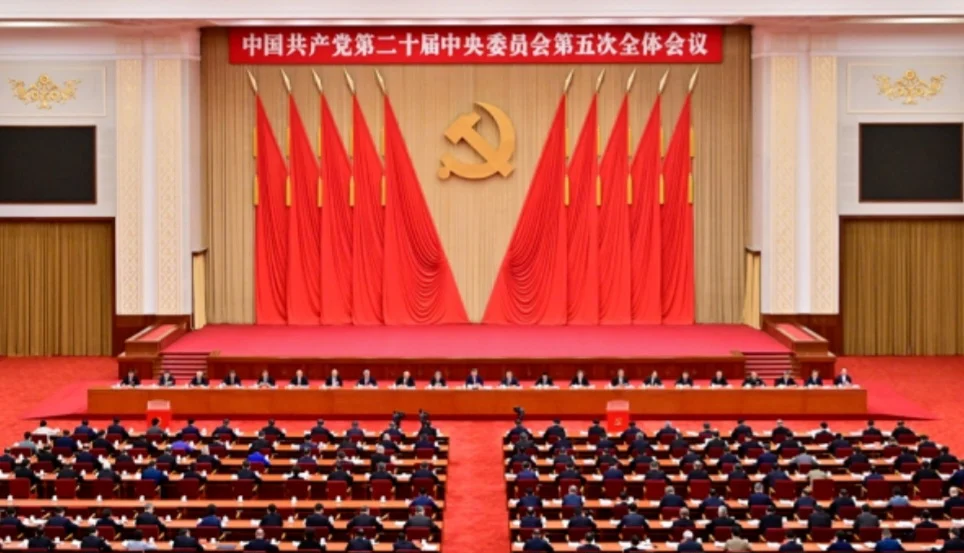
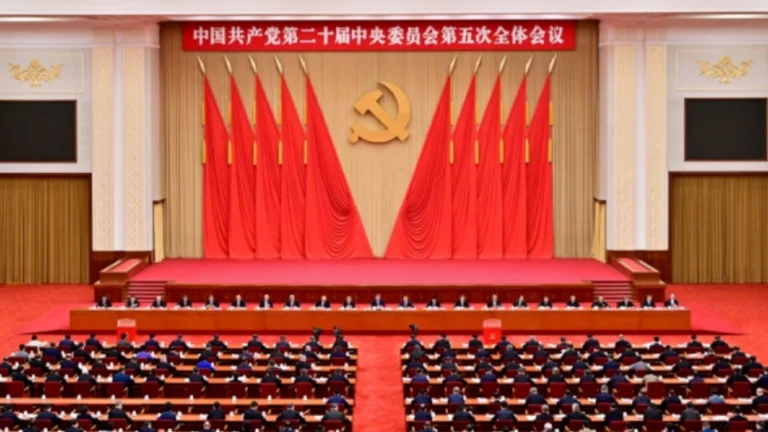
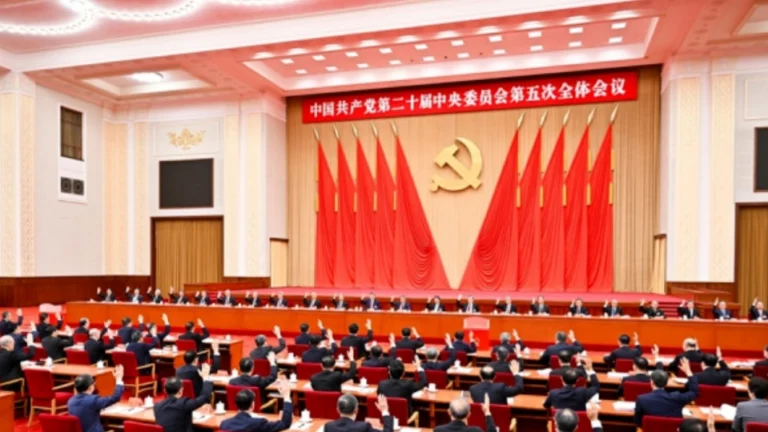
These issues featured prominently at the Fifth Plenary Session of the 20th CPC Central Committee, held in Beijing from October 26 to 29, 2026, under the chairmanship of the Political Bureau of the Central Committee. President Xi Jinping, General Secretary of the CPC Central Committee, delivered an important address to the Plenum, which was attended by 162 full members and 117 alternate members of the Central Committee, alongside other participants in a non-voting capacity.
The Plenum reviewed the work of the Political Bureau since the Fourth Plenary Session and adopted a major resolution on advancing full and rigorous Party self-governance.
Among its major outcomes was the Central Committee’s affirmation of the work of the Political Bureau and its progress in implementing the guiding principles of the 20th CPC National Congress and subsequent plenary sessions.
The Plenum acknowledged progress in several critical areas, including the implementation of China’s development philosophy, pursuit of high-quality economic growth, advancement of socialist democracy and the rule of law, improvement of public welfare, ecological conservation, national security and social stability.
Other areas included strengthening Party self-governance, modernising national defence and the armed forces, carrying out work related to Hong Kong, Macao and Taiwan, and advancing major-country diplomacy with Chinese characteristics.
These efforts, according to the Plenum’s communique, have contributed to the successful conclusion of China’s 14th Five-Year Plan (2021–2025) and provided a positive foundation for the implementation of the 15th Five-Year Plan (2026–2030).
Equally significant was the Plenum’s assessment of the CPC’s achievements in exercising full and rigorous self-governance in the new era. Participants acknowledged the importance of confronting weaknesses in Party leadership, inadequate internal supervision, lax discipline and other institutional challenges.
The Central Committee, under the leadership of Xi Jinping, was credited in the communique with demonstrating political resolve and a strong sense of responsibility in addressing these challenges through stricter oversight, institutional reforms and sustained efforts to strengthen Party discipline.
In a broader context, the Plenum’s deliberations underscore the CPC’s continued emphasis on internal discipline, institutional strengthening, accountability and the fight against corruption. These measures are intended to reinforce the Party’s organisational capacity and improve the implementation of national policies.
For China, the relationship between Party governance and national development remains particularly important. The country’s development experience illustrates how political leadership, long-term planning, institutional coordination and policy continuity have been brought together in the pursuit of national objectives.
Commenting on the significance of the Fifth Plenary Session, Nigerian scholar, Professor Sheriff Ghali Ibrahim, observed that the meeting offered valuable insight into how the CPC approaches the challenges of governance and national development.
According to him, the Party’s emphasis on strengthening internal discipline, intensifying the fight against corruption, improving oversight and building effective institutions reflects an approach aimed at translating national policies into practical results.
Indeed, one notable feature of the CPC’s governance model is its institutional emphasis on self-examination, identifying weaknesses and taking corrective measures. Its continued focus on self-reform suggests that political leadership and institutional credibility are regarded as important factors in sustaining national development.
Professor Ibrahim further described the CPC as a distinctive political party in contemporary governance, noting its strategic orientation and commitment to China’s national development, as well as its wider regional and international engagement.
He maintained that the Party’s development strategy and its emphasis on institutional discipline offer important perspectives for understanding China’s governance experience and its approach to national transformation.
Beyond China, the CPC’s experience raises broader questions about the relationship between political leadership, institutional accountability, policy implementation and development. For countries across the Global South, these issues remain relevant in the search for effective governance systems capable of delivering sustainable economic growth and improving citizens’ welfare.
Ultimately, China’s development experience demonstrates the central place occupied by the CPC in the country’s political and institutional structure. Its emphasis on Party self-governance, long-term planning and institutional reform continues to shape its approach to national development and its engagement with the wider world. (GSF)
— Sale is Global South Affairs Analyst based in Abuja (lawalmaida1@yahoo.com)
Comments