


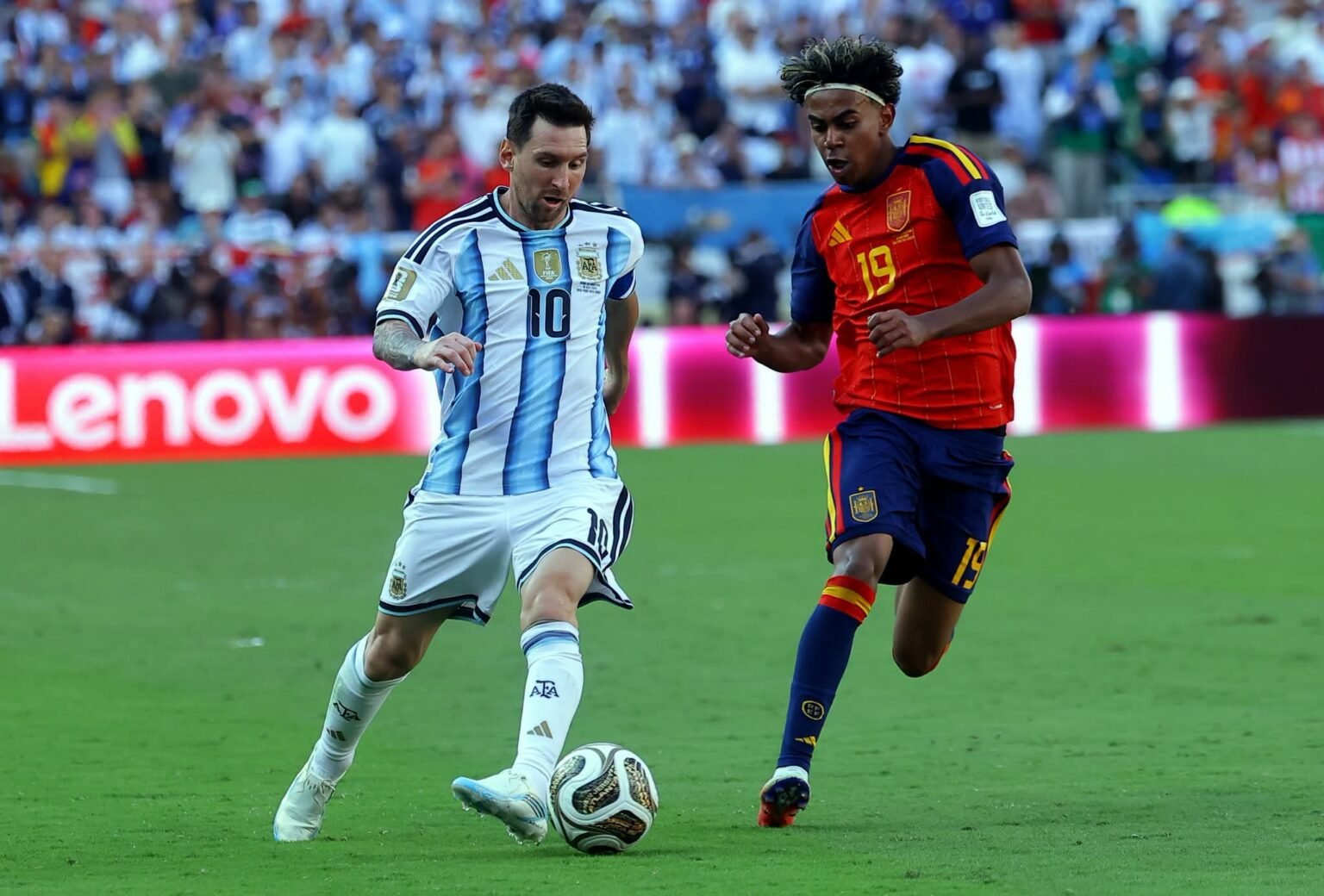
Spain 1-0 Argentina (after extra time): A team with the greatest footballer ever should not be this dull, this focused on delaying and disrupting, writes Richard Jolly from the New York Stadium.
Don’t cry for them, Argentina. Some tears were shed by Lionel Messi, after an unsatisfactory end to one of the great World Cup careers. But his team-mates merit rather less sympathy. What had been a valiant, dramatic and compelling attempt to retain the World Cup ended with a lack of discipline, creativity and, above all, shots.
The historic feat, it transpired, was not becoming the first team since Brazil in 1962 to win consecutive World Cups, but in being officially the least attacking team ever in a final. Argentina had no shot of any kind in 90 minutes, an xG of 0.00 when it went to extra time. Spain had 20 shots before Argentina’s first, in the 121st minute.
All this with a man who has been involved in more World Cup goals than anyone else, who many believe is the greatest footballer ever. A team with Messi should not be this dull, this focused on delaying and disrupting.
Argentina offered nothing in the final and Messi was left anonymous (Reuters).
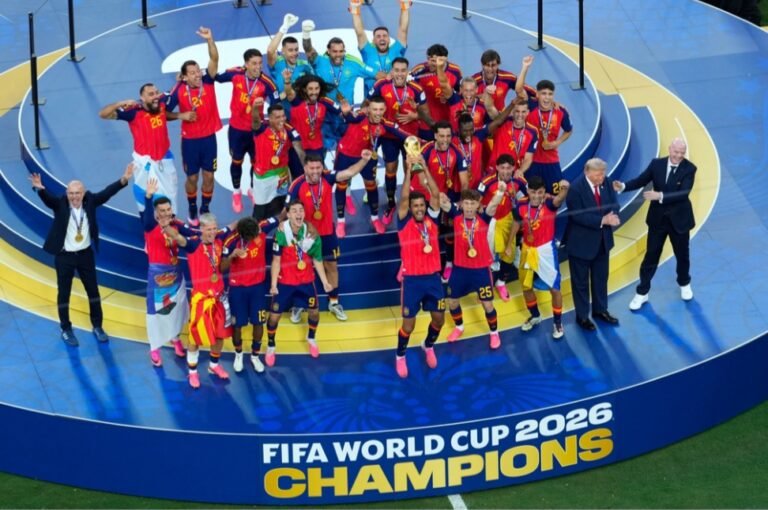
But after Fifa wasted everyone’s time getting into the MetLife Stadium, Argentina wasted their time inside it. If anything can be savoured from their exercise in nothingness, it is the thought they may have bored Donald Trump and the battalion of celebrities who somehow acquired tickets that could have gone to actual supporters.
The many actors among them may have been bemused: this was a supposed blockbuster that was often lacking in drama, where the eventual starring role was assumed by Ferran Torres, a minor character who did not figure in the first hour. Messi, the man with top billing, endured an uncharacteristic descent into anonymity.
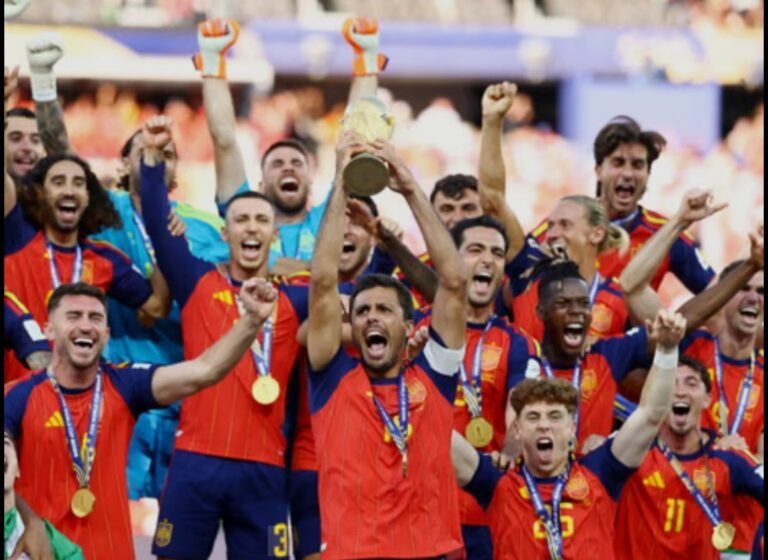
Spain secure World Cup glory to banish miserable Argentina and their anti-football.
Lionel Messi brought to tears as final World Cup ends in bitter defeat.
Argentina’s World Cup ends with punches and in disgrace.
His eventual tally stands at three World Cup finals; one won, two 1-0 defeats. For six weeks, the improbable had come to feel possible: that, at 39, he could create the 2022 final, when scored two goals and lifted the trophy.
This World Cup had felt a continuation of the last for Messi: when he scored in the first five games, took Miroslav Klose’s all-time scoring record, closed in on the Golden Boot. In a country where many spend fortunes trying to prevent the ageing process – perhaps some of Fifa’s famous guests among them – Messi seemed to have found a method that involved nothing more than footballing talent.
But this was a first game this World Cup he has not really influenced. He scored in the first five, stirred late on against Switzerland, made both goals against England. Julian Alvarez, a forward who may command a £150m fee, ended up on the left of midfield before he was substituted.
Messi will be 43 by the time the next World Cup comes around and he was given no support against Spain,
And Argentina’s lack of ambition was staggering. Perhaps their capacity for late goals convinced them they did not need to try and score early on. And yet it was only Torres’ belated strike that brought them to life. Part of it could be attributed to Spain’s watertight defence, but only part. It underlined that, until now, a team with a lack of pace or width had prospered because largely because of an over-reliance on Messi.
As he was starved of service, Argentinian resorted to anti-futbol. They have often showed the best side of their footballing traditions in this tournament. In the biggest game, they doubled down on their worst instincts.
As finals involving Argentina go, this was more 1990 than 2022, 1986 or 1978. Enzo Fernandez’s deserved dismissal may have highlighted his stupidity in getting booked for dissent. When he sent Pau Cubarsi flying, however, he may have been fortunate only to get a second yellow card. The third Argentinian to be sent off in a World Cup final was reluctant to leave the pitch. Perhaps Argentina had got away with enough skulduggery of late that Fernandez believed he was immune to such a sanction.
Fifa may yet need to take action against another Argentinian. Leandro Paredes was summoned at half-time. Argentina’s resident prince of darkness was soon in the book for an off-the-ball barge on Rodri. After the final whistle, he threw Gavi to the ground; perhaps a punch or two, as well.
After Fernandez’s red card, Argentina’s task became tougher. In their defence of the trophy, defence became the operative word. Emi Martinez was increasingly busy; increasingly impressive, too, with a fine save from Lamine Yamal’s free kick and a still better one from Nico Williams’ header.
But over 120 minutes, it became harder to believe this side had won one World Cup and two Copa Americas. They were outclassed and out-passed by Spain, arguably the first top-class team they have met en route. When the draw was made, they could have been pitted against Portugal in the last eight and Brazil in the last four. They got neither. They still almost stumbled at every hurdle. They conjured dramatic finishes in four knockout rounds, but they required them, too.
At the last, they tarnished memories of those victories and their glory days. Argentina were unedifying and unthreatening. But a signature song of one of New Jersey’s favourite musical sons, Frank Sinatra, had been played before kick-off and ultimately Argentina did it their way.
Culled: from the Independent UK
Comments