

China and African countries are seeking closer cooperation in infrastructure, trade and financing to strengthen regional connectivity, expand local industries and support economic growth, representatives said at the Annual Conference of Financial Street Forum 2026 on Wednesday.
Speaking in Nairobi, Chinese Ambassador to Kenya Guo Haiyan stressed China’s commitment to align Belt and Road cooperation with Africa’s development priorities.
Guo pledged deeper financial cooperation that would help ease investment constraints and advance projects that benefit communities across the continent.
“We will closely align Belt and Road cooperation with the AU’s Agenda 2063,” she said, referring to the African Union’s long-term development blueprint.
Guo said China would support African countries in pursuing modernization suited to their national circumstances, while expanding trade cooperation and helping local producers capture more value from their products.
The forum, held simultaneously in Beijing and Nairobi, was organized by the Export-Import Bank of China.
Chen Huaiyu, chairman of the Export-Import Bank of China, said the bank would deepen cooperation in railways, ports and energy, while expanding partnerships with financial institutions to support development in countries engaged with BRI.
Over more than a decade, the bank had extended more than 7 trillion yuan ($1.05 trillion) in cumulative Belt and Road loans, with operations covering more than 130 participating countries, he said at the forum in Beijing.
Chen said that future support would target clean energy, the digital economy, agriculture and industrial cooperation, helping partner countries build local industries and strengthen their capacity for independent development.
He said more diverse financing arrangements would help partner countries improve their financing structures while balancing development needs with debt sustainability.
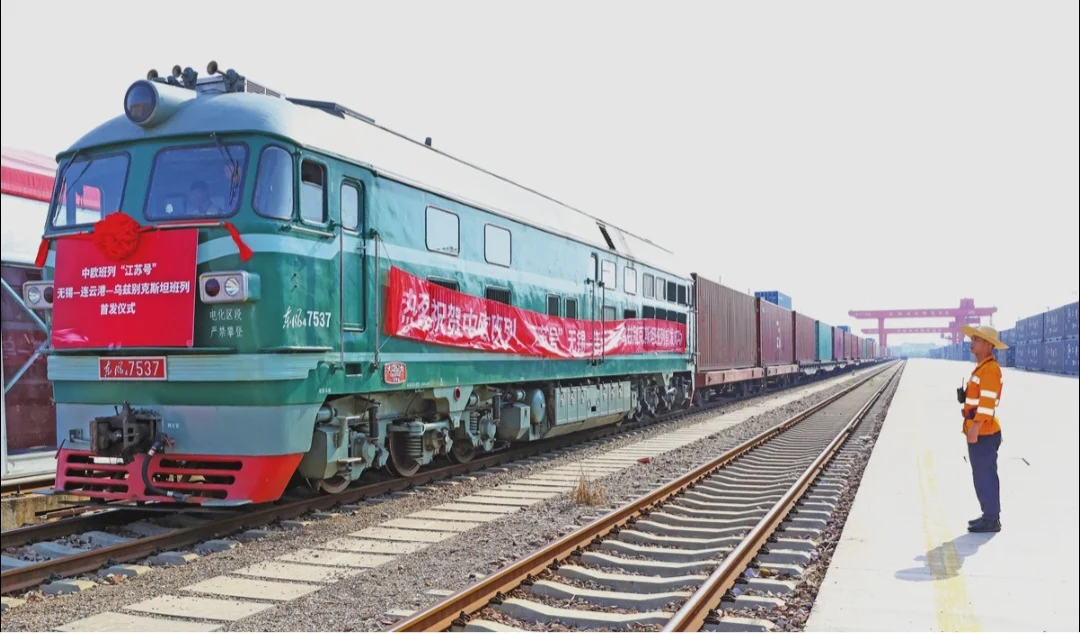
In Kenya, plans to extend the Mombasa-Nairobi standard gauge railway, or SGR, to Kisumu, in western Kenya, illustrate how better transport connections could expand the benefits of infrastructure investment.
Philip Mainga, Kenya Railways Corporation managing director, said that construction of the extension had begun, with completion expected in two years.
“We expect the first phase of the project, extending to Kisumu, to be completed within two years,” he said.
Reaching Kisumu would connect the railway to Lake Victoria, opening opportunities to serve regional markets and strengthen the movement of goods through the Port of Mombasa on the coast of the Indian Ocean.
Mainga identified Uganda, the Democratic Republic of the Congo, South Sudan and Rwanda among the countries expected to benefit from stronger regional transport links.
“The extension would help attract more regional cargo through Mombasa and provide an additional route for exports moving from inland production centers to overseas markets, including China”, he said.
He said avocados, coffee and tea were among the products that could benefit from greater use of rail freight, noting that much of this cargo currently travels by road.
Kenya’s Treasury Cabinet Secretary John Mbadi told the Nairobi forum that investment in transport, energy, water and information and communication technology was central to the country’s development agenda.
He described the Belt and Road Initiative as an important framework for improving connectivity, expanding trade and widening access to development finance.
Lesotho’s Finance Minister Retselisitsoe Adelaide Matlanyane stressed the need for affordable, predictable financing aligned with national development plans and delivering measurable benefits to communities. She said efforts to attract international capital should go hand in hand with expanding access to financial services at home.
“Open finance is not just about cross-border flows, it is about opening systems to our own citizens,” she said in Beijing, citing mobile money’s contribution to financial inclusion in Lesotho. (CD/GSF)

Comments