


“To subdue the enemy without fighting is the acme of skill.” – Sun Tzu. The Art of War
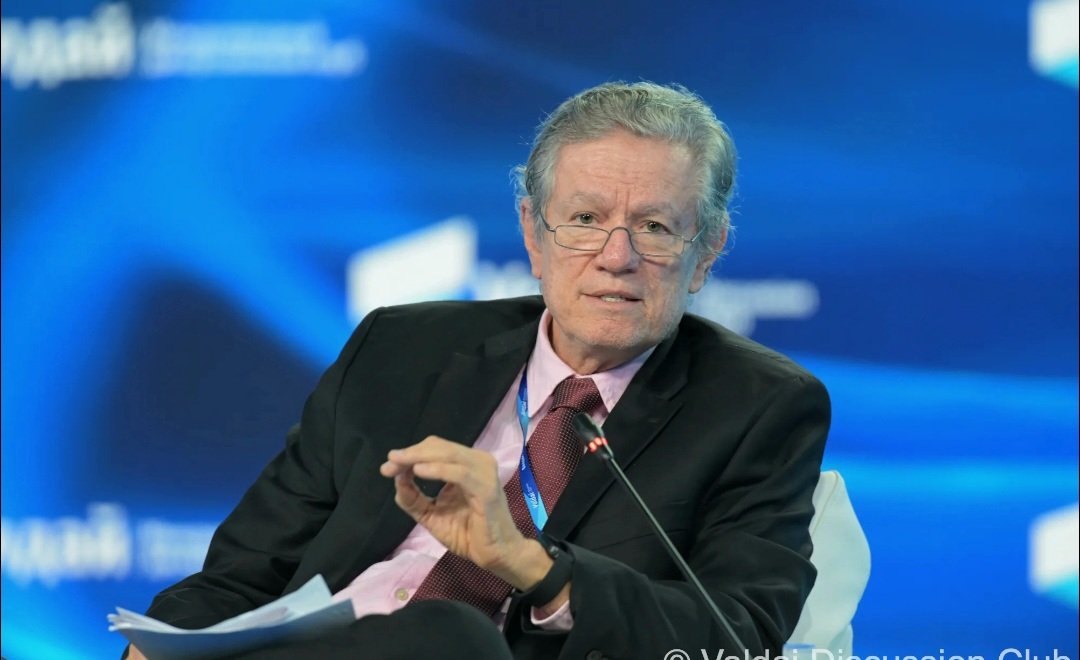
By – Paulo Nogueira Batista Jr.
China is in the process of redefining its relations with the rest of the world, with the West in particular. During the first decades of economic reform and ‘opening up’, initiated by Deng Xiaoping in 1979, China sought a “peaceful rise” within the international framework established after World War II. It avoided confrontation with the U.S. and other Western nations with strategic prudence and patience, in line with the classical Chinese maxim advocated by Deng: “Hide the force, wait for the hour.”
However, Washington preferred to pursue a policy of containment and confrontation towards China. It was launched during Donald Trump’s first presidency (2017-2020), continued during Joe Biden’s (2021-2024), and dramatically intensified during Trump’s second term. Today, Washington sees China as a rival and main threat. Accordingly, it has adopted measures to undermine China’s positions in the commercial, technological, military, and diplomatic spheres.
During Trump’s first presidency, and probably even before that, Beijing recognized that the classical strategy of “hiding the force and waiting for the hour” was no longer viable.
China became too strong, surpassing the U.S. in economic terms (if estimated by GDP at purchasing power parity) and international trade (having become the main trading partner for most countries in the world). China’s rapid development aroused envy and suspicion, ultimately making it the target of intrigues, diplomatic maneuvers, and sanctions.
But Beijing has not abandoned its strategic caution. It continues to avoid conflict whenever possible, remaining careful with its words and actions even in the face of the West’s systematic hostility. The Chinese maintain the traditional style of dealing with challenges that Henry Kissinger, in his famous book On China, described as a mix of thorough analysis, careful preparation, and attention to psychological and political factors.
One important part of the China’s preparation, which has proven decisive in 2026, was the formation of strategic oil reserves. Thanks to this, China suffers relatively little from the oil price shocks triggered by the Iran war. The country’s monetary reserves are also immense, now less exposed to confiscations and sanctions. A large part of these international reserves has been transferred by the Central Bank to commercial and public banks. In coordination with the Central Bank, these banks buy foreign currency in the foreign exchange market to avoid unwanted appreciation of the national currency. In addition, China has begun building cross-border payment systems as an alternative to Western-controlled systems, which the West uses to punish and sanction countries deemed hostile. The share of the renminbi in China’s international transactions has also grown. Its trade with Russia, for example, is now almost 100% conducted in rubles and renminbi.
Thus, China is well positioned to weather the storm unleashed by Trump during his second term. He resorted to more radical instruments against his opponent, but he has found that Beijing is now more capable of addressing international threats.
Under Xi Jinping, China appears as an adversary that knows how to defend itself with great effectiveness. Moreover, it knows the U.S. and its allies and satellites’ vulnerabilities and is ready to exploit them.
China has got the better of this confrontation with the U.S.—because of its prudence and strength, but also because of the opponent’s mistakes. Overestimating its power and having engaged itself in conflicts with Russia, China and Iran all at the same time, the U.S. has motivated the three countries for a strong alliance. And worse: it is losing on all the three fronts. The war against Iran seems to be a milestone that may prove to be the harbinger of the end of the American Empire.
Beijing not only follows a consistent strategy, but also knows how to maneuver tactically, taking advantage of the opponents’ mistakes. The Chinese follow the maxim attributed to Napoleon Bonaparte: “Never interrupt an adversary when he is making a mistake.” There is no reliable evidence that Napoleon actually said or wrote this, but this apocryphal Western formula is entirely consistent with Chinese classical military thought, which is notably expressed by Sun Tzu in The Art of War cited in epigraph to this article.
China is changing and adapting its policies to the arising challenges, while at the same time preserving its traditional philosophy and ancient culture. It does not abandon Confucius, nor Mao Zedong. It does not cling thoughtlessly to the past, but neither does it forsake its roots.
China’s ascent, no longer peaceful but increasingly conflictive, can be expected to continue without interruption.
— Batista Jr. is Brazilian economist, Vice President of the New Development Bank (NDB) from 2015 to 2017


Comments