



By Nurlan Yermekbayev | China Dail
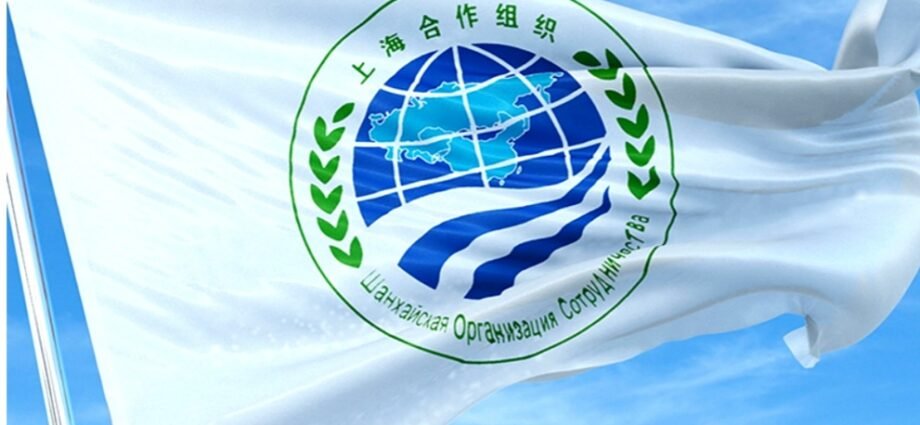
The story of the Shanghai Cooperation Organization began on June 15, 2001 in Shanghai, where the heads of six states — Kazakhstan, China, Kyrgyzstan, Russia, Tajikistan and Uzbekistan — took the momentous decision to establish a new international organization. This step marked the birth of a fresh format for regional interaction.
From the very outset, the leaders laid down the foundational values that have enabled the SCO’s steady advancement over the past 25 years. Essential to this has been the “Shanghai Spirit” — a set of principles centered on mutual trust, mutual benefit, equality, mutual consultation, respect for cultural diversity and the common aspiration for shared growth.
The SCO Charter signed in 2002 enshrined the key principle of consensus in decision-making within the organization, underlining the full equality of all members, regardless of territorial size or economic weight.
Since then, the SCO has expanded to include India (2017), Pakistan (2017), Iran (2023), and Belarus (2024), bringing its membership to 10 states. Together, they cover nearly one-fourth of the world’s landmass, are home to almost half of the global population and generate 25 percent of global GDP. With two observer states, 15 Dialogue Partners, and over a dozen applications pending, the SCO’s appeal speaks for itself.
The organization’s current institutional framework includes the Council of Heads of State, the Council of Heads of Government, the Council of Foreign Ministers, 30 sectoral meetings and the Council of National Coordinators. The main executive body is the SCO Secretariat in Beijing, alongside which there is a specialized Regional Anti-Terrorism Structure headquartered in Tashkent, Uzbekistan.
Over time, as envisioned by the heads of member states, the SCO has evolved beyond military-political issues into a universal platform for dialogue and cooperation across political, security, trade, economic, transportation, scientific, cultural and educational fields.
On security, the SCO maintains a strong focus on traditional and emerging challenges, continuing the fight against terrorism, separatism, extremism, as well as drug trafficking. A multi-level system of interaction has been established in these fields.
Recognizing the need to adapt, the member states decided in 2024 to comprehensively modernize the organization. In 2025, this led to a decision to create new specialized security bodies: the SCO Anti-Drug Center in Dushanbe, Tajikistan, and the Universal Center for Countering Challenges and Threats in Tashkent. The latter will include an information security center, as well as the Center for Combating Transnational Organized Crime in Bishkek. The work is underway to establish these mechanisms so that the SCO can respond more effectively to both traditional and emerging threats.
The SCO’s profile on the international stage continues to grow. When unforeseen situations arise that threaten peace, security and stability in the region, the SCO member states respond collectively, drawing on an agreed set of political and diplomatic response measures. Political and diplomatic statements on situations challenging regional peace remain the principal instruments — demonstrative of the organization’s united approach. Such political statements are subject to unanimous approval by all member states.
The organization also operates an observer mission for presidential and parliamentary elections, as well as referendums. This work is based on the principles of objectivity and noninterference in internal affairs.
Besides observation missions, following the results of the electoral activities held in the SCO area, the Secretary-General extends congratulatory messages to the leadership of the countries which are members, observers or partners of the organization.
The SCO takes a comprehensive approach to security, believing that economic development is integral to the broader security agenda. Permanent cooperation mechanisms are operational in trade, finance, transport, agriculture, energy, and customs, while new areas of cooperation such as the digital economy, the creative economy, green development and antitrust regulation are also emerging.
The SCO Development Strategy until 2035, adopted last year, sets ambitious yet realistic targets to enhance practical cooperation: deepening cooperation in trade, the economy, finance, investment, and high technology, including digital and green development, in order to create new areas of growth, ensure sustainable development, and improve the well-being and living standards of peoples in the SCO area.
To name a few practical outcomes, in transport, the Concept on Ports and Logistics Centers is being implemented and international road transport routes are being expanded. In 2025, member states made a political decision to establish the SCO Development Bank in a format of interested parties. In the digital sphere, work is underway on e-commerce and data-exchange platforms.
China has played a responsible role in the organization, implementing projects such as the SCO Demonstration Base for Agricultural Technology in Shaanxi province and the China-SCO Local Economic and Trade Cooperation Demonstration Area in Qingdao, Shandong province, that now serve as successful zonal platforms. During China’s chairmanship in 2024-25, three cooperation platforms were established — on energy, green industry and the digital economy — along with three centers for scientific innovation, higher education and vocational education.
The SCO is not resting on its laurels and it remains confident that the goals we have set will be successfully attained.
Beyond politics and economics, the members believe in fostering mutual understanding and cultural ties among the SCO peoples.
The member states cooperate in music, theater, movies, the fine arts, archives, libraries, museums and heritage protection.
An important role in strengthening cultural ties is assigned to public diplomacy. The institution of SCO Goodwill Ambassadors has been functioning since 2022.
Youth engagement remains a priority, with the SCO Youth Council and SCO Model providing a space for dialogue among the younger generation.
Sport is also in focus with many sports events taking place in SCO countries, including such landmark ones as the International Kunming Marathon and the International Issyk-Kul Marathon.
In 2025, the SCO presidency passed to the Kyrgyz Republic. The theme of its presidency — 25 Years of the SCO: Together Toward Sustainable Peace, Development and Prosperity — reflects the continuity of the agenda and the organization’s firm focus on the future. Kyrgyzstan has been successfully fulfilling its presidential responsibilities, with the Bishkek Summit set to serve as the culmination of its chairmanship.
In June 2026, the SCO members widely celebrated the 25th anniversary of the organization. The anniversary is a moment to take pride in the collective journey and to draw inspiration for the road ahead. Over the past quarter-century, the SCO has matured into a unique community of nations bound not by force, but by trust; not by self-interest, but by shared purpose.
The values and principles of the SCO, such as noninterference, the rejection of the use and threat of use of force, equality, respect for the diversity of cultures and civilizations and multipolarity, are all attractive to many states. This is evidenced by the growing number of countries and organizations wishing to join the SCO in one capacity or another.
As the SCO members look ahead, they do so with optimism, knowing that the bonds they have built and the principles they hold dear will continue to guide the region toward a future of peace, shared prosperity and mutual understanding.
The author is the secretary-general of the Shanghai Cooperation Organization.
The views do not necessarily represent those of China Daily.