








By our Correspondent
Chinese President Xi Jinping has called for a more inclusive, equitable and collaborative approach to artificial intelligence (AI) governance, announcing a series of initiatives aimed at helping developing countries bridge the digital divide and benefit from the transformative power of AI.
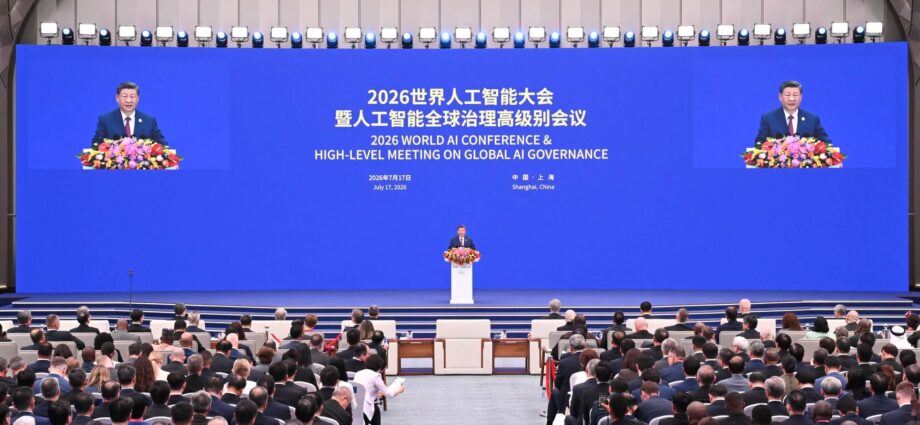
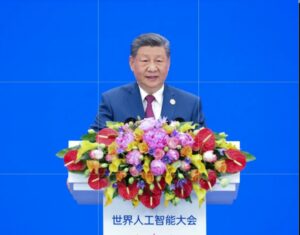
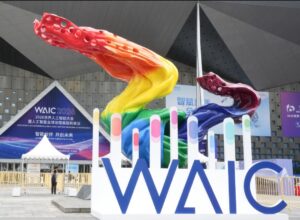
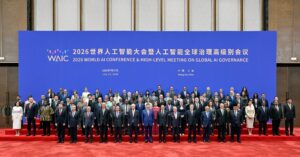
Speaking in Shanghai at the opening ceremony of the 2026 World Artificial Intelligence Conference (WAIC) and High-Level Meeting on Global AI Governance, President Xi said AI represents a historic opportunity for humanity but also poses significant challenges that require collective global action.
Addressing government leaders, industry executives, researchers and policymakers from around the world, Xi stressed that AI development should serve humanity, promote shared prosperity and remain under effective human control.
“AI development should not be a solo performance by a single country, but a symphony of international cooperation,” Xi said.
Reflecting on the 70th anniversary of the Dartmouth Workshop, widely regarded as the birthplace of AI, Xi noted that the technology has entered a period of unprecedented innovation, with intelligent connectivity, human-machine collaboration and cross-sector integration rapidly reshaping economies and societies worldwide.
He said the world must confront critical questions surrounding AI governance, including safety, ethics, security, decision-making accountability and the growing digital divide between developed and developing nations.
To address these challenges, Xi outlined four key principles for global AI development and governance:
First, he called for greater openness, collaboration and technological sharing to drive innovation and economic growth. He urged countries to promote open-source development, strengthen international cooperation and accelerate the integration of AI into traditional and emerging industries.
Second, he emphasized the need to strengthen safeguards against the misuse of AI, calling for robust legal frameworks, technological oversight mechanisms, early-warning systems and emergency-response capabilities to ensure AI remains safe, secure and controllable.
Third, Xi advocated inclusiveness and mutual learning among civilizations, stressing that AI should respect cultural diversity and be guided by humanity’s shared values rather than eroding the uniqueness of different societies.
Fourth, he urged countries to strengthen multilateral cooperation and improve global AI governance under the framework of the United Nations.
He noted that greater coordination is needed on development strategies, governance rules and technical standards to ensure AI benefits all countries.
Particular attention, he said, should be given to helping Global South countries build technological capacity and close widening AI and digital gaps.
“AI is an invaluable asset that embodies humanity’s collective wisdom,” Xi said.
“We must prevent the creation of new historical injustices in the field of artificial intelligence.”
The Chinese president highlighted China’s own advances in AI development, saying the country’s core smart-economy industries are now valued at more than one trillion yuan, while AI-powered applications and intelligent manufacturing are becoming hallmarks of Chinese modernization.
At the same time, he reaffirmed China’s commitment to responsible AI governance through improved legislation, ethical standards and regulatory mechanisms designed to ensure the technology develops in a safe and orderly manner.
Xi also highlighted China’s growing role in providing international public goods in AI governance. He cited Beijing’s Global AI Governance Initiative, the United Nations General Assembly Resolution on Enhancing International Cooperation on Capacity Building of Artificial Intelligence, the AI Capacity Building Action Plan for Good and for All, and the AI Plus International Cooperation Initiative.
A major outcome of the conference was the establishment of the World Artificial Intelligence Cooperation Organization (WAICO) in Shanghai.
Describing the organization as a milestone in the history of AI development, Xi said WAICO would serve as a platform for strengthening international cooperation, particularly in response to the needs and aspirations of developing countries.
To further support global AI development, Xi announced that China will provide 5,000 AI training and seminar opportunities for developing countries over the next five years.
He also revealed plans to establish international AI application cooperation centers with major regional organizations, including the African Union (AU), Association of Southeast Asian Nations (ASEAN), BRICS, the League of Arab States, the Shanghai Cooperation Organization (SCO), and the Community of Latin American and Caribbean States (CELAC).
In addition, he said China will enable 30 countries to access its AI-powered meteorological early-warning system, known as MAZU, aimed at strengthening disaster preparedness and protecting vulnerable communities.
The Chinese President concluded his address by urging the international community to guide AI development with wisdom, responsibility and international consensus.
“As AI advances at a staggering speed, we must ensure that its development remains for the positive, for good and for humanity,” he said, adding that “China stands ready to work with all parties to seize the opportunities presented by AI, address the challenges together, and create a brighter future for humanity.” (GSF)