
By Okoh Aihe
Concluding her keynote on Beyond the Ballot Summit in Abuja, Prof Abigail Ogwezzy-Ndisika wrote: Generative Artificial Intelligence and Foreign Information Manipulation pose serious challenges to our republic but they are not our destiny because technology is created by humans and human institutions retain the moral authority, legal mandate and practical capacity to defend the truth.
Concerning the 2027 Election, this hints at shared human responsibility to manage technology especially in this age of AI to enable it deliver instead of permitting its adulteration that can lead to unsavory results.
When Ogwezzy-Ndisika presented her very pedantic paper, Beyond the Ballot: Architectural Resilience, Generative AI and Securing Electoral Integrity for Nigeria 2027 Polls, both Gbenga Adebayo, ALTON Chairman, and Seun Okinbaloye of Channels Television, were not present in the opening day.
On the second day however, they had to tackle each other on how human handling of technology can guaranty fidelity of the electoral process.
The nation has a point of reference that is not inspiring.
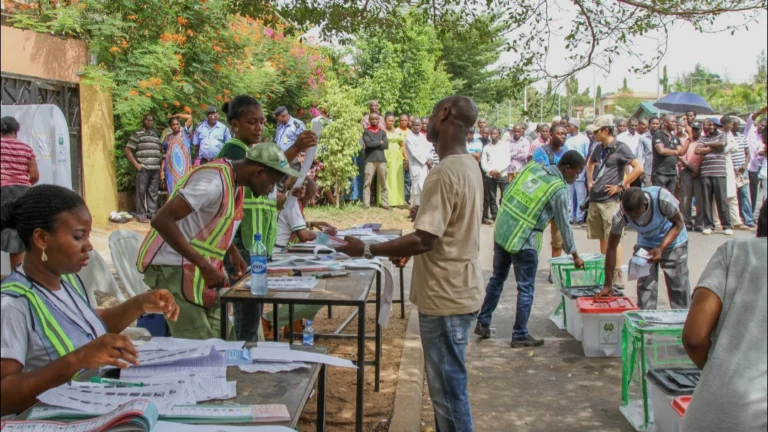
Just when everybody thought the 2023 Presidential Election was on a smooth sail, boom, came a technical glitch that rendered it difficult for information from the polling stations to be uploaded for onward transmission. A beautiful election had been blighted within seconds, raising tension across the nation.
With the stubborn intrusion of Artificial Intelligence, the organizers of the Summit, IPC, CEMESO and DAI, with support from the EU Support to Democratic Governance in Nigeria (EU-SDGN), had history in mind but they were also very conscious of how to manage the entire gamut of technology, including AI, to deliver trusted election results.
Hold democracy together and be able to create more human development that can impact technological growth for humanity instead of phobia for the unknown.
The second day came with significant highlights. It was the Panel Session on Telecoms Accountability and Responsible Influencing: What Should Telecom operators and Influencers Do Differently in 2027? The Session featuring Adebayo of ALTON, Dan Bello and Rukayya Muhammed, two Social Media influencers, was moderated by Okinbaloye.
Almost pressed beyond limits by Okinbaloye on whether the government could shut down the telecom network for whatever reason, Adebayo contributed that there were regulatory issues and cognate developments that could be responsible for such a situation but his conclusion being that the government cannot shut down the network.
This I totally agreed with because no matter what you may want to accuse the Bola Tinubu government of, one thing I can say is that it is not a rogue government that may want to act irresponsibly without recourse to the law of the land.
But why was that question ever necessary? Here is my little take. Elections are coming and this government does not enjoy so much trust from the people, as with other governments anyway. All kinds of things are imputed to the government although veracity is far remote. Yet it was still good for a strategic person in the telecom ecosystem to address such issue.
What also emerged is the kind of money politicians are splashing on influencers to help push their campaign materials and messages although the gathering called for caution as even Adebayo would explain that the telecom operators have no way of determining the nature of contents being pushed through their network. Such responsibility falls on social media platforms like X (formerly Twitter), Facebook and Instagram, among others.
“It is important that we distinguish between the telecommunications infrastructure that carries information and the platforms that create, host, distribute and moderate content.
Telecommunications operators provide the infrastructure – the pipes, if you like – that constitute the information superhighway. We provide the connectivity that enables Nigerians to communicate, access information, conduct business and participate in the digital economy,” Adebayo explained.
It was gratifying therefore, when the INEC Chairman, Prof Joash Amupitan informed that for real-time response to happen, the election agency was “partnering with global social media platforms such as TikTok, Facebook, Instagram, WhatsApp, YouTube, Facebook Messenger, Telegram, X (formerly Twitter), etc. “We already have an MOU with TikTok,” he said.
With Adebayo up there on the platform, people were anxious to squeeze guarantees from the operators. You have to appreciate their concerns.
In the period leading to the 2023 elections, some lawmakers had argued that some of their environments were so remote and therefore uncovered by any telecom network that it would be unreasonable to want to transmit election results electronically. Some even said at the time that they still use Thuraya for their means of communication. But you see, dear friend, there is no need arguing with anybody who makes exclusive claim to the absolute truth even when falsehood looks more pronounced.
Adebayo was deliberate and patient in his submission as he pointed out the differences in the times.
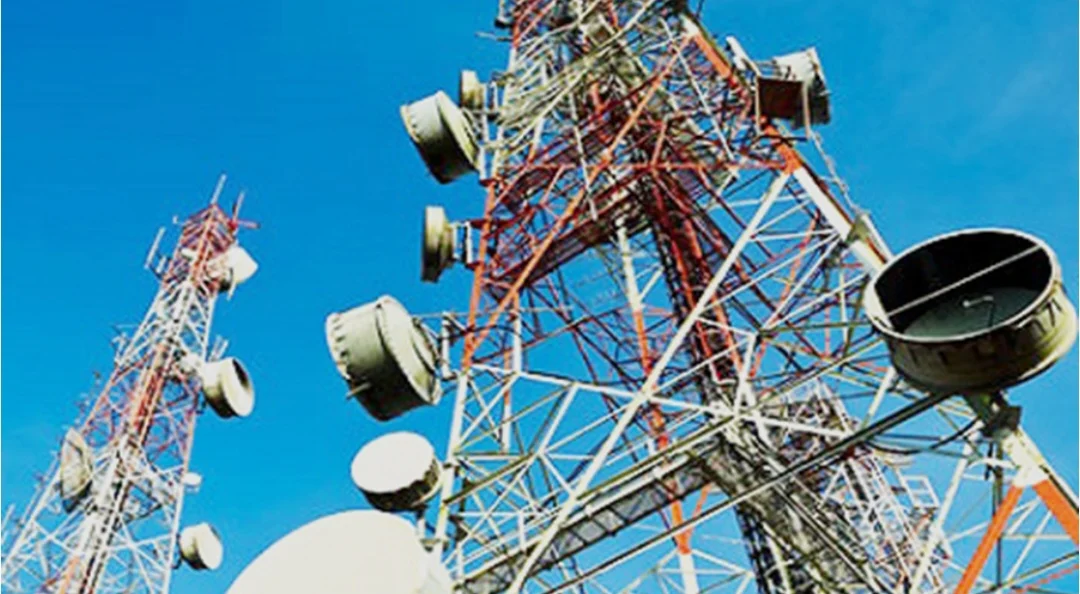
In January 2025, this administration approved a tariff review for telecom operators which has boosted their capacity for bolder investments. Since then fresh investments have gone into expanding network capacity – building new base stations, fibre optics layout and even strengthening the power capacity to run their operations.
“The Nigerian telecommunications industry recorded capital expenditure of approximately N2.132 trillion in 2025. Operators projected capital expenditure for 2026 was approximately N1.855 trillion. Taken together, these figures represent an investment commitment of almost N4 trillion across the two years.
The investment is directed at network expansion, capacity enhancement, improved coverage and resilience,” Adebayo revealed.
Consequent upon the tariff review and the concomitant investment by the operators, the industry, in the explanation of Adebayo, has built an extensive telecommunications footprint, with mobile networks providing connectivity across the vast majority of the country’s population.
Recent report provides the following population-coverage indicators: 2G – 95.31 percent; 3G – 89.42 percent; 4G – 84.60 percent, and 5G – 13.28 percent.
“These figures,” he pointed out, “demonstrate the extent of the industry’s reach, particularly with 4G, which is a principal platform for mobile broadband services.
It is important, however, to distinguish between population coverage and geographical coverage,” adding that “operators have established network operation centres that continuously monitor network performance.”
Some contingency plans by the operators include: Network redundancy and alternative transmission routes, backup power systems at critical network locations, traffic rerouting and network optimization, additional capacity deployment at high-demand locations, and coordination between operators and relevant public institutions.
Adebayo therefore pledged that for election-related activities, operators will pay particular attention to INEC offices, polling-unit clusters, collation centres, state and national collation facilities, and other critical locations.
At the Beyond the Ballot Summit, participants have alerted on the beauty and the beast of AI, ALTON has pledged the readiness of members to support the elections with a resilient telecoms infrastructure; it is now the responsibilities of Nigerians to play their role and for INEC to transform the hopes of the people to reality by conducting elections that are unblemished.
Comments