





CGTN
Chinese authorities say that during the 14th Five-Year Plan period (2021-2025), the country has built the largest and the most comprehensive transportation infrastructure system in human history. Vice-Minister of Transport Xu Chengguang made the announcement on Tuesday at a press conference in Beijing. Xu said China invested 18.8 trillion yuan ($2.78 trillion) in transport fixed assets during this period, the largest investment and fastest network expansion in any five-year period since the founding of the People’s Republic of China in 1949. The country’s comprehensive transport network now stretches over 6 million kilometers, providing the foundation for a new stage focused on improving connectivity, efficiency and resilience rather than expansion alone.
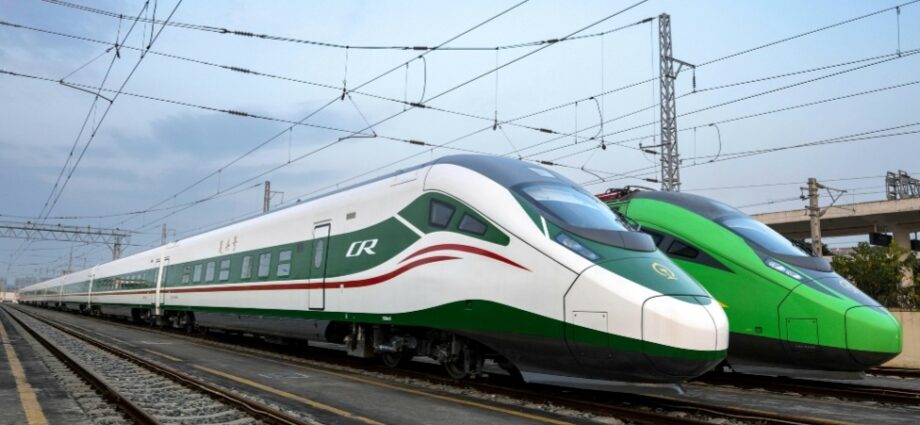
Authorities believe China’s comprehensive transportation infrastructure has firmly ranked among the top in the world in terms of scale and volume, including high-speed rail operating mileage exceeding 50,000 kilometers, highway opening mileage reaching 199,000 kilometers, and a total of 270 transportation airports. It has built the world’s largest and most beneficiary delivery network.
Meanwhile, Xu also said China’s transportation services are more convenient, economical, and efficient. The high-speed rail passenger volume has increased by 132% in 5 years, and the civil aviation passenger transport volume has grown by 84.2% in 5 years. The sea freight volume and port container throughput both account for one-third of the global total, and the express delivery business volume has ranked first in the world for 12 consecutive years.
Under its 15th Five-Year Plan (2026-2030), officials at the Ministry of Transport said China pledges to advance a modern infrastructure system through a series of major transport projects, including the completion of key high-speed railway corridors and expressway networks, the upgrading of inland waterways, and the development of world-class port and airport clusters.
“During the 2026-2030 period, China will step up efforts to upgrade transport infrastructure, accelerate digital transformation, expand the use of clean-energy vehicles, and build green freight and shipping corridors, in an effort to cultivate new drivers of growth.” Xu said.