


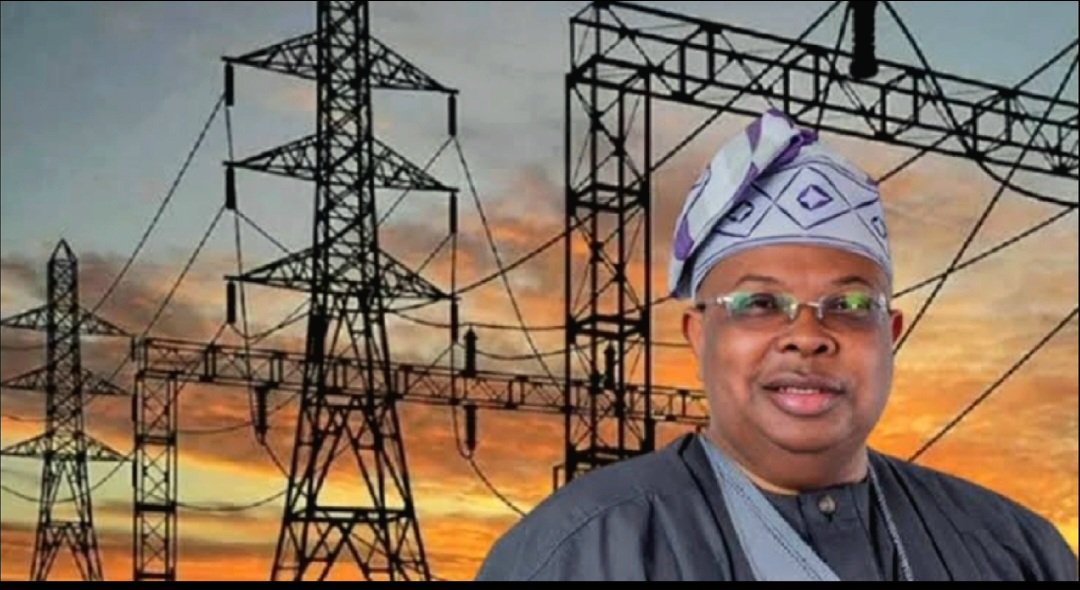
The Minister of Power, Joseph Olasunkanmi Tegbe, has inaugurated a nine-member inter-agency committee to address implementation issues surrounding Nigeria’s transition to a decentralised electricity market, describing the reform as one of the most significant changes in the country’s power sector in decades.
The committee, chaired by Tegbe in his capacity as Chairman of the Power Sector Inter-Agency Committee, was constituted at the end of a stakeholders’ workshop on the implementation of the Electricity Act, 2023.
According to a statement signed by the Commission, the committee has been given four weeks to review issues raised during the workshop, engage with relevant stakeholders and submit recommendations to support the seamless operationalisation of the Electricity Act.
The committee is expected to drive sustained engagement among stakeholders, resolve emerging implementation challenges and strengthen the framework for Nigeria’s evolving electricity market.
In his remarks, the minister said Nigeria’s transition to a decentralised electricity market would only succeed through collaboration, regulatory certainty and a shared commitment by all stakeholders.
“Nigeria’s transition to a decentralized electricity market is one of the most significant reforms in the power sector in decades. Its success will depend not on institutional competition, but on collaboration, regulatory certainty, and our shared commitment to delivering better outcomes for Nigerians,” he said.
He urged stakeholders in the industry to remain focused on ensuring the success of the Nigerian Electricity Supply, describing electricity as the backbone of economic development and national growth.
According to him, electricity remains the single most important enabler of economic growth, industrialisation, job creation, digital transformation and improved quality of life.
He emphasized that Every sector of the economy depends upon electricity – Manufacturing, Agriculture, Mining, Financial Services, Telecommunications and Information Technology, to mention but a few.
“Indeed, every national aspiration under the Renewed Hope Agenda rests upon the availability of reliable electricity. The responsibility before us, therefore, extends beyond institutional mandates. It is a national obligation,” he added.
He further explained that decentralisation should not be viewed as a fragmentation of the power sector but as a strategic redistribution of responsibilities within an integrated national electricity ecosystem.
“The decentralisation of the electricity market should not be viewed as fragmentation. It should rather be understood as the intelligent distribution of responsibilities within one integrated national electricity ecosystem,” he noted.
The minister also commended stakeholders for their constructive participation at the workshop, expressing confidence that continued consultations would strengthen the implementation framework.
“I am encouraged by the constructive engagement of all stakeholders, including the decision to deepen consultations as we continue to strengthen the implementation framework. Together, we are laying the foundation for a modern, reliable, and investor-friendly electricity market that delivers improved service, attracts investment, and powers Nigeria’s economic growth,” he said.
Comments