


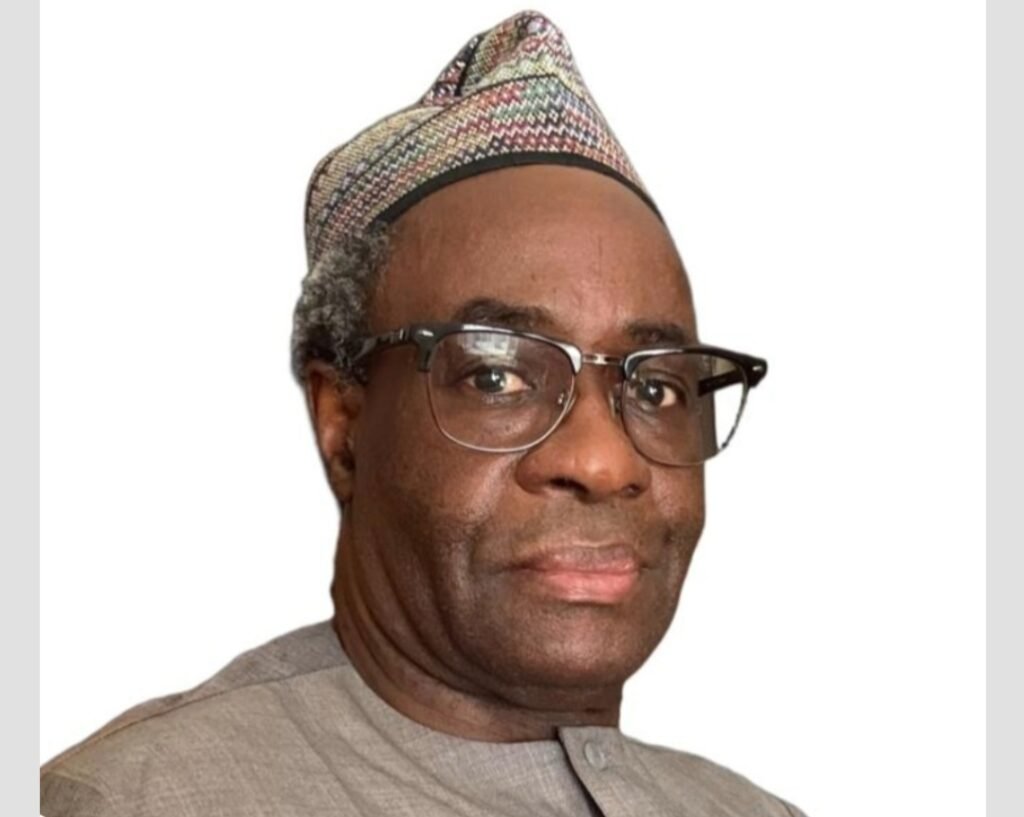
By Lawal Sale
The Director-General of the Budget Office of the Federation (BoF), Tanimu Yakubu, has dismissed recent criticisms of President Bola Tinubu’s foreign trips by opposition figures as “populist simplification” that ignores the complex realities of rebuilding a distressed economy.
In a strongly worded statement issued in Abuja, titled “Foreign Engagements, Economic Stabilisation, and the Dangers of Populist Simplification”, Yakubu took aim at former Anambra State Governor Peter Obi, accusing him of reducing “extremely complex questions of economic recovery, sovereign diplomacy, and international capital engagement into simplistic populist soundbites.”
Yakubu, an economist argued that no serious analyst disputes the need for foreign engagements to produce measurable economic outcomes. However, he questioned whether Obi properly understands the sequence through which nations emerging from fiscal instability rebuild investor confidence and reposition themselves within global capital markets.
According to him, President Tinubu inherited an economy in severe structural distress, including:
unsustainable fuel subsidy regime,
multiple exchange-rate distortions,
collapsing fiscal buffers, mounting debt-service pressures,
dwindling investor confidence, and
unprecedented dependence on central bank “Ways and Means” financing to sustain government operations.
Yakubu noted that under such circumstances, international engagements are “not mere ceremonial excursions” but essential instruments for rebuilding sovereign credibility, restoring policy confidence, reassuring investors, and repositioning Nigeria within regional and global economic networks.
He frowned at comparisons by Peter Obi between Nigeria and the United States under Donald Trump as “particularly superficial,” noting that the United States engages China from a position of global economic dominance as the world’s largest consumer market and primary reserve currency issuer.
“Nigeria, by contrast, is a reforming emerging economy attempting to stabilise after years of fiscal distortion”. Yakubu said.
The DG Budget Office emphasised that investment benefits do not materialise instantly in dramatic headline announcements.
He stressed that serious commitments in infrastructure, manufacturing, energy financing, and sovereign investment often emerge gradually after sustained diplomatic engagement and policy stabilisation.
In a pointed observation, Yakubu noted the contradiction among critics: “Ironically, many of the same critics now demanding immediate investment inflows were among those who opposed the difficult stabilisation reforms — including fuel subsidy removal and exchange-rate unification — that were necessary to restore the macroeconomic credibility investors require.”
Yakubu further explained a stark picture of the pre-Tinubu fiscal reality, stating that Nigeria was “approaching a dangerous fiscal cliff” before the current administration intervened. The government had become excessively reliant on central bank financing for recurrent obligations, fuel subsidies had become fiscally indefensible, and exchange-rate arbitrage had become systemic.
“Delayed reforms would likely have produced even deeper economic instability,” he warned. “What this administration confronted was not the luxury of ideal sequencing, but the urgency of stabilisation.” The DG stated.
In his defence of government’s economic policies, Yakubu argued that it is “intellectually inconsistent to oppose stabilisation reforms on one hand while simultaneously demanding the investment confidence that only such reforms can eventually produce.”
He called for patience and realism, saying that “Diplomacy should indeed generate economic value, reiterating that rebuilding a damaged economy requires more than slogans, photo comparisons, or selective foreign analogies. It requires difficult decisions, international re-engagement, policy credibility, institutional stabilisation, and the patience necessary for long-term economic restructuring to take root.” (GSF)
Comments