


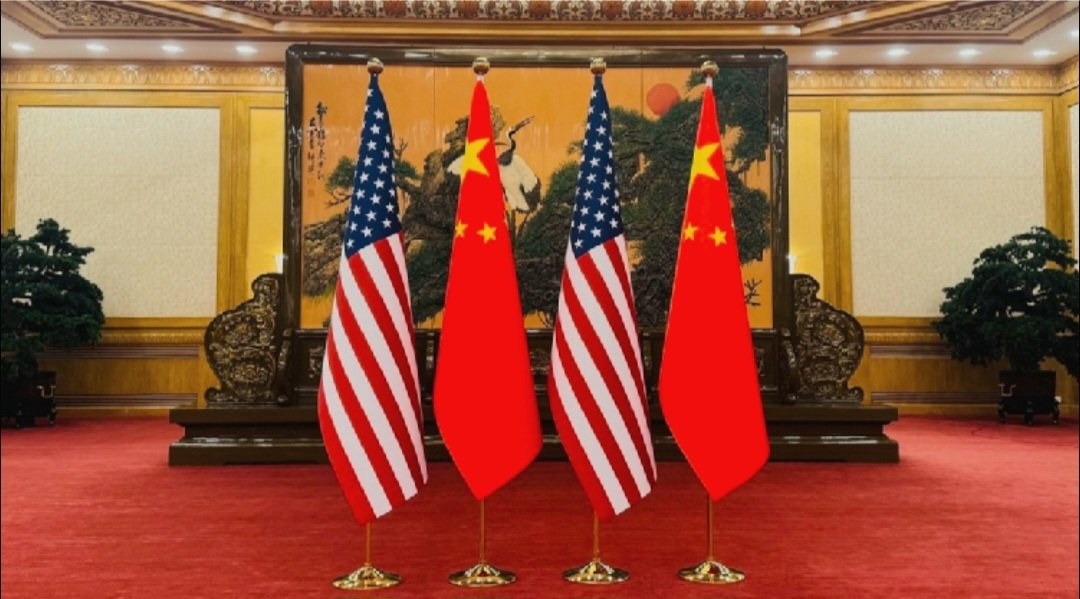
“Safeguarding peace and stability across the Taiwan Strait is the biggest common denominator between China and the United States.”
“The Taiwan question is the most important issue in China-U.S. relations. If it is handled properly, the bilateral relationship will enjoy overall stability. If it isn’t, the two countries will have clashes and even conflicts, putting the entire relationship in great jeopardy.”
“Taiwan independence” and cross-Strait peace are as irreconcilable as fire and water. — President Xi Jinping
An analysis, by Lawal Sale
Above were the exact words explicitly stated by President Xi Jinping during his meeting with visiting U.S. President Donald Trump in Beijing.
Those words were a solid affirmation and a clear message to the whole world that the Taiwan question is inviolable and that only the Chinese people can solve it themselves as an internal matter, not by any foreign entity or by any form of separatist activities.
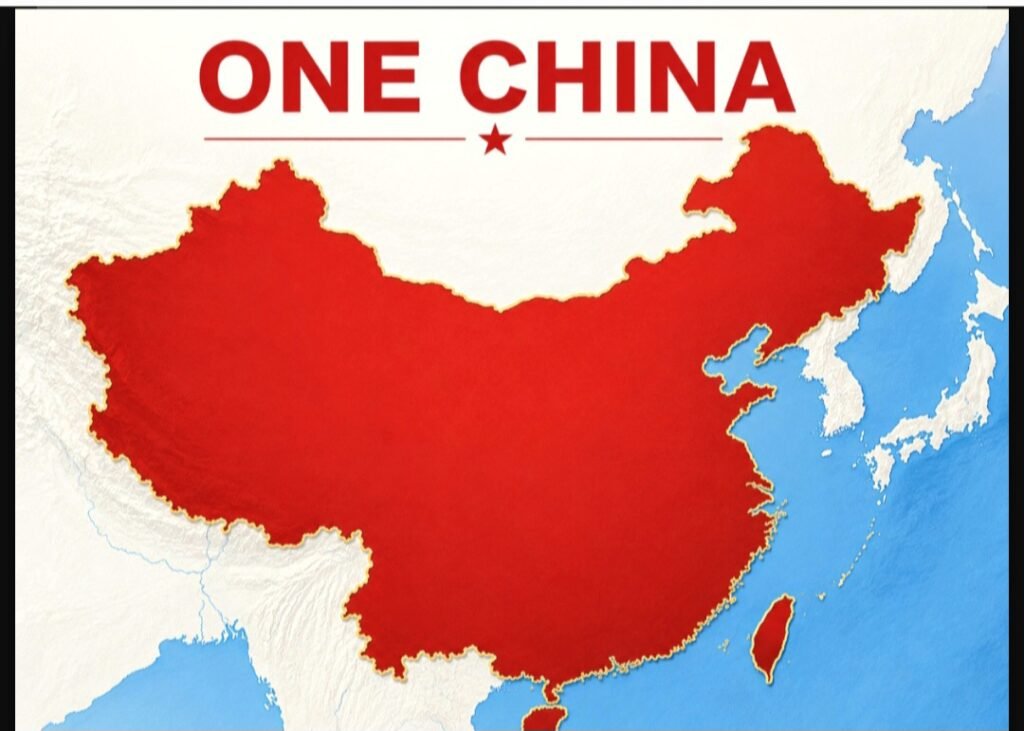
Unarguably, Taiwan is an inseparable part of China’s territory. It is an indisputable historical fact, a solid legal basis, and an international consensus, as well as a core element of the One China principle.
Historical Facts on Taiwan Question:
Historically, Taiwan has belonged to China since ancient times, with clear historical context and solid legal authority.
Empirical facts chronicle the early development of Taiwan by the Chinese people as early as the 12th Century. It was then that the Chinese government established administrative institutions in Taiwan and ruled over it.
In 1895, there was a turn of events when the Japanese forces seized the Taiwan region in a brutal military invasion. After the Japanese occupation, in 1943, toward the end of World War II, China, the United States, and Britain issued the Cairo Declaration, stipulating that the occupied Taiwan must return to the motherland China.
Similarly, in 1945, China, the United States, Britain, and the Soviet Union issued the Potsdam Proclamation, which affirmed that the provisions of the Cairo Declaration must be implemented. In August 1945, Japan accepted the Potsdam Proclamation and signed the Instrument of Surrender, undertaking to faithfully abide by all the provisions of the Potsdam Proclamation, thus returning Taiwan to China. These were the set of internationally legally binding agreements that confirmed China’s recovery of Taiwan.
Subsequently, Taiwan was returned to the territory and authority of China.
History also indicates that shortly after the world Anti-Fascist War and China’s victory against the Japanese Aggression in 1945, the opposition Kuomintang clique launched another war against the people of China. The Chinese people under the Communist Party of China fought and won the civil war, ultimately overthrowing the government of the Republic of China led by Chiang Kai-shek and retreated to Taiwan.
What’s more, on October 1, 1949, the victorious Communist Party of China proclaimed the People’s Republic of China, replacing the Republic of China that retreated to Taiwan.
Succinctly, the Government of the People’s Republic of China became the sole legitimate government representing the whole of China, including Taiwan.
Going forward, on October 25th, 1971, during the 26th session of the United Nations General Assembly (UNGA), a historic Resolution was adopted with an overwhelming majority which decided to restore all its rights to the People’s Republic of China and to recognize the representatives of its government as the only legitimate representatives of China to the United Nations, and expel forthwith the illegal representatives of Chiang Kai-shek of the then Republic of China (Taiwan) from the place they unlawfully occupied at the UN and all its related entities.
The historic October session of UNGA subsequently took the action following the adoption of UN Resolution 2758 of 1971, which states that all issues on representation of the whole of China, including Taiwan, have been resolved in the UN as a political, legal, and procedural issue. The resolution brooks no challenge to its legitimacy, validity, and authority.
Accordingly, the proceedings and passing of the motion on October 25, 1971, at the UN headquarters was successfully passed with majority votes mainly coming from Non-Aligned Movement countries who massively voted for China to secure the historic feat through a landslide victory. It was reported that the majority who voted in favor of China were from African countries.
Unequivocally, the UN Resolution 2758 of 1971 came with an authoritative legal force and it, therefore, became a potent tool for all the UN organizations in efforts to handle the Taiwan question properly.
After all the necessary legal documentation at the UN, Taiwan was simply referred to as “Taiwan province of China” with no separate or independent status.
Since 1971, the one-China principle has become a basic norm of international relations and to date, more than 183 countries have established diplomatic relations with the People’s Republic of China on the basis of the one-China principle.
An expert in Sinology, Professor Sherrif Ghali, in a paper he presented at a media salon on the Taiwan question, described China’s one-China principle as a cornerstone of its foreign policy, adding that it is a core national value attached to the issue of sovereignty of the People’s Republic of China.
“It should be clearly understood that Taiwan is not a sovereign entity, as it has no independence and it is not a member of the United Nations,” Ghali stated.
Ghali further maintained that just as many African states have been colonized and suffered external manipulation, they understand deeply the significance of safeguarding a nation’s territorial integrity. He said in recent years, the United States sought to provoke tensions in the Taiwan Strait by openly supporting separatist activities and supplying Taiwan with weapons.
He noted the calls by African voices for respect of China’s sovereignty and for dialogue rather than confrontation.
Explainer on One-China Principle:
After the adoption and affirmation of the lawful rights of China at the UN via Resolution 2758 of 1971, which fully embodies the One-China Principle, it became obvious that the core meaning of the One-China Principle could be summarized under three broad categories:
The first aspect is that there is only one China in the world, while the second is that the Taiwan region is an inalienable part of China’s territory. The last aspect emphasizes that the Government of the People’s Republic of China is the sole legal government representing the whole of China.
In pragmatic terms, the UN Resolution 2758 was perspicuous and straightforward, hence the application and affirmation of the one-China principle has become universal, unconditioned, and unquestionable. It, therefore, behooves all countries which have established diplomatic relations with China and all UN member countries to unconditionally adhere to and respect the one-China principle that is based on the UN Resolution 2758, which was overwhelmingly adopted on October 25, 1971.
There was no doubt or ambiguity regarding the fact that the People’s Republic of China naturally and firmly enjoys and exercises territorial sovereignty over the whole of China, including the Taiwan region. It also represents the whole of China in international relations while exercising authority for the whole of China in the UN and its related organizations.
The Resolution never recognized any geopolitical entity apart from the People’s Republic of China, which currently has a permanent seat on the UN Security Council.
It is important to note that, since Taiwan has been an integral part of China and not a sovereign state, it has no right whatsoever to claim the status of an independent state, engage in diplomatic shuttles, operate embassies, and participate in the UN and its related organizations as a sovereign nation.
It is worthy to note that at the moment, China is having solid diplomatic relations with 53 out of the 54 African nations. Eswatini is the only country that is having so-called diplomatic relations with Taiwan.
The recent trip by Taiwan’s leader Lai Ching-te to the tiny Eswatini in a “stowaway” style was an aberration and abuse of established legal instruments.
On his part, Charles Onunaiju, another Sinology expert, emphasized that Beijing does not beg for anyone to recognize or acknowledge the “one-China principle”.
According to him, the reality of the one-China principle is rooted in the core fabric of China’s sovereignty and territorial integrity, adding that any attempt to violate the principle would incur such an unmistakable cost that is actually unreasonable to attempt. Onunaiju stressed that China is too patient with Taiwan for consistently seeking peaceful reunification rather than direct confrontation.
Role of One-China Principle in Deepening China-Nigeria Relations:
Almost immediately after the adoption of UNGA Resolution 2758 in 1971, the Federal Republic of Nigeria and the People’s Republic of China established diplomatic relations, with Nigeria making solemn commitments to upholding and adhering to the one-China principle and opposing Taiwan’s independence on multiple occasions as documented in the joint communiqué on diplomatic establishment and bilateral joint statements between the two countries. As a result, in 2017, Nigeria relocated the Taiwan office in Abuja that was operating a “quasi” embassy to the commercial city of Lagos to be named the “Trade Office of Taipei”.
It is indisputable that Nigeria’s strong adherence to the one-China principle has had practical implications for Taiwan in Nigeria, following the MoU signed between China and Nigeria in 2017 that saw the relocation of Taiwan’s trade office to Lagos.
This year marks 55 years of fruitful diplomatic relations between China and Nigeria, and in the over five decades, relations between the two populous countries in the world and Africa have transformed into a Comprehensive Strategic Partnership, elevating bilateral cooperation across diverse and strategic sectors.
Nigeria is a key partner in China’s institutionalized development framework, including the Belt and Road Initiative (BRI), and the Forum on China-Africa Cooperation (FOCAC).
Since the establishment of diplomatic relations with China, successive Nigerian administrations have remained steadfast in Nigeria’s commitment to the one-China principle. Adhering firmly to the principle is not a matter of yielding to pressure, but of honoring a long-standing diplomatic cornerstone that has allowed bilateral relations to grow and flourish.
More recently, in September 2024, during a state visit to China for the FOCAC meeting, Nigerian President Bola Ahmed Tinubu signed, among other documents, two joint statements reaffirming Nigeria’s position on the one-China principle. Tinubu confirmed that Nigeria firmly adheres to the One-China principle, acknowledging that China is the sole legal government representing the whole of China, and that Taiwan is an inalienable part of the People’s Republic of China.
Nigeria’s political resolve and firm stance on the Taiwan question are fundamentally rooted in the interests of the Nigerian nation and its people, grounded in the UN Charter.
Unarguably, the one-China principle is a global standard and has become an international consensus with about 185 sovereign countries–including Nigeria–maintaining established diplomatic relations with China based on the UN Resolution 2758.
What’s more, the one-China principle has been enshrined and entrenched into the deep-rooted foundation of China-Africa cooperation which defines trust, respect, and a shared future for the two sides. Contained in the Beijing Declaration of 2024 at the FOCAC meeting is the firm commitment of the 53 African leaders to the one-China principle. Besides, Chinese Foreign Minister Wang Yi, during his traditional annual diplomatic shuttle to Africa this year, assured African partners of continuous adherence to the one-China principle by the African Union.
— Sale is Abuja based Global South Affairs Analyst and Publisher of the Global South Focus online

Comments