


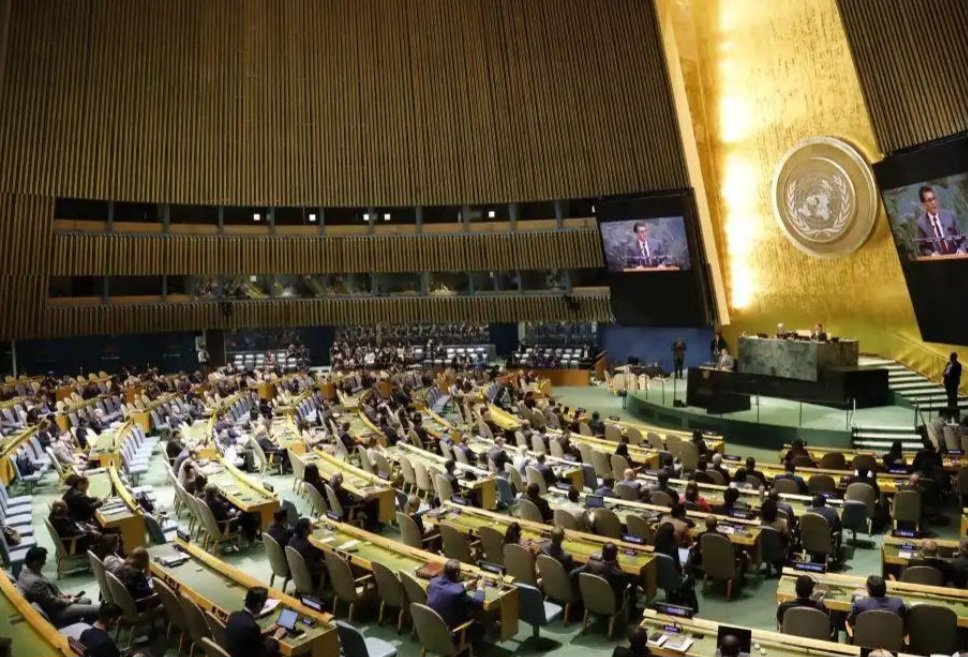
The 81st session of the UN General Assembly (UNGA) was declared open by Khalilur Rahman, the new president of the General Assembly, on Tuesday.
In his speech at the opening session at the UN headquarters in New York, Rahman said he is assuming his responsibility at a consequential moment for the United Nations.
As the world body enters its ninth decade, many achievements deserve recognition, he said, noting that, at the same time, the world body faces grave challenges.
The United Nations has often fallen short of the expectations placed on it. Conflicts continue to inflict immense human suffering. Development gains remain feeble and fragile. Climate impacts are intensifying, he said.
“Together, these challenges have brought trust in multilateralism under tremendous strain. A widening trust deficit is testing confidence in international institutions and collective action — a deficit that we must close by working together through dialogue, renewed cooperation and delivery,” said Rahman.
He said his main pledge for the 81st session is to work tirelessly to revive trust in this organization, upon which the success of member states’ collective action ultimately depends. This conviction is the spirit behind the theme of this 81st session: “Restoring Trust, Managing Transformation: A United Nations that Delivers for All.”
Centering on the restoration of trust, the 81st UNGA session will focus its work around six priorities: to strengthen peace and security, accelerate sustainable development, step up climate action, advance human rights, help ensure that technological transformation serves people everywhere, and restore trust in multilateralism, he said.
“Delivering on these six priorities demands that we remain true to the values of our charter while adapting our institution to a world profoundly different from that of 1945. And if the United Nations is to remain indispensable in an ever-changing world, it must also remain fit for purpose — and fit for the future,” he said.
UN Secretary-General Antonio Guterres, in his remarks, said the global problem-solving system is more crucial than ever in these tumultuous times.
“We face conflicts, divisions and a risk of nuclear escalation; persistent poverty and inequality; worsening climate chaos; technology like artificial intelligence that offers great promise but also great peril without good governance and transparency around its environmental footprint; and sluggish progress on the Sustainable Development Goals,” he said.
Displacement is near record levels. Human suffering is intensifying while funding for aid and development is being slashed. The institutions of the multilateral system, from the UN Security Council to the international financial architecture, are straining to meet the moment. International law and human rights, the core of the United Nations, are too often flouted with impunity. And geopolitical mistrust and suspicion continue to block the effective solutions that are needed, and erode people’s faith in the possibilities of global cooperation, he added.
Guterres expressed the hope that under Rahman’s leadership, the UNGA, through diplomacy, dialogue and collaboration, can rebuild the trust and good faith that are missing from today’s geopolitics, and ensure the people of the world inherit a better, healthier and more peaceful future.
“Our direction is clear. The Pact for the Future and the UN80 Initiative represent a blueprint for action, solutions and bold reforms to carry our organization into the future. The work of this assembly is critical to bringing these commitments to life,” said Guterres. “As we embark on the 81st General Assembly, let’s meet the moment. Let’s live up to the great promise of this organization, and through solidarity deliver the solutions our world needs.” (Xinhua/GSF)

Comments