

A Commentary by Lawal Sale
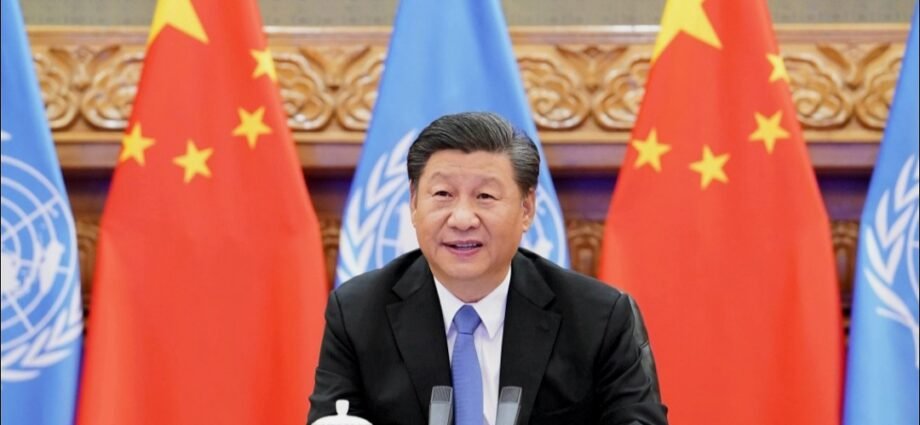
At a time the world is facing unprecedented turbulence and uncertainties through growing suppression, protectionism and conflicts, Chinese President Xi Jinping, in his wisdom, put forward a solution to moderating global uncertainties in 2021 by launching the Global Development Initiative (GDI) during the 76th Session of the United Nations General Assembly.
The GDI is a public good offered to the world by China with the aim of advancing global development and fulfilling the United Nations Agenda 2030 for Sustainable Development.
As noted by President Xi, “development holds the master key to all challenges.” Prior to the launching of the GDI, President Xi introduced a new vision to the world, while on official visit to Russia in 2013, and the vision was aimed at “building global community with a shared future for mankind”.
Global South experts are of the view that President Xi’s concept of a community with a shared future for mankind will evolve into a truly pragmatic foreign policy approach for shared future.
Therefore, the launching of GDI in 2021 aptly aligned with President Xi’s thought and principles, which advocate and emphasize inclusive and sustainable development, mutual respect and win-win cooperation that are strikingly different from those ideologies that encourage geopolitical rivalry and seek unilateral gains.
As GDI marks its five years of existence, the initiative has since evolved from a Chinese proposal into a major global public programme; drawing wide participation from the international community while delivering practical benefits to humanity.
Various international relations experts have noted that China remains committed to the growth and development of the Global South, while steadily advancing the implementation of GDI in cooperation with like-minded countries.
At the recent High-Level Meeting with relevant parties to mark the 5th anniversary of GDI in Beijing, Chinese Foreign Affairs Minister Wang Yi reaffirmed China’s commitment to advancing global development, while exploring novel ways of speeding up the transition to sustainable development for shared future.
The minister declared that for “the sake of our shared future, we should continue to underscore the imperative of development and align the GDI with the UN development agenda.”
Yi also reviewed the fruitful outcomes of the GDI, stressing that the initiative had, in the last five years, strengthened its role in driving global development and improved cooperation mechanisms across various fields, while delivering a steady stream of practical cooperation outcomes.
CHINA’S SIGNIFICANT OUTCOMES UNDER THE GDI
In five years of the existence of the GDI, China, through the programme, has mobilized over $23 billion; supporting the implementation of more than 1,800 small cooperation projects and providing training for over 200,000 people in different skills.
Similarly, China, through the Global Development and South-South Cooperation Fund, has worked with more than 20 international organizations to implement over 100 trilateral projects in more than 50 countries. Also, the Group of Friends of the GDI, established in 2022, now comprises more than 80 countries.
Observers have noted that from technological cooperation to capacity building, from poverty reduction and education to digital economy, from high-yield rice to fungus-based processing, and from child nutrition and health to women’s economic empowerment, GDI cooperation has delivered tangible benefits and strengthened local development capabilities.
In a nutshell, the GDI has, in the last five years, increasingly garnered public approval as a meaningful scheme designed to bring development back to the centre of global governance, at a time when the world is glaringly facing growing uncertainties. China’s approach under the GDI is, however, different from the traditional international cooperation model, which is largely driven by unilateralism.
In the meantime, more countries and international organizations have been expressing support for the GDI, as more than 88 countries have joined the Group of Friends of the GDI, with about 30 cooperation mechanisms and platforms being established.
Besides, from the Juncao programme that contributes to global poverty reduction efforts, to the Sustainable Development Science Satellite 1 (SDGSAT-1) that enables synchronized data sharing, and to the MAZU platform that helps Global South countries with meteorological warning and disaster prevention and mitigation strategies, the GDI has brought tangible benefits to the ordinary people in more than 120 countries.
At the High-Level Meeting, Minister Yi further emphasized that the world was going through a period of turbulence while the implementation of 2030 Agenda for Sustainable Development had experienced delays; just as the North-South gap kept widening, thereby making the global development strategies to face perceptible challenges.
Yi underlined the need to sustain the promotion of human development that aligned the GDI with the development agenda, particularly in the four preconditions that were put forward and highlighted at the High-Level Meeting.
The first is to enhance solidarity and mutual cooperation to foster a peaceful environment for a shared future where the international system is central to the UN and international order. According to Yi, China is committed to promoting the reform of the UN that will advance the interests of developing countries.
The second precondition is that there should be a combined effort to accelerate progress towards achieving the UN 2030 Sustainable Development Goals (SDGs) via the mobilisation of appreciable resources for global development. China has pledged to promote the fulfillment of this condition with the provision of requisite finance and technology, in cooperation with developing countries in order to undertake extensive bilateral, multilateral and trilateral cooperation; with the aim of tackling uneven and inadequate development for the shared future for mankind.
The third is to stipulate that openness and mutual learning should be the engine for boosting innovation for development that will enable openness and cooperation; all in a strong push to eliminate the digital and Artificial Intelligence (AI) divides between the North and South.
It is pertinent to note that recently in Shanghai, China, along with 28 other countries formed the World Artificial Intelligence Cooperation Organization (WAICO). This, according to Minister Yi, is a major breakthrough in China’s efforts to accede to the growing calls of the Global South to promote the development of AI in governance.
The fourth precondition is aimed at boosting the practice of multilateralism to help improve the global governance system, deepen the reform of global economic and financial architecture, while promoting cooperation and deepening financing commitment, as the UN gets ready to craft the post-2030 Development Agenda in September 2027.
The Chinese foreign affairs minister Yi underscored the need to make policy preparations, while communicating and coordinating the emerging policies extensively with one another, in order to fashion out a new development agenda that would appropriately reflect the needs of the Global South.
GAINS OFFERED BY GDI TO THE WORLD
Perceptive observers have noted that in the last five years; the GDI has made some remarkable progress, particularly in its transition from a concept to a worthwhile project, which is anchored on pragmatic development frameworks such as Belt and Road Initiative, the South-South cooperation Fund, New Development Bank, the Asia Infrastructure Bank for the empowerment and development of related countries.
They also viewed China’s 15th Five-Year Plan as a veritable opportunity for the countries to partake in the development dividends brought about by Chinese modernization and jointly explore the new avenue for global development.
Other gains, as noted by the experts, include poverty reduction through the provision of access to agricultural technology, training and rural development framework, inclusion in digital connectivity, e-commerce and Artificial Intelligence; all aimed at enhancing development in the Global South.
The GDI has also offered a roadmap for bridging the North-South divide, addressing development imbalances and accelerating the implementation of the UN 2030 Agenda for Sustainable Development.
GDI AND OPPORTUNITIES FOR AFRICA
As a people-centred framework, the GDI is the essential model for development and modernization for Nigeria and other African countries, as well as the countries of the Global South.
Under the Forum on China-Africa Cooperation (FOCAC) mechanisms, China, through mutual cooperation, has continued to partner and support African countries in efforts to overcome their myriad challenges, particularly at a time when the world is facing uncertainties and turbulence. The relationship between China and African countries offers an alternative platform for dialogue, pluralism and development-first cooperation.
Strictly speaking, Africa adheres to the conditions of China’s GDI and the advancement of both the UN 2030 Agenda and African Union’s Agenda 2063. The Beijing FOCAC Summit in September 2024 presented a valuable practical cooperation platform for the two sides.
Since its launch in 2021, the GDI, along with the 53 member countries of the AU and the FOCAC framework have remained resolute and solid in efforts to consistently produce fruitful results in the areas of infrastructure development, industrialization, green energy development, financing and agriculture under FOCAC and Belt and Road Initiative (BRI) cooperation mechanisms.
Pledging support for the fulfilment of the African Union’s Agenda 2063, President Xi, in a message to the African leaders at the 39th African Union Summit in Addis Ababa, Ethiopia, in February this year, announced a major expansion of China’s zero-tariff policy for the 53 African countries that have diplomatic ties with China.
Economic experts believe that the zero-tariff policy gesture offered by China would significantly spur the development and transformation of industrialization, trade and economic growth for African countries, while creating incentives for domestic industries with a potential to compete with Chinese industries in the Chinese market.
All in all, the experts have noted that China has been Africa’s largest trading partner for 18 consecutive years, with a trade volume exceeding $350 billion as at the beginning of 2026.
GDI AS CATALYST FOR DEEPENING NIGERIA-CHINA RELATIONS
As an important member of the Global South, Nigeria stands to leverage and benefit from the GDI’s core developmental concepts. Already, Nigeria and China are yielding the fruit of the more than 55 years of diplomatic relations.
Overtime, cooperation between the two countries have transformed into “Comprehensive Strategic Partnership”, elevating bilateral relations across diverse and strategic sectors. In addition to being part of GDI framework, Nigeria is also a strong member of Chinese development mechanisms such as Belt and Road Initiative and Forum on China-Africa Cooperation. It is pertinent to note that like the GDI, both BRI and FOCAC mechanisms promote inclusive development, collaboration, consultation and practical South-South cooperation in an increasing volatile and unpredictable environment.
Experts observed that the positive and practical outcome of these initiatives in Nigeria in areas of infrastructure development, financing, education, agriculture, industrialisation, telecommunications, science and technology, climate change and people-to-people exchanges are massive and impressive.
Presently, Nigeria is China’s largest engineering contracting partner in Africa, the second largest export destination, the largest trading partner and a major investment hub on African continent.
Going forward, Nigeria is proud to align with the GDI and other other Chinese development initiatives for shared prosperity. It is worth to note that over the decades the two countries recorded remarkable achievements in trading, infrastructure development and financing.
As I end this commentary, let me also highlight qoute from Minister Yi’s closing speech at the High-Level Meeting in Beijing. He said and I qoute: “Ancient philosophy teaches that those pursuing the Great Way are never alone and the whole world is one family. A thriving world lifts China, and a prosperous China empowers the world”.
— Sale is Abuja based Global South Affairs Analyst based in Abuja (lawalmaida1@yahoo.com)