







By Davina Peter
China’s zero-tariff policy for African products has begun delivering significant trade gains, with China-Africa trade reaching a record $207 billion in the first half of 2026,
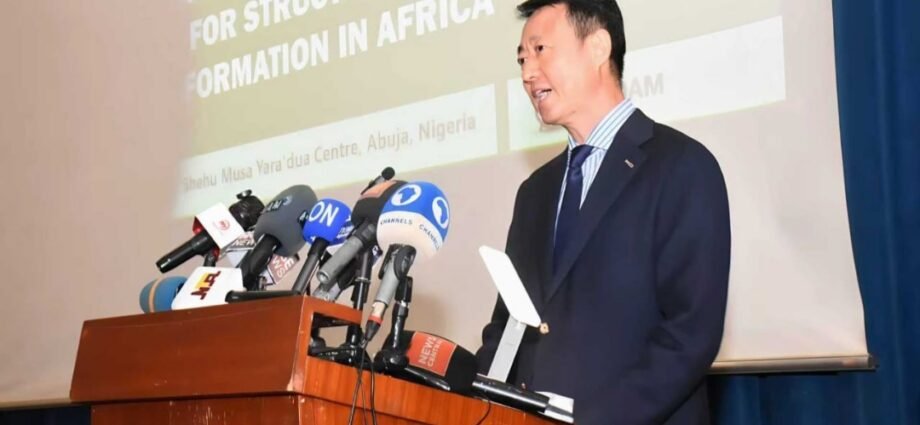
This was disclosed on Friday by the Chinese Ambassador to Nigeria, Yu Dunhai at the seminar on “China’s Zero-Tariff Measures and Africa’s Economic Structural Transformation” held in Abuja, where government officials, lawmakers, diplomats, exporters and economic experts examined how the policy could accelerate industrialisation and economic transformation across the continent.
According Ambassador Yu, Chinese imports from Africa reached $29 billion between May and June 2026, representing a 24 per cent year-on-year increase, while estimates indicated that the zero-tariff measure had increased overall African exports to China by about six per cent.

He said Nigeria had recorded particularly strong growth since the policy took effect on May 1, following an announcement by President Xi Jinping on February 14 on zero-tariff treatment to all 53 African countries that have diplomatic relations with China.
Yu noted that bilateral trade between Nigeria and China reached $18 billion in the first half of 2026, representing a 35 per cent year-on-year increase, while Chinese imports from Nigeria rose by 80 per cent to $2.3 billion.
He added that monthly growth in Nigerian exports to China exceeded 40 per cent in both May and June.
He said the figures demonstrated that the zero-tariff policy was already producing tangible benefits for African economies few months after its implementation.
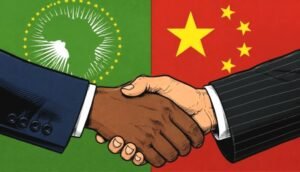
He described the initiative as a strategic milestone in building a high-level China-Africa community with a shared future and advancing the continent’s economic modernisation.
According to him, the policy is particularly significant at a time when geopolitical tensions, protectionism and disruptions to global supply chains are putting pressure on developing economies.
“African economies have long faced structural disadvantages—delayed industrialisation, incomplete manufacturing systems, and infrastructure bottlenecks—leaving many caught in a cycle of resource abundance alongside economic lag,” he said.
The ambassador said Africa needed stable and open access to international markets to support long-term economic recovery and structural transformation.
He explained that the zero-tariff initiative was designed not merely to increase the volume of African exports to China but also to help African countries move away from dependence on unprocessed commodities.
According to him, the measure, combined with China’s “Green Channel 2.0” for agricultural products, would lower export costs, address market-access challenges and enable more African products to reach China’s 1.4 billion-consumer market.
Yu described Nigeria as a cornerstone of China’s engagement with Africa, citing the country’s population, economic size and strategic importance.
He said the immediate benefits of the zero-tariff policy in Nigeria were already visible in reduced trading costs, increased export volumes and growing investment in local processing.
According to him, every 100 tonnes of sesame exported to China could save Nigerian exporters approximately $11,000, while Nigeria’s annual export of 7,000 tonnes of cattle bone granules could generate nearly $450,000 in savings.
Ambassador Yu also disclosed that a single shipment of 23,000 tonnes of Nigerian liquefied propane generated about $300,000 in tax savings on the first day of the policy.
He said the policy was also helping to increase the volume of Nigerian specialty products entering China, with zero-tariff shipments being cleared at Chinese ports on a daily basis.
In his remarks, the Permanent Secretary, Ministry of Foreign Affairs, Ambassador Dunoma Umar Ahmed, representing the Minister of Foreign Affairs, said Nigeria must fundamentally change its approach to exports if it is to maximise the Chinese market opportunity.
Ahmed said the zero-tariff policy should not be treated simply as a trade concession but as an opportunity to deepen industrial cooperation, technology transfer, skills development and investment.
He called for a shift from exporting raw commodities to exporting value-added products.
“Crude oil should support petrochemical and downstream industries; agricultural commodities should feed agro-processing and manufacturing; solid minerals should stimulate mineral processing and industrial production; and our abundant human capital should be integrated into technology, innovation, and knowledge-based industries,” he said.
He urged Chinese investors operating in Nigeria to establish factories, processing plants, technology centres and logistics networks that would source locally, employ Nigerians, develop domestic suppliers and transfer technology.
“Nigeria is open for business, but increasingly, we seek investment that does more than extract. We seek investment that builds,” he said.
According to him, Nigeria’s large consumer market, entrepreneurial population, natural resources and strategic location gave it the potential to become a major manufacturing hub serving both the domestic and African markets.
He noted that the African Continental Free Trade Area had further strengthened Nigeria’s position as a production base by giving manufacturers access to markets across the continent.
On his part, the Minister of State for Agriculture and Food Security, Senator Aliyu Sabi Abdullahi, described China’s zero-tariff initiative as a “defining moment” for Africa and a major opportunity for Nigeria to diversify its export base.
He said Nigeria should move beyond asking whether it could export more and instead focus on whether it could export better.
“Can we export processed cassava derivatives instead of primary commodities? Can we export premium Nigerian rice, spices, shea products, hibiscus, cashew blends, cashew kernels, soybean products, fruit and vegetables that meet international quality standards?” he asked.
Abdullahi said Nigeria had for decades exported raw agricultural commodities while importing finished products at higher prices, a pattern that had limited industrial growth and job creation.
He, however, warned that zero tariffs alone would not guarantee success.
“Opportunities alone does not create prosperity,” he said, identifying agricultural productivity, modern processing facilities, efficient logistics, quality assurance, traceability, financing, storage and export certification as essential requirements.
Abdullahi also stressed the need for Nigerian exporters to meet sanitary and phytosanitary standards required in the Chinese market.
The minister cited the Federal Government’s Special Agro-Processing Zones programme as part of efforts to build domestic processing capacity, noting that projects had been launched or were at advanced stages in Kaduna, Cross River, Ogun and Gombe, while all 36 states had subscribed to the programme.
He said the government was also pursuing agricultural mechanisation, including a programme involving 2,000 Belarusian tractors and equipment, to improve productivity.
The Director of the Centre for China Studies, Charles Onunaiju, said the zero-tariff initiative represented a major opportunity for Africa but warned that it should not be viewed as an automatic solution to the continent’s structural economic weaknesses.
“Zero-tariff treatment for products coming from Africa is only the starting point, it’s not the finish line,” he said.
Onunaiju identified weak productive capacity, non-tariff barriers, customs procedures, standards and logistics as major constraints that African countries must overcome.
He called for greater use of the African Continental Free Trade Area to aggregate production, harmonise standards and develop regional value chains capable of supplying the Chinese market consistently. (GSF)