
By Lawal Sale
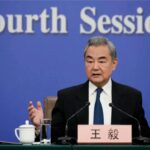
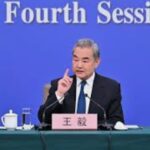
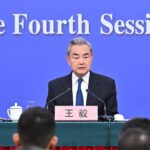
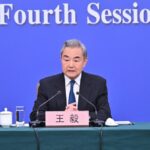
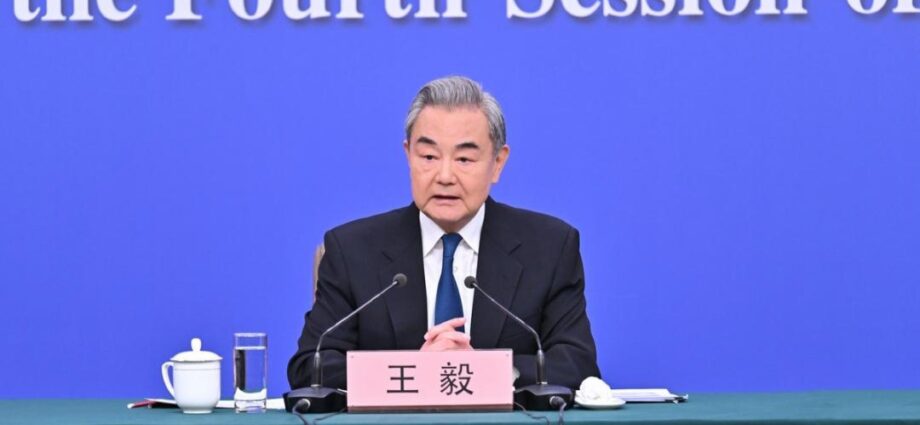
At a press conference on Sunday in Beijing, on the sidelines of the fourth session of the 14th National People’s Congress (NPC), Chinese Foreign Minister Wang Yi, who is also a member of the Political Bureau of the Communist Party of China addressed the press and answered questions from domestic and international media on a wide array of topics concerning China’s foreign policy and external relations.
At the briefing, Wang Yi provided a comprehensive overview of Beijing’s diplomatic posture as follows:
On Call for Global Governance and Strengthening UN Institutions:
Minister Wang opened the briefing by addressing global governance, calling on more nations to support the Global Governance Initiative.
He urged the international community to work together to “revitalize, defend, and strengthen the United Nations.” Warning against the fragmentation of international relations, he stated that creating parallel structures or exclusive blocs outside the UN is “unpopular and unsustainable,” emphasizing that without the UN, “the world would be worse off.”
Envisioning a broader future, Wang stressed that humanity’s common enemies are “poverty, war, hunger, and injustice.” He reiterated China’s commitment to building an “equal and orderly multipolar world” and pursuing a path of peaceful development.
On China-U.S Relations:
On relations with the United States, Wang acknowledged the significance of the year ahead, noting that the agenda for high-level interactions is already on the table.
He said there is need for thorough preparations to manage differences and remove unnecessary disruptions.
“Neither China nor the US can remodel the other, but we can choose how we want to engage,” Wang stated. He advocated for a spirit of mutual respect, a bottom line of peaceful coexistence, and the prospect of win-win cooperation.
On China-Russia Ties:
On relations with Russia, Wang emphasized the strong political mutual trust between the two nations, asserting that they do not fear external attempts to sow discord in their relations. He highlighted that both countries uphold strategic autonomy and respect each other’s core interests, adhering to the principle of “non-alliance, non-confrontation, and not targeting any third party.”
China-Europe Relations:
The Foreign Minister noted that ties with EU have been regaining strength, positioning China as a “global partner” rather than a competitor.
On Regional Conflicts:
The press conference addressed several ongoing conflicts and regional dynamics. Regarding the situation in the Middle East, Wang commented on the US-Iran conflict, describing it as “a war that should not have happened—a war that does no one any good.” He called for an immediate halt to military operations, insisting that “force provides no solution” and that the sovereignty of Iran and Gulf nations must be respected.
On the Palestine-Israel conflict, he reaffirmed that the two-state solution is the only viable path to resolving the Palestinian issues.
On the Taiwan Question:
In his address on Taiwan, Wang delivered a firm message, stating that Taiwan has been an integral part of China since ancient times. He identified the Democratic Progressive Party (DPP) in Taipei as the “root cause of disruption to peace and stability across the Taiwan Strait.”
On South China Sea:
Minister Wang advocated for a shift in narrative on issues concerning South ChinaSea, suggesting that “peace, cooperation and friendship” should define the region’s future.
On APEC, Leadership and Economic Diplomacy:
As the current host of the Asia-Pacific Economic Cooperation (APEC), Wang highlighted China’s role in shaping the regional agenda. He said the APEC Economic Leaders’ Meeting, set to take place in Shenzhen, Guangdong province, will focus on openness, innovation, and cooperation.
“China is committed to translating the goal of building an Asia-Pacific community into concrete action,” Wang said, expressing hope that the summit will serve as a new starting point for regional cooperation.
On Global South and Relations with Africa:
Wang praised the Global South as a crucial dynamic force that promotes multipolarity.
He underscored the durability of China-Africa ties, which defied external forces for 70 years. He also affirmed that Latin American and Caribbean nations reserve the right to choose who to relate with.
On People-to-People Exchanges and Consular Affairs:
Wang announced China’s efforts to improve visa services, vowing to “make the process more convenient and comfortable for foreigners to travel to China.”
He also addressed the protection of Chinese nationals overseas, assuring that diplomats are overcoming various challenges to fulfill their duties.
The Minister maintained that China is positioning itself as a stabilizer in a turbulent world, advocating for multipolarity and UN-centered governance while firmly defending its core interests regarding sovereignty and territorial integrity, particularly concerning Taiwan. (GSF)