


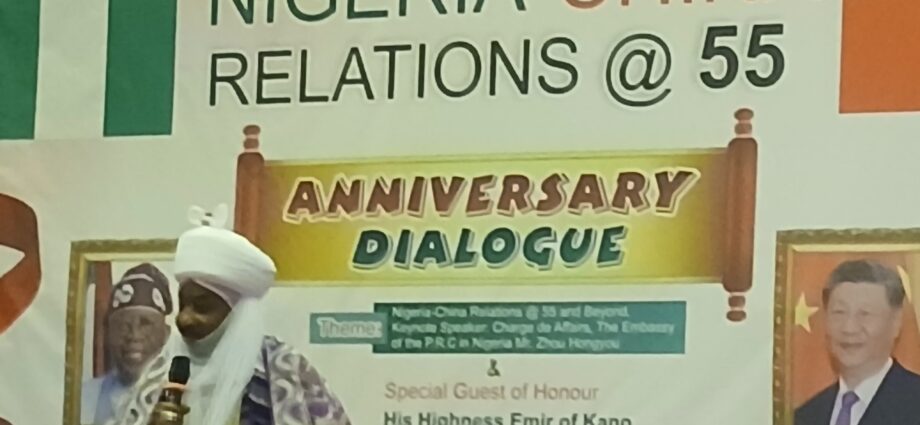
The Emir of Kano, Muhammadu Sanusi II, has urged Nigeria to adopt a more strategic approach in its economic engagement with China to accelerate industrialisation and boost domestic manufacturing capacity.
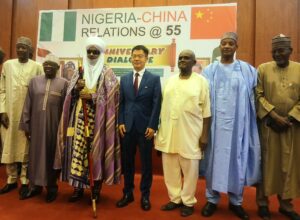
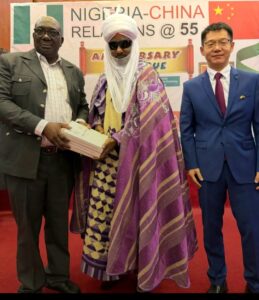
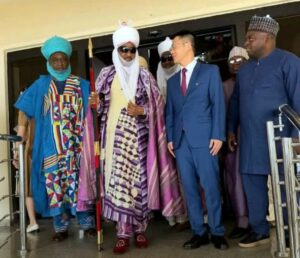
Sanusi made the call on Wednesday at the “Nigeria–China at 55 and Beyond” dialogue held in Abuja. The event was organised by the Centre for China Studies in collaboration with the Institute for Peace and Conflict Resolution (ICPR).
While acknowledging the value of Chinese-backed infrastructure projects in Nigeria, the Emir stressed that the country must avoid remaining primarily a consumer market for imported goods.
Citing a Chinese-owned mega leather factory on the outskirts of Addis Ababa, Ethiopia, which produces high-quality shoes for export, Sanusi said Nigeria risks missing out on similar opportunities if it fails to strategically leverage Chinese investment.
“If Nigeria refuses to leverage Chinese investment, neighbouring countries like Benin Republic and Ghana will manufacture goods and export them to Nigeria,” he warned.
Reflecting on China’s transformation from a largely poor country in the 1970s to a global economic powerhouse and the world’s second-largest economy, Sanusi described its rapid poverty alleviation — which lifted more than 700 million people out of poverty — as evidence of long-term strategic planning driven by foresight and industrial expansion.
Drawing from his experience as former Governor of the Central Bank of Nigeria (CBN), he noted that Nigeria was among the first African countries to include the Chinese renminbi (yuan) in its foreign reserves — a decision he said was based on anticipating China’s growing role in the global economy.
“What we need is production and industrial capacity,” Sanusi said, warning that Nigeria risks losing out if Chinese manufacturers relocating from mainland China establish factories in smaller West African countries that then export to the Nigerian market under the African Continental Free Trade Area (AfCFTA) framework.
The Emir described Nigeria–China relations as “unfinished business,” calling for deliberate policies and diplomatic strategies that prioritise value addition, technology transfer and job creation.
In his address, the Chargé d’Affaires of the Chinese Embassy in Nigeria, Zhou Hongyou, reaffirmed China’s commitment to deepening bilateral ties.
Speaking on behalf of the Chinese Ambassador, Zhou recalled that diplomatic relations between Nigeria and China were established on February 10, 1971, and have since evolved from a basic diplomatic partnership to a Comprehensive Strategic Partnership.
He noted that China has consistently supported Nigeria’s efforts to maintain national unity, peace and stability, while Nigeria has continued to uphold the One-China principle and support China on core global issues.
According to him, cooperation between both countries has expanded across trade, infrastructure development, energy, mining, health, education and green development.
Zhou highlighted major projects executed under the Belt and Road Initiative (BRI) and the Forum on China–Africa Cooperation (FOCAC), including the Lekki Deep Sea Port, the Zungeru Hydropower Station, the Ajaokuta–Kaduna–Kano (AKK) Gas Pipeline, and railway modernisation initiatives.
He added that bilateral trade between the two countries has grown significantly, reflecting the dynamism of the partnership.
The envoy outlined four priority areas for the next phase of engagement: strengthening strategic mutual trust; advancing high-quality Belt and Road cooperation aligned with Nigeria’s development agenda; enhancing coordination in multilateral institutions such as the United Nations and BRICS; and expanding people-to-people exchanges in education, youth and media.
Also speaking, Charles Onunaiju, Director of the Centre for China Studies, described the 55-year Nigeria–China relationship as one of the most stable and strategically significant partnerships in Africa.
Onunaiju said the anniversary provides an opportunity not only to celebrate milestones but also to assess how both countries can reposition their partnership in a rapidly changing global order.
He added that the elevation of ties to a Comprehensive Strategic Partnership in 2024 signals a new phase that requires deeper policy coordination, stronger institutional frameworks and clearer economic objectives. (GSF)