








A Response to Growing Narratives of Economic Breakdown
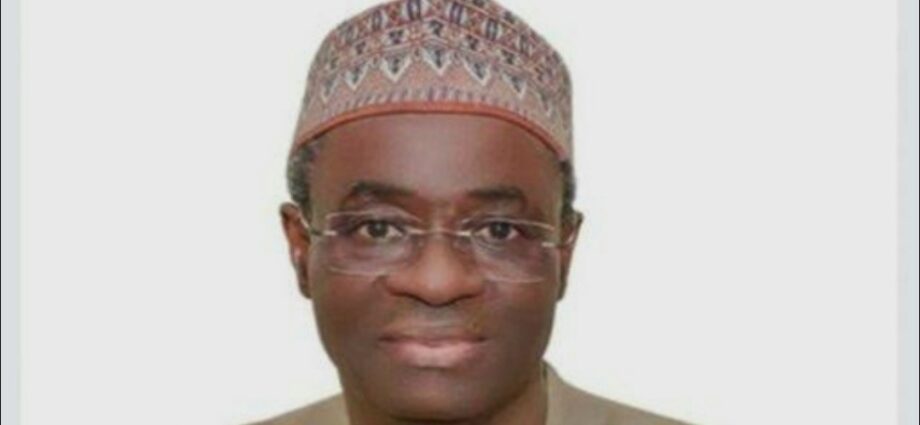
By Tanimu Yakubu
Nigeria is not collapsing. We are confronting reality.
What Nigerians are experiencing today is painful but necessary. Years of accumulated distortions are being unwound. Distress is real—but distress is not disintegration.
Collapsed states do not unify exchange rates. They do not rebuild reserves. They do not regain access to international capital markets. They do not reduce debt ratios. They do not expand fiscal revenues.
Nigeria, despite pressure, is doing all of these.
Why the Old System Had to End:
For years, Nigeria operated an economic system that appeared stable but was fundamentally unsustainable.
Artificially low fuel prices, multiple exchange rates, and fiscal accommodation created opportunities for arbitrage rather than productivity.
These distortions benefited a narrow segment while imposing hidden costs on the broader population.
The removal of these distortions has exposed the true cost structure of the economy.
This has produced inflationary pressures, but it has also restored transparency and credibility to economic policy.
A Stronger Fiscal Foundation Is Emerging:
Recent data shows that distributable revenues to the Federation Account have increased by over 40 percent following the removal of fuel subsidies, reflecting reduced leakages and improved remittance discipline (FAAC Communiqués, 2023–2025).
Nigeria’s public debt remains below 30 percent of GDP, which is moderate relative to peer emerging markets, according to the International Monetary Fund¹.
External reserves have strengthened, exceeding $40 billion, based on data from the Central Bank of Nigeria².
Across the federation, subnational governments are now better positioned to meet basic obligations.
Salary payments have become more regular, with some states implementing inflation adjustments, reflecting improved fiscal space.
Inflation: Painful, But Not Permanent:
Inflation remains the most visible consequence of reform. It is driven by exchange rate adjustment, energy price correction, and long-standing supply constraints.
International experience shows that such inflationary spikes are often transitional when reforms are sustained.
The critical risk lies not in reform itself, but in abandoning reform midway.
We Must Not Misread This Moment:
Public frustration is understandable. Nigerians expect tangible improvements in living conditions. However, hardship should not be mistaken for systemic collapse.
Nigeria’s institutions remain intact, fiscal capacity is improving, and macroeconomic reforms are underway.
The current phase is one of adjustment—not disintegration.
The Next Step:
Delivering for Nigerians
The next phase of reform must translate macroeconomic gains into improved welfare.
Investments in health, education, and targeted social protection will be critical.
The credibility of reform will ultimately depend on whether it delivers visible and sustained improvements in the lives of ordinary Nigerians.
Conclusion: Stay the Course
Nigeria has long understood its economic challenges.
What has often been missing is consistency in implementation.
The greatest risk now is not reform—it is retreat. Reversing course would undermine credibility, deter investment, and restore the distortions that have held the economy back.
This moment demands patience and resolve. Nigeria is not collapsing. Nigeria is correcting—and rebuilding for the future.
References:
¹ International Monetary Fund (IMF), Nigeria Country Reports, 2024–2025.
² Central Bank of Nigeria (CBN), External Reserves Data, 2025.
–Yakubu is the Director-General, Budget Office of the Federation