


A Renaissance Narrative Against Nihilism, Revolutionary Rupture and the Mockery of a Wounded Country:
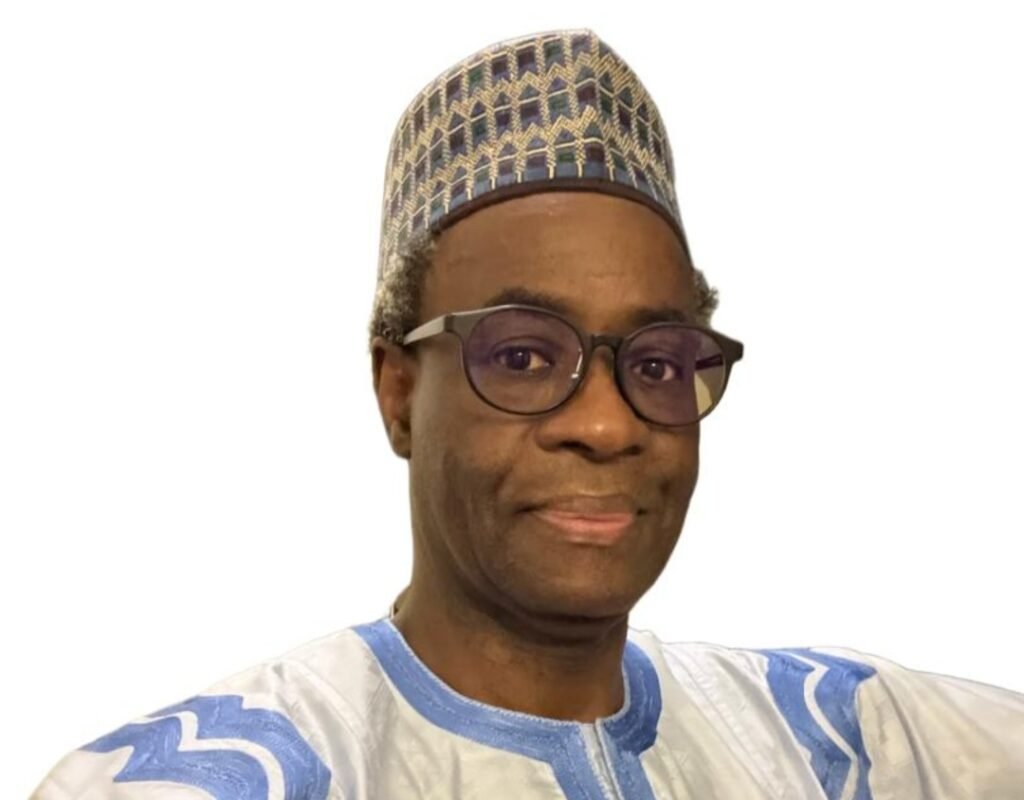
By Tanimu Yakubu
This paper is a deliberate rebuttal to the seductive thesis that Nigeria is merely a theatre of failure, a republic of gullible sheep, frightened animals, hungry lions and a few surviving tortoises. It does not deny pain. It does not ask the hungry to clap. It does not ask the bereaved to forget. It argues, rather, that despair is not analysis, contempt is not criticism, and revolutionary romanticism is not the same thing as national renewal.
Its proposition is simple: Nigeria is wounded, but not dead; strained, but not emptied of thought; betrayed many times, but not without builders; mocked often, but not without institutions, enterprises, reformers and citizens now refusing to accept shame as destiny.
1. The Point of Disagreement
I disagree.
Not because the wound is imaginary. Not because the lion has never eaten the sheep. Not because leadership has not failed, nor because the Nigerian citizen has not too often been abandoned in the harsh weather of power. I disagree because an allegory, however clever, can become a cage. I disagree because a nation cannot be rescued by contempt for its own people. I disagree because the easiest revolution is always the revolution of language: every citizen becomes a fool, every leader a demon, every institution a corpse, and every critic a solitary tortoise carrying the last flame of reason.
This is intellectually dramatic, but it is not sufficient. A national diagnosis must do more than wound the patient. It must locate the infection, trace the fever, distinguish dead tissue from living muscle, and identify the organs still capable of recovery.
The thesis that “nothing works and no one cares” is emotionally powerful, but analytically weak. It tells us where anger lives, but not where repair has begun. It tells us that the forest is dangerous, but not that some hands are already clearing paths, building shelters and planting again.
A country must not be flattered into blindness. But neither should it be beaten into permanent despair.
2. Against the Revolutionary Romance
I reject the revolutionary pathway, not because I worship the status quo, but because I have no appetite for the false poetry of fire. The poor are usually the first taxpayers of chaos. They pay in blood, hunger, flight, displacement, interrupted schooling, ruined livelihoods and destroyed neighbourhoods. The comfortable may theorise rupture from a distance; the vulnerable inherit its ashes.
No nation is renewed because it has become loud. No school is rebuilt by slogans. No hospital is equipped by fury. No refinery works because the crowd has found a new enemy. No currency is stabilised by incantation. Revolutions that do not mature into institutions soon become new cages with different lions.
Therefore, the responsible path is not destructive rupture. It is disciplined reconstruction. It is the harder, slower, less theatrical labour of law, data, fiscal correction, civic consequence, enterprise, institutional redesign and moral seriousness. It is not the burning of the forest. It is making the forest habitable for justice.
3. The Nigerian People Are Not an Olodo Multitude
The Nigerian people are not an “Olodo” multitude. They are a battered people, yes; a disappointed people, yes; sometimes manipulated, sometimes exhausted, sometimes cynical. But they are also a thinking people. Their tragedy is not that they cannot reason. Their tragedy is that too many structures have punished reason and rewarded shortcuts.
The Aba women of 1929 were not “olodos” when they stood against colonial arrogance and the violence of imposed taxation. The Iva Valley workers of 1949 were not “olodos” when they faced the lethal force of colonial labour exploitation. Kunle Adepeju was not an “olodo” when student grievance and state violence turned a university protest into a national memory.
Murtala Mohammed was not an “olodo” when urgency, discipline and national purpose returned briefly to the grammar of public power. The Yar’aduas were not “olodos” when restraint, courage, transition, due process and democratic sacrifice entered the national story. The unnamed citizens who laboured, marched, wrote, taught, organised, governed, resisted and died were not fools. They were witnesses that thought can wear the body of courage.
A people who have produced martyrs, builders, reformers, technologists, public servants, artists, soldiers, scholars, traders, farmers and restless founders cannot be reduced to an insult. The real question is not whether Nigerians can think. The question is whether institutions can be made to reward thinking, whether leadership can be made to respect consequence, and whether citizenship can be made more powerful than ethnic fear, religious panic and stomach calculation.
4. The Proof of Movement: Statistics That Refuse the Corpse Theory
The evidence of renewal must begin with humility. Statistics do not feed a family by themselves. They do not silence a gun. They do not instantly reopen a factory or heal a hospital ward. But statistics matter because they separate national analysis from national mood. A country that is truly dead does not show measurable movement in output, reserves, capital flows, rating confidence and institutional reform.
Nigeria’s real GDP grew by 3.89 percent year-on-year in the first quarter of 2026, higher than the 3.13 percent recorded in the first quarter of 2025. Manufacturing grew by 3.29 percent year-on-year, while the non-oil sector contributed 96.08 percent of real GDP in the same quarter. This does not announce paradise; it disproves paralysis. It says that beneath the loudness of despair, millions of Nigerians are still producing, trading, transporting, coding, farming, lending, teaching, healing and creating value. [1]
Capital has also begun to listen again, even if cautiously. In the first quarter of 2026, total capital importation stood at US$10.371 billion, an 83.83 percent rise from the corresponding quarter of 2025. The serious analyst must immediately add the caveat: portfolio investment dominated the inflows, while foreign direct investment remained modest. Yet the caveat does not cancel the signal. Confidence often returns first through the liquid channels before it deepens into factories, jobs, exports and durable industrial investment. [2]
External buffers have also strengthened. The Central Bank reported a major rebuilding of reserves, with net foreign-exchange reserves rising to US$34.8 billion by the end of 2025 and gross reserves reported above US$50 billion in 2026. This is not a small matter for a country emerging from foreign-exchange volatility. It is the rebuilding of a national shield. [3]
The international credit conversation has also shifted. On 15 May 2026, S&P Global Ratings raised Nigeria’s long-term sovereign ratings to “B” from “B-” with a stable outlook. A rating upgrade is not a hymn. It is not a guarantee. But it is a market signal that reforms, however painful, are being noticed. [4]
The fiscal architecture is likewise changing. The four tax reform laws signed in June 2025 — the Nigeria Tax Act, the Nigeria Tax Administration Act, the Nigeria Revenue Service Act and the Joint Revenue Board Act — seek to simplify tax law, modernise administration, improve compliance and reorganise the revenue state. The transition guidelines issued for the 2025 Tax Acts further show that the reform is not merely rhetorical; it is being operationalised. [5]
In oil and gas, where public revenue has long leaked through opaque deductions and fragmented accountability, the 2026 directive on direct remittance of oil and gas revenues to the Federation Account represents a major attempt to recover the fiscal bloodstream of the republic. If implemented with discipline, it can help return public resources from the shadows into the budgetary daylight.
5. Naming the Institutions of the New National Grammar
But statistics alone do not rebuild a wounded national imagination. A number may prove movement, but a name gives movement flesh. A percentage may show recovery, but an institution shows intention. A balance-of-payments improvement may calm the market, but a new generation of institutions tells citizens that the state is trying, however imperfectly, to relearn seriousness.
There is now an institutional Nigeria trying to reassemble the broken machinery of public purpose: the Nigeria Revenue Service and the Joint Revenue Board emerging from the new tax reform architecture; the Nigeria Data Protection Commission guarding the rights, privacy and dignity of citizens in the digital age; the 3 Million Technical Talent programme building a pipeline of technical skills; the Nigeria Startup Portal giving statutory visibility to founders, investors, accelerators, incubators and innovation hubs; NELFUND attempting to make higher education finance less impossible for students; CREDICORP seeking to democratise responsible consumer credit for working Nigerians; and the Presidential CNG Initiative forcing a gas-rich country to begin using its own gas to move its own people. [7]
These institutions are not perfect. None should be romanticised. Some will stumble. Some will need correction. Some will require vigilance against capture. But their very existence matters.
They represent a movement from complaint to architecture, from policy slogans to administrative vehicles, from frustration to design.
There is also the regulatory Nigeria that is no longer content to watch national value escape through broken pipes and careless rules. The Nigerian Upstream Petroleum Regulatory Commission and the Nigerian Midstream and Downstream Petroleum Regulatory Authority, created under the Petroleum Industry Act, are part of the attempt to impose commercial discipline, regulatory clarity and public accountability across the upstream, midstream and downstream value chain. [8]
6. The Contrarian Flag-Bearers: Fintech and the Digital Economy
Then there is the fintech Nigeria that refused to wait for perfect roads before building digital highways. Moniepoint, Flutterwave, Interswitch and Paystack did not ask the world for pity. They built payment rails, merchant tools, transaction engines, digital trust and financial inclusion infrastructure.
Moniepoint crossed the billion-dollar valuation mark after a US$110 million investment round backed by investors including Google, and Reuters reported that it was processing over 800 million transactions monthly, with transaction value above US$17 billion.
Flutterwave reached a valuation of more than US$3 billion after raising US$250 million in 2022. Interswitch became one of Africa’s early fintech unicorns after Visa’s investment. Paystack, born in Lagos, was acquired by Stripe, announcing that Nigerian code could command global respect. [9]
There is the wider digital economy Nigeria too: MainOne, whose infrastructure became important enough for Equinix to acquire in a US$320 million transaction; Andela, which helped reframe African technical talent for global work; uLesson and Miva, insisting that education can be re-engineered through technology; AltSchool Africa, training young people for software engineering, data, product, cybersecurity and the skills of the new world. This is not an Olodo uprising. This is a generation refusing intellectual defeat. [10]
Here is the irony the cynic misses: some of the most globally legible evidence of Nigeria’s renewal has been written not in government speeches, but in code, compliance systems, payment APIs, merchant terminals, data centres, learning platforms and the sleepless discipline of young founders.
7. Indigenous Energy Ambition: Upstream, Midstream and Downstream
There is also the upstream Nigeria that is taking assets once controlled by international oil companies and placing them increasingly in Nigerian hands.
Oando’s acquisition of NAOC increased its participating interests in OMLs 60, 61, 62 and 63 from 20 percent to 40 percent. Seplat completed its acquisition of Mobil Producing Nigeria Unlimited from ExxonMobil. Shell completed the sale of SPDC to Renaissance, a consortium with strong Nigerian participation. Aradel, FIRST E&P, Waltersmith, Heirs Energies and other indigenous operators continue to demonstrate that Nigerian hands can hold serious strategic assets, not as spectators, but as operators. [11]
These companies are not saints and should not be treated as saints. The point is not moral perfection. The point is strategic agency. A country that cannot own, finance, operate, regulate and discipline its strategic assets will remain a warehouse for other people’s ambition. Indigenous energy operators are therefore part of the new national grammar: ownership must mature into operational excellence; operational excellence must mature into fiscal contribution; fiscal contribution must mature into public value.
In the downstream, Dangote Refinery has moved from aspiration to production. Reuters reported in June 2026 that the refinery processed more than 700,000 barrels per day during a performance test, above its 650,000 barrels-per-day nameplate capacity. Its meaning is not merely industrial. It is psychological. A country long mocked for importing what it produces is now compelled to imagine refining, petrochemicals, aviation fuel, diesel, petrol, exports, jobs, logistics and domestic value addition as a national possibility rather than a national joke. [12]
The midstream story is also emerging through gas, CNG conversion, logistics, processing, pipelines and regulatory reform. The Presidential CNG Initiative, with conversion centres, refuelling stations, trained technicians and vehicle conversions, is one practical sign that the gas economy can move from conference speeches to transport systems. [7]
8. The Restless
Entrepreneurs and the Incognito Patriots
The renaissance is not carried only by named companies. It is carried by restless entrepreneurs whose names may never enter newspapers: the woman using a point-of-sale terminal to deepen financial access in a market town; the software engineer building for clients abroad from Lagos, Kaduna, Enugu, Kano, Ibadan or Abuja; the farmer organising out-growers in a difficult rural economy; the logistics operator turning chaos into delivery routes; the small manufacturer surviving power, interest-rate and exchange-rate pressures; the doctor building a diagnostic centre; the teacher preparing children for a world that has not yet respected them; the honest public servant pushing a reform note through a tired bureaucracy.
They are part of the Nigeria that refuses to be mocked. They are part of the Nigeria that refuses to be shamed. They do not answer insult with propaganda. They answer it with work. Their patriotism is often invisible because it has no anthem. It has invoices, lesson notes, code repositories, hospital files, farm records, compliance memos, factory shifts and sleepless nights.
9. What This Argument Does Not Deny
This argument denies nothing that must be confronted. It does not deny hunger. It does not deny insecurity. It does not deny the anger of citizens who feel abandoned. It does not deny corruption, poor service delivery, unemployment, underemployment, inadequate schools, distressed hospitals, unreliable power, decaying infrastructure or the moral obscenity of public waste. A renaissance narrative that becomes propaganda is already dead.
But truth has two enemies. The first is false praise. The second is total despair. False praise says all is well when citizens are suffering. Total despair says nothing is changing when evidence shows movement. The duty of serious citizenship is to reject both.
We must criticise without becoming undertakers. We must recognise progress without becoming praise-singers. We must oppose failure without wishing for national collapse merely to prove a point. We must demand accountability without insulting the people we claim to defend.
10. The Tortoise We Need
The tortoise remains necessary, but not as a lonely genius mocking the forest. We need the tortoise in every ministry, every classroom, every newsroom, every court, every mosque, every church, every market, every polling unit and every family table. We need citizens who ask: What is the evidence? Who benefits? Who pays? What is the consequence? What does the law say? What does the budget provide? What did you promise? What have you delivered? What must change?
Critical thinking must not become a costume for contempt. It must become a civic discipline. The teacher must teach children to question, not merely cram.
The journalist must investigate, not decorate. The regulator must regulate, not negotiate surrender. The judge must interpret law, not status. The public servant must serve the republic, not the appetite of office. The voter must examine character before currency. The entrepreneur must build value, not merely arbitrage dysfunction.
The lion must not be appeased. The sheep must not be abandoned. The tortoise must not be lonely. The forest must become a republic.
11. Conclusion: May Nigeria Win
Through Renewal
Nigeria will not be saved by despair. Nigeria will not be saved by abuse. Nigeria will not be saved by revolutionary theatre. Nigeria will be saved by disciplined patriots, institutional reformers, honest workers, courageous citizens, competent leaders, watchful journalists, principled judges, productive entrepreneurs, serious teachers and young people who refuse to inherit cynicism as destiny.
Let us therefore reject the politics of hopelessness. Let us reject the insult that turns the citizen into an “olodo” and the critic into a prophet. Let us reject the romance of fire.
Nigeria has fallen before, but it has also risen before. It has buried martyrs and produced builders. It has wasted opportunities and created miracles out of scarcity. It has disappointed its children, but its children have not exhausted their capacity to redeem it.
May Nigeria win — not through rupture, but through renewal.
May Nigeria win — not by burning down the forest, but by making the forest safe for justice.
May Nigeria win — not by surrendering to lions, but by building a republic where no lion is above the law, no sheep is without protection, and no tortoise has to trick power into telling the truth.
— Yakubu is the Director-General, Budget Office of the Federation
Comments