


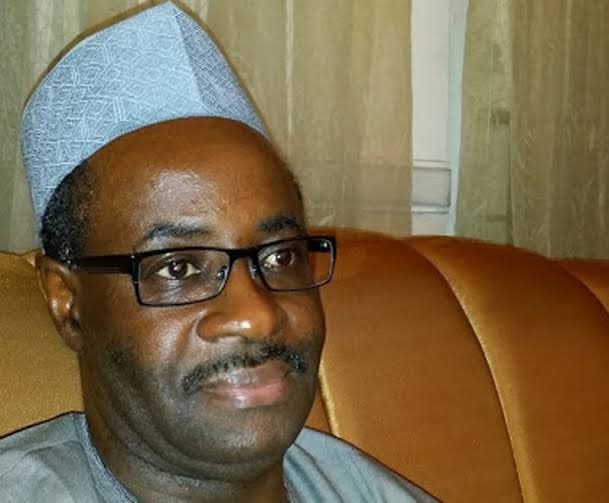
By Tanimu Yakubu
If Nigeria’s manifest destiny is grounded in history, demography, and political economy, then its realization must necessarily pass through a moment of rupture—a decisive break from the inertia of the past. That moment, however contested, is now.
The bold policy actions of the current administration under President Bola Ahmed Tinubu must be situated within this larger ideological and historical frame. These are not isolated technocratic adjustments; they are structural interventions aimed at resetting the foundations of the Nigerian state in line with the imperatives articulated by Garvey, Fanon, Magubane, Biko, and Rodney.
The removal of fuel subsidies, long sustained as a political palliative despite its corrosive fiscal implications, represents a classic Fanonian rupture—a dismantling of a postcolonial economic distortion that enriched intermediaries while impoverishing the state. It is a painful but necessary correction, one that reclaims fiscal space for productive investment. Similarly, the unification of the foreign exchange regime is not merely a monetary policy adjustment; it is an attempt to reintegrate Nigeria into the global political economy on more transparent and competitive terms, breaking with decades of arbitrage and rent-seeking.
These actions reflect an understanding—implicit or explicit—that Nigeria cannot fulfill its manifest destiny while trapped in a cycle of subsidy-driven consumption and currency fragmentation. They align with Walter Rodney’s insistence that underdevelopment is not a natural condition but a structural outcome that must be consciously reversed. By confronting these distortions, the administration is, in effect, attempting to rewire the Nigerian economy from extraction to production.
Yet policy, no matter how bold, is insufficient without a corresponding shift in consciousness. Here, the burden falls most heavily on Nigeria’s youth—the largest demographic bloc, and the most consequential. To them, one must speak not in platitudes, but in challenge.
The transformations underway demand a deeper, more nuanced understanding than the surface-level narratives that dominate public discourse. The instinct to resist hardship is human; but the refusal to interrogate the structural logic of reform is a luxury Nigeria can no longer afford. Steve Biko’s call for psychological liberation is instructive: the youth must move beyond reactive anger to critical engagement. They must study these policies, debate them rigorously, improve them where necessary, and ultimately own them as co-authors of Nigeria’s future.
This is not a call for blind allegiance. It is a call for informed participation—for a generation to rise as a vanguard, equipped not only with passion but with ideological clarity and historical awareness. Nigeria’s manifest destiny will not be delivered from above; it will be constructed through the interplay of state action and societal agency.
In this light, the discordant tunes of opposition—often amplified through the language of grievance and immediacy—must be carefully weighed. Dissent is essential to democracy; but not all dissent is equal. Much of what passes for opposition today is curiously detached from the deeper currents of political economy and history. It is reactive rather than reflective, emotive rather than analytical. It critiques the pain of reform without offering a coherent alternative to the structures that produced that pain.
To be clear: the challenge is not to silence opposition, but to elevate the quality of national conversation. Nigeria stands at a takeoff stage—a fragile, contested, but necessary phase in its journey toward economic sovereignty and global relevance. What this moment requires is not the paralysis of perpetual contestation, but the disciplined energy of collective purpose.
The youth, therefore, must become the custodians of this transition. They must lend it the momentum that only a conscious, organized, and ideologically grounded generation can provide. They must push beyond cynicism, beyond the easy allure of populist critique, and engage in the harder work of nation-building.
History has placed Nigeria at a crossroads. The path forward is difficult, but it is also clear. And the responsibility—to walk it, to shape it, to defend it—belongs to all, but especially to those who will inherit what is built.
For nations, like men, are not defined by the ease of their beginnings, but by the courage of their becoming. Nigeria is not merely a state; it is an unfinished idea—an argument with history, a negotiation with destiny.
Africa has always known that “no condition is permanent,” but it has also taught that permanence belongs only to those who build with vision and endure with purpose. The reforms unfolding today are not endpoints; they are foundations. They are the scaffolding upon which a new Nigerian economy—and a renewed Black civilization—may yet rise.
If Garvey gave us the dream, Fanon the warning, Biko the spirit, Magubane the analysis, and Rodney the history, then this generation must supply the execution.
For in the end, destiny is not something a nation inherits—it is something it earns.
And Nigeria must now earn its place—not just in Africa, but in the conscience of the world—as the flagship of Black humanity, forged in diversity, tested by reform, and destined for greatness.
–— Yakubu is an economist and Director-General, Budget Office of the Federation
Comments