
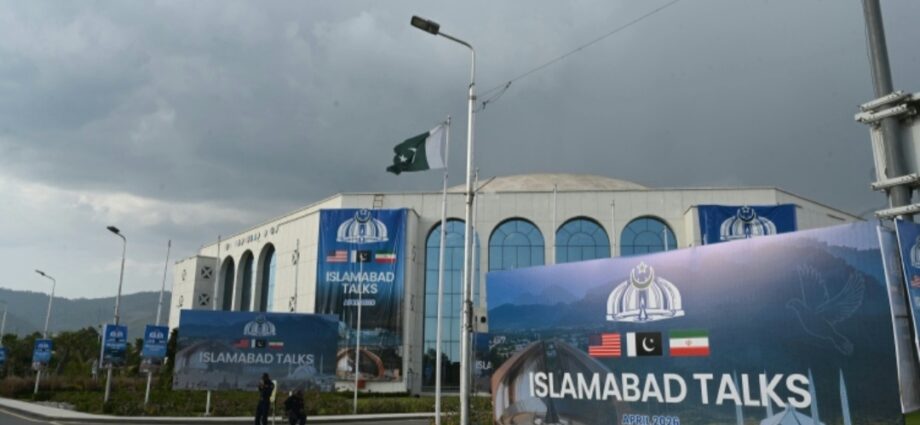
The U.S. and Iranian negotiators have begun their engagement in Pakistan’s capital city of Islamabad Saturday, with their messages conveyed to each other in various ways.
The talks started Saturday afternoon, according to media reports. Earlier, the two sides met separately with Pakistani Prime Minister Shehbaz Sharif, who continued to relay messages to both sides in efforts to reach a peaceful solution for the Middle East crisis.
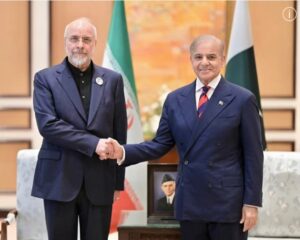
The Iranian negotiation team discussed the preconditions of the talks with Sharif ahead of their talks with U.S. counterparts, according to Pakistani sources.
Issues related to the Strait of Hormuz, the unfreezing of Iranian assets and accounts, payment for reconstruction, immediate stop of the attacks, including in Lebanon, and permission for civilian nuclear energy use are among the preconditions the Iranian side discussed, according to Pakistani sources.
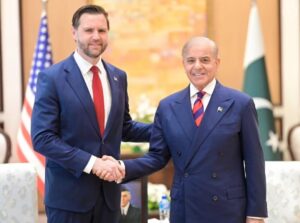
When meeting with U.S. Vice President JD Vance, Sharif commended the commitment of both delegations to engage constructively, and expressed the hope that these talks would serve as a stepping stone toward durable peace in the region.
Sharif reiterated that Pakistan looks forward to continuing its facilitation of both sides in making progress towards sustainable peace in the region.
Iranian Ambassador to Pakistan said in a social post that it remains to be seen whether the U.S. honors the mediation efforts of the host.
U.S. President Donald Trump said on Saturday that he did not care whether the talks with Iran in Islamabad would go well or not, as he threatened to continue military action, according to media reports.
In the backdrop of the important talks, security measures in Pakistan’s federal capital, Islamabad, remain tightened, with limited public entry to the venue.
The Jinnah Convention Center in Islamabad is buzzing with local and foreign journalists as they work around the clock to cover the historic U.S.-Iran peace talks.
A separate Pakistani source said that “the pace of the talks process is slower than expected, and it can go longer than expected.”
After the arrival of the dignitaries in Islamabad, Pakistan’s Deputy Prime Minister and Foreign Minister Mohammad Ishaq Dar expressed hope that all parties involved in the ongoing conflict would engage constructively to advance efforts toward a peaceful resolution.