
By Lawal Sale
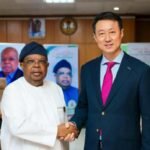
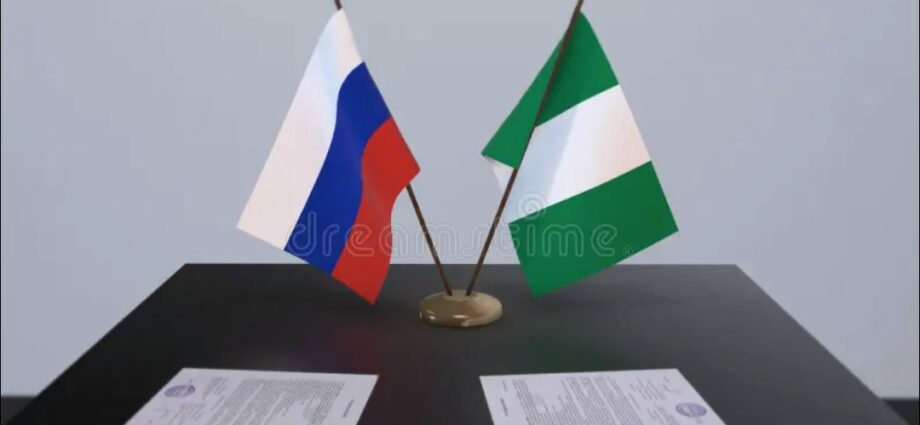
The Nigerian Institute of International Affairs (NIIA) and the Moscow State Institute of International Relations (MGIMO) have signed a Memorandum of Understanding (MoU) to enhance institutional cooperation, academic exchange and joint research.
The signing followed a joint forum organised by both institutes with the theme: “Nigeria and Russia in the Changing and Challenging World Order.”
MGIMO is an elite university under the Russian Ministry of Foreign Affairs.
According to Alexey Starikov, Attaché at the Russian Embassy in Nigeria, said both countries enjoyed longstanding goodwill without political contradictions, stressing the need to translate this into concrete projects.
He identified energy, including hydrocarbons and peaceful nuclear energy, agriculture, education and security as priority areas for cooperation.
He emphasised the importance of expanding academic exchanges, scholarships and joint research.
Starikov noted that the global system was undergoing profound structural changes, with the era of unipolarity giving way to a more complex multipolar arrangement.
He noted that emerging centres of power, particularly in the Global South, were playing an increasingly decisive role.
The Russian diplomat added that both Nigeria and Russia were not mere observers but active contributors to shaping a more balanced international system.
According to him, Russia views the transition as a long-term process that should be anchored on sovereign equality, non-interference in internal affairs and genuine multilateralism, with the United Nations at its core.
“Attempts to impose external models through political pressure, sanctions or selective interpretation of international law undermine global stability and trust.
“Russia does not see Africa as an arena for geopolitical competition, but as a partner in building a fair world order based on mutual respect and shared interests,” he said.
He disclosed that preparations were ongoing for a meeting of the Russia–Nigeria Intergovernmental Commission on Economic, Scientific and Technical Cooperation.
According to him, the event is scheduled for May in Kazan, Russia.
He expressed optimism that the platform would yield practical outcomes in key sectors such as infrastructure, agriculture and technology.
In her remarks, Maya Nikolskaya, Head of Africa Programme at MGIMO, said the emerging multipolar world often reflected fragmentation rather than balance, describing the current reality as a global disorder.
Nikolskaya referenced the concept of “antifragility,” popularised by Nassim Nicholas Taleb, noting that both countries could adopt such an approach in navigating global uncertainties.
According to her, the future of global competitiveness lies not only in natural resources but also in human capital, technology and data.
She emphasised the importance of education and capacity-building, noting that MGIMO had continued to offer scholarship programmes and specialised training for African professionals in areas such as science, technology, economics and governance.
“Economic cooperation between our countries is expanding across sectors including energy and infrastructure, with growing interest from investors on both sides.
“Sovereignty should not be equated with isolation but the ability of states to make independent choices while engaging globally on mutually beneficial terms,” she said.
The MGIMO representative also highlighted platforms such as BRICS as avenues for emerging economies to strengthen their voices in global governance, describing the grouping as a horizontal and inclusive framework.
In his presentation, Prof. Joshua Bolarinwa, Director of Research at NIIA, said that West Africa was experiencing a significant geopolitical shift, adding that Russia’s engagement in the region was a multifaceted phenomenon.
According to him, Moscow desires to challenge western dominance, secure strategic resources and expand its global influence.
“By forging partnerships with west African nations, Russia aims to expands its global reach and counterbalance the influence of traditional powers,” Bolarinwa said.
Meanwhile, Dr Adesuwa Erediauwa, Head of Bashir Adeniyi Centre for International Trade and Investment, NIIA, said that Nigeria–Russia relations had historically been shaped more by political and diplomatic engagements than by deep economic integration.
She noted that Nigeria’s imports from Russia annually stood at over $676 million while it exported only approximately $1.5 million worth of goods annually, revealing a stark trade imbalance.
Shs said that the imbalance was due to trade facilitation constraints, compliance risks and logistics challenges, among others.
Erediauwa called for more balanced trade with diversified exports, stressing that Russia’s role in the hybrid framework of cooperation was systematically important.