


By Lawal Sale
China and Pakistan have jointly proposed five key initiatives aimed at easing tensions and de-escalating the ongoing military conflict in the Gulf and broader Middle East region.
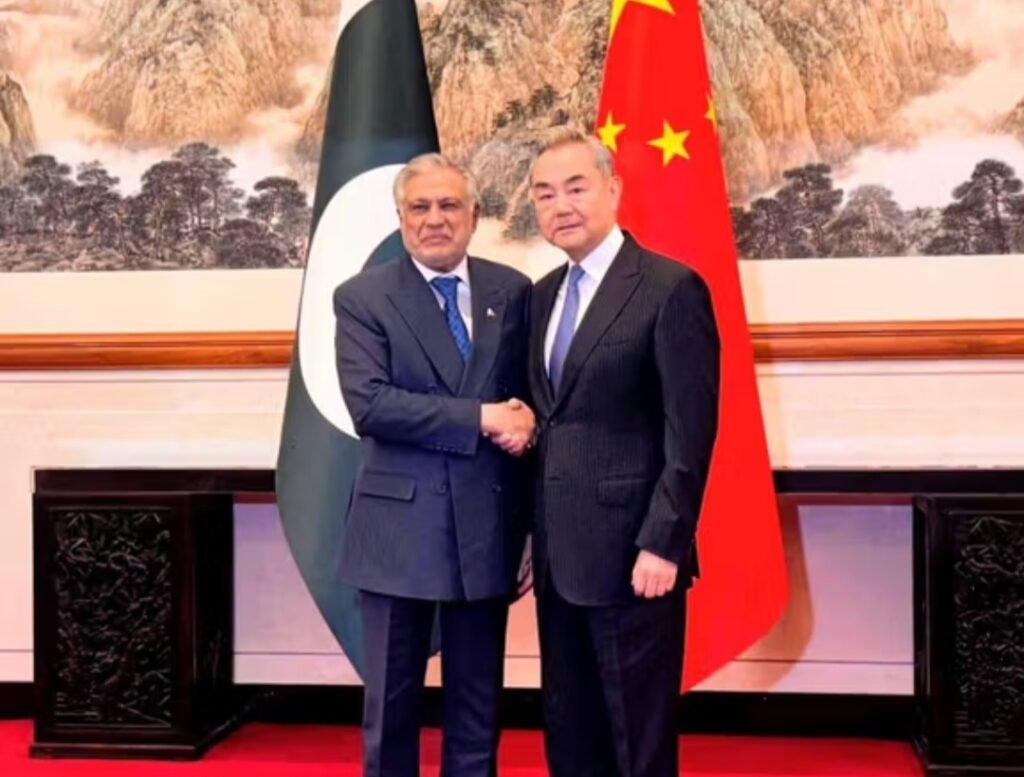
According to a statement from the Chinese Foreign Ministry, China’s Foreign Minister and Member of the Political Bureau of the CPC Central Committee, Wang Yi, met with Pakistan’s Deputy Prime Minister and Foreign Minister, Mohammad Ishaq Dar, in Beijing on March 31, 2026, where both sides reviewed the evolving security situation in the Gulf and the Middle East.
During the meeting, the two sides outlined five major proposals to help reduce tensions and promote stability in the region:
(I). China and Pakistan called for an immediate cessation of hostilities and urged all parties to make utmost efforts to prevent further escalation. They stressed that humanitarian assistance must be allowed to reach all war-affected areas without obstruction.
(II). Both countries called for start of peace talks as soon as possible. They emphasized that the sovereignty, territorial integrity, national independence, and security of Iran and Gulf states should be safeguarded. China and Pakistan underscored that dialogue and diplomacy remain the only viable paths to resolving disputes and encouraged all parties to commit to peaceful solutions while refraining from the use or threat of force during negotiations.
(III). The two countries highlighted the need to protect nonmilitary targets and civilians. They called on all parties to adhere strictly to International Humanitarian Law and cease attacks on civilian infrastructure, including energy facilities, desalination plants, power installations, and peaceful nuclear infrastructure such as nuclear power plants.
(IV). China and Pakistan emphasized the importance of safeguarding international shipping lanes. They noted that the Strait of Hormuz and its adjacent waters serve as critical global routes for goods and energy supplies. The two sides urged parties to ensure the safety of vessels and crew members, facilitate the safe passage of civilian and commercial ships, and restore normal maritime operations as soon as possible.
(V). The duo of China and Pakistan stressed the primacy of the United Nations Charter. They called for genuine multilateralism, strengthening the central role of the United Nations, and supporting efforts toward a comprehensive peace framework grounded in international law and the principles of the UN Charter.
Responding to questions during a regular press briefing in Beijing, Chinese Foreign Ministry spokesperson Mao Ning said both sides had conducted in-depth exchanges and reached important common understandings. She summarized the initiatives in three words: “cease, talk, and ensure,” referring to cessation of hostilities, the start of peace talks, and ensuring the protection of civilians, infrastructure, and shipping lanes.
Commenting on the development, Mohammed Tola Sulaiman, former Managing Editor of the News Agency of Nigeria, described the joint initiative as a commendable effort aimed at restoring peace and creating a conducive environment for normal economic activities in the region.
He noted that the proposals could encourage all parties to embrace dialogue, foster mutual understanding, and promote respect among nations.
Sulaiman further argued that the ongoing conflict has exposed weaknesses in international institutions, adding that the intervention by China and Pakistan could help reinforce multilateral diplomacy.
He also warned that continued escalation risks undermining the authority of global governance mechanisms and the oversight functions of the United Nations. (GSF)


Comments