


By Lawal Sale
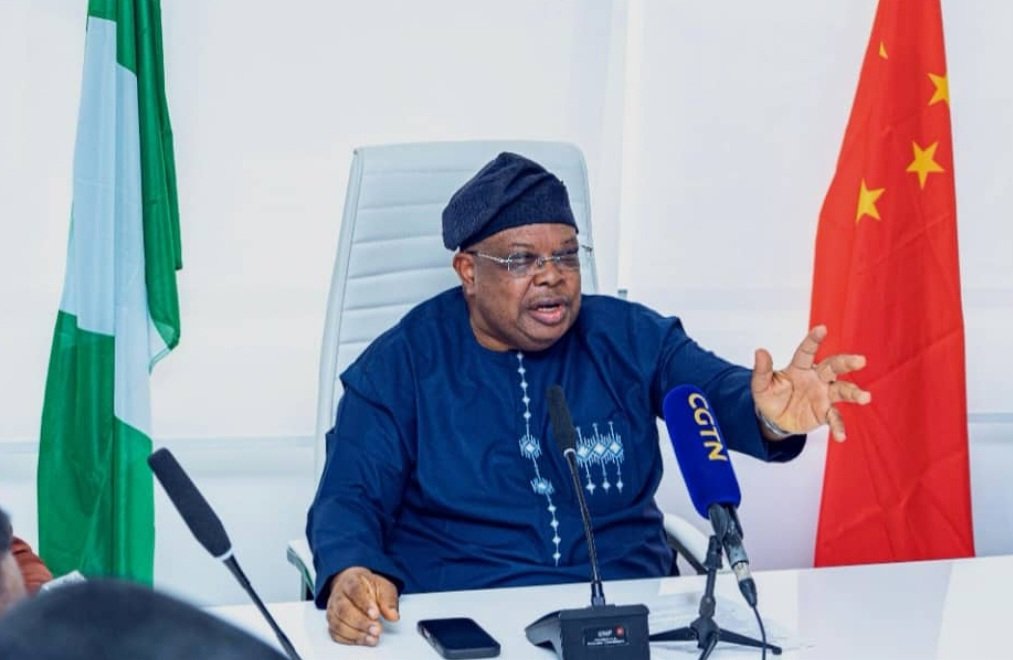
The Director-General and Global Liaison of the Nigeria–China Strategic Partnership (NCSP), Mr. Joseph Tegbe, has reaffirmed Nigeria’s commitment to deepening its Comprehensive Strategic Partnership with China, as the two countries mark 55 years of diplomatic relations.
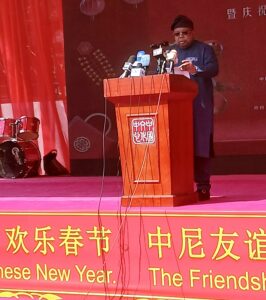
Speaking on Saturday at the Chinese New Year Temple Fair celebrating the Year of the Horse, Tegbe described the long-standing Nigeria–China relationship as resilient, results-driven, and increasingly impactful on the lives of citizens of both countries.
He noted the symbolic significance of the horse in both cultures, describing it as a shared emblem of strength, dignity, endurance, and progress. According to him, the symbolism underscores the shared determination of Nigeria and China to advance cooperation and shared prosperity.
Tegbe reaffirmed Nigeria’s unwavering adherence to the One-China Principle, describing it as the foundation of the enduring bilateral relationship and a guiding framework for continued collaboration.
Reflecting on the evolution of relations since 1971, he said Nigeria–China ties have grown from cordial diplomatic engagement into a robust partnership delivering tangible benefits across infrastructure, trade, agriculture, education, and industrial development.
Looking ahead, Tegbe stressed that the anniversary celebrations must be matched with concrete action, in line with the reform and development agenda of President Bola Ahmed Tinubu, GCFR, particularly following the President’s historic visit to Beijing in September 2024.
Highlighting key areas of cooperation, the NCSP Director-General commended the Chinese leadership and enterprises for their role in Nigeria’s infrastructural transformation, citing the rail modernisation programme and flagship projects such as the Lekki Deep Sea Port.
The DG also announced the launch of Nigeria’s National Integrated Poultry Project, inspired by China’s success in food security. He explained that the initiative, with an estimated initial investment of about one billion dollars, will begin with pilot projects in Kaduna, Oyo, and Enugu States before expanding nationwide.
According to him, the project is expected to produce six million eggs daily, support over seven million laying birds and two million broilers, cultivate more than 60,000 hectares of maize and soybeans, and provide subsidised feedstock to local farmers, creating jobs and strengthening food security.
On Nigeria’s industrial development, Tegbe described the planned revitalisation of the Ajaokuta Steel Complex as a potential turning point for Nigeria’s economy. He said collaboration with China is expected to position the steel plant for an output of up to 10 million metric tonnes annually, boosting manufacturing, job creation, and industrialisation.
He further highlighted the ongoing knowledge exchange and educational partnerships between the two countries, noting that academic cooperation, scholarships, joint research, and innovation-driven industrial parks remain central to building long-term people-to-people ties.
Tegbe called on Chinese businesses to continue investing in Nigeria, stressing the importance of partnerships that prioritise skills transfer, capacity building, and shared growth, while assuring investors of Nigeria’s hospitality and commitment to mutual respect.
As Nigeria and China usher in the Year of the Horse, he expressed optimism that the bilateral partnership would continue to gain momentum, delivering prosperity and strengthening friendship between both nations.
It will be recalled that after his return from the FOCAC 2024 Beijing Summit, President Bola Ahmed Tinubu approved the establishment of the Nigeria-China Strategic Partnership (NCSP) and appointed Mr. Joseph Tegbe, as its Global Liaison and Director-General, with a mandate of overseeing the implementation of the signed agreements through engagement with the Chinese counterparts, while ensuring the alignment of all deliverables with national development goals.
In addition, in the strategic plan, the NCSP is expected to outline specific deliverables, timeliness and key performance indicators for each area of cooperation, including priority projects, projected investments and expected socio-economic outcomes.
He added that these encompassed projects in infrastructure, agriculture, health care, education, mining, manufacturing and technology sectors, among others.
Tegbe underscored the wisdom in creating the NCSP office to coordinate and ensure the proper implementation of the projects and programmes, recalling that in the past when such partnerships were created, the perceptible lacuna was the absence of a central point for their coordination. (GSF)

Comments