


By our Correspondent
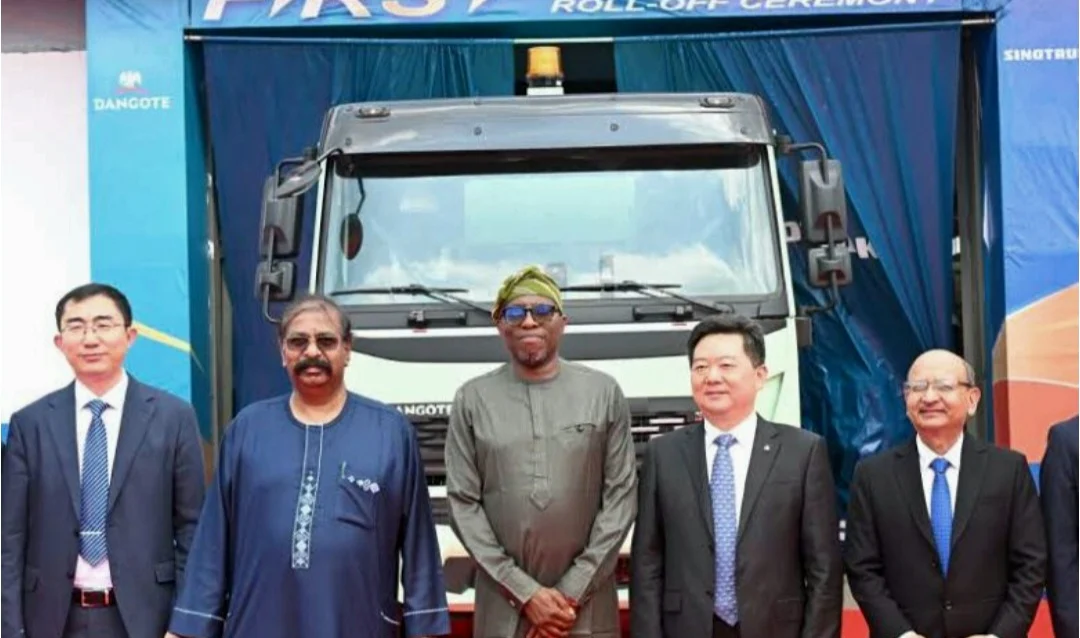
Dangote Sinotruk West Africa Limited has rolled out Nigeria’s first locally assembled electric heavy-duty truck, marking a major milestone in the country’s automotive industry and opening a new chapter in green mobility and sustainable transportation.
The electric truck was unveiled at the company’s assembly facility in Ikeja, Lagos, at an event attended by representatives of the Dangote Group, Sinotruk Group, Lagos State Government, industry stakeholders and business partners.
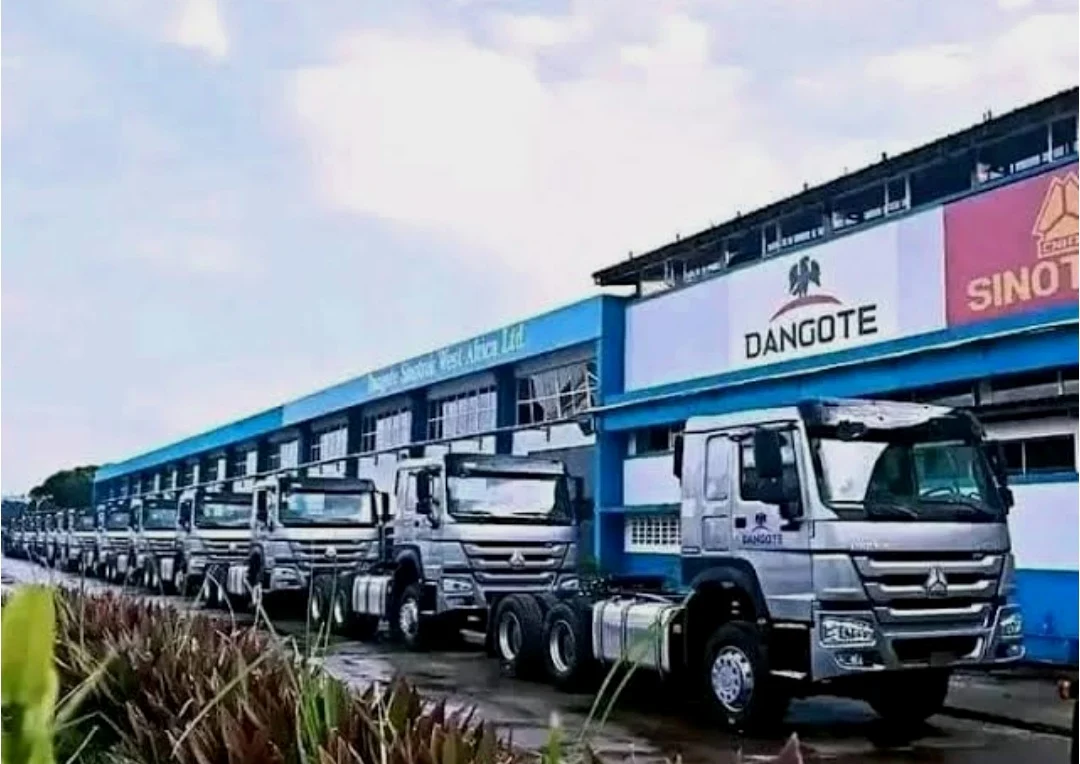
The development marks a significant expansion of the Dangote-Sinotruk joint venture into new-energy mobility, complementing its existing range of conventional heavy-duty trucks, tippers, light trucks, pickups and buses.
Speaking at the unveiling, Group Vice-President of Dangote Industries Limited, Devakumar V.G. Edwin, described the introduction of electric commercial vehicles as another important milestone in the partnership’s commitment to technological innovation, environmental sustainability and Nigeria’s industrial development.
He said the Dangote-Sinotruk partnership was established to build a world-class commercial vehicle manufacturing business in Nigeria through local assembly, technology transfer, employment generation and industrial capacity development.
According to him, the company had moved from conventional vehicle assembly to compressed natural gas (CNG) technology and was now embracing electric mobility in response to global developments in the automotive industry.
“Today, we are taking an important further step as the global economy is looking for sustainable business, that is, vehicles which will also be protective of the environment. So, we went into CNG technology, and now we are going into electric technology. This is a technology which is revolutionising the whole world,” Edwin said.
He noted that electric commercial vehicles offered opportunities to reduce operating costs and tailpipe emissions, depending on electricity prices, vehicle applications and the availability of charging infrastructure.
Edwin also disclosed that the company was preparing the necessary technical and after-sales support systems to facilitate the successful adoption of electric trucks in Nigeria.
He said the company would provide customers with technical expertise, spare parts and support for charging infrastructure while developing the capacity of Nigerian engineers and technicians.
“This is more than a launch of new vehicles. It’s a statement of our commitment to innovation, our commitment to green energy, and the future of mobility,” he said.
Edwin further explained that the company’s long-term ambition was to become one of West Africa’s leading automotive assembly and manufacturing companies, with Nigeria serving as a strategic production hub for the region.
He said the company would continue to deepen local assembly, promote technology transfer, develop technical skills and increase local value addition.
As part of the initiative, Sinotruk is expected to provide specialised training for Nigerian engineers and technicians, including opportunities for selected personnel to receive practical training at its facilities in China.
Also speaking, President of Sinotruk Group, Liu Wei, described the rollout as a historic achievement for Nigeria, the joint venture and Africa’s automotive industry.
He said the electric heavy-duty truck represented a significant step towards localised manufacturing and the transition to cleaner commercial transportation across West Africa.
According to Liu, the truck is the first new-energy heavy-duty truck assembled on the African continent, demonstrating the growing capacity of African countries to participate in the global transition towards sustainable transportation.
“More importantly, it represents a substantial step forward for Nigeria and West Africa in driving localised manufacturing and the green transition of new-energy commercial vehicles,” he said.
Liu said the initiative aligned with Nigeria’s long-term carbon-neutrality objectives and energy-transition ambitions, particularly efforts to modernise the energy mix, reduce transportation emissions and strengthen domestic manufacturing capacity.
He traced the evolution of the Dangote-Sinotruk partnership to 2010, when cooperation between the two companies began, while the joint venture was formally established in 2014.
He recalled that the first heavy-duty truck rolled off the assembly line in 2017, while the commissioning of a commercial vehicle welding and e-coating paint line in 2024 represented another major step towards deeper local manufacturing.
Liu disclosed that the joint venture had so far assembled more than 8,000 vehicles locally, adding that Sinotruk would continue to upgrade its production capabilities and strengthen technical training for Nigerian personnel.
The Lagos State Government also welcomed the development, describing it as a defining moment for Nigeria’s industrial and transportation sectors.
A representative of the Commissioner for Transportation said the introduction of locally assembled electric heavy-duty trucks demonstrated Nigeria’s capacity to participate in the global transition towards cleaner transportation rather than remain dependent on imported automotive technologies.
The government representative highlighted the potential of electric vehicles to reduce emissions, lower long-term transportation costs, generate employment and equip Nigerian engineers and technicians with advanced manufacturing and electric vehicle skills.
The representative also commended Dangote Sinotruk for combining international automotive technology with local industrial capacity and called for sustained investment in skills development and domestic manufacturing.
The rollout further reinforces the Dangote Group’s industrialisation strategy of expanding domestic production, facilitating technology transfer and creating employment opportunities while developing businesses capable of serving markets beyond Nigeria.
With the introduction of electric heavy-duty trucks, Dangote Sinotruk is positioning itself at the intersection of commercial transportation, automotive manufacturing and the emerging green-energy economy.
The development also strengthens Nigeria’s prospects of becoming a strategic automotive manufacturing hub for West Africa, particularly as demand for commercial vehicles continues to grow across the region’s logistics, construction, infrastructure and transportation sectors.
The milestone therefore represents more than the introduction of a new vehicle. It underscores the potential of local manufacturing and international technology partnerships to support Nigeria’s industrial transformation and contribute to a more sustainable transportation future. (GSF)


Comments