


VIEWPOINT: by Lawal Sale
I have been following the progress of President Xi Jinping’s first out of the now “four initiatives”, the Global Development Initiative (GDI) which he put forward in September 2021 during the United Nations General Assembly in New York. Since then, I have zero doubt and of the opinion that GDI has demonstrated its significance as an international development framework that came at a time when the world is experiencing growing uncertainties, geopolitical tensions and economic turbulence.
Introduced by President Xi as a global public good, the GDI reflects China’s commitment to prioritising development, supporting the aspirations of developing countries and advancing a community with a shared future for humanity.
At its core, the initiative places development at the forefront of international cooperation, recognising that addressing poverty, inequality and other development challenges is essential to improving people’s well-being and building a more prosperous and sustainable world.
It is also evident that China, in collaboration with the United Nations and other international partners, has continued to advocate multilateralism and support efforts to implement the UN Sustainable Development Goals (SDGs).
In this regard, I have observed that the GDI provided an additional platform for mobilising resources, strengthening international partnerships and accelerating progress towards the 2030 Agenda for Sustainable Development.
In particular, I have noted China’s advancement in development cooperation through several mechanisms and frameworks, including the Belt and Road Initiative (BRI), the Shanghai Cooperation Organisation (SCO) and the Forum on China-Africa Cooperation (FOCAC), alongside other initiatives aimed at promoting a community with a shared future for humanity.
These frameworks have provided platforms for infrastructure development, economic cooperation, capacity building and people-to-people exchanges. They have also contributed to practical South-South cooperation, offering developing countries opportunities to pursue their development priorities through partnerships based on their respective needs and circumstances.
For Africa and Nigeria, ooperation with China has produced tangible outcomes in infrastructure development, poverty alleviation, agriculture, education, energy, telecommunications and human capacity building.
Across the continent, I am aware of the numerous China-supported projects that contributed to the development of railway networks, maritime ports, dams, energy facilities and telecommunications infrastructure.
Some of the signature projects that I know and have seen physically are the Abuja-Kaduna standard gauge railway, Lagos-Ibadan railway, Lekki Deep Seaport, Nairobi-Mombasa standard gauge railway, Addis Ababa-Djibouti standard gauge railway, Zambia’s TAZARA railway project, Atuabo Gas processing plant in Ghana among other developmental projects across the region of Africa.
Succintly, cooperation in renewable energy, new energy technologies and industrial development has also created opportunities for African countries to strengthen productive capacity, improve connectivity and advance their economic transformation.
These areas of cooperation are particularly important for Nigeria and other African countries seeking to close infrastructure gaps, diversify their economies, create employment opportunities and achieve sustainable development.
Within five years of its launch, the GDI has reportedly attracted support from more than 130 countries and international organisations, mobilised over $20 billion funding for development cooperation, trained more than 200,000 professionals in capacity building and over recorded about 2,000 completed and ongoing projects across the Global South.
To me, these figures underscore the initiative’s expanding international reach and the scale of development cooperation associated with it.
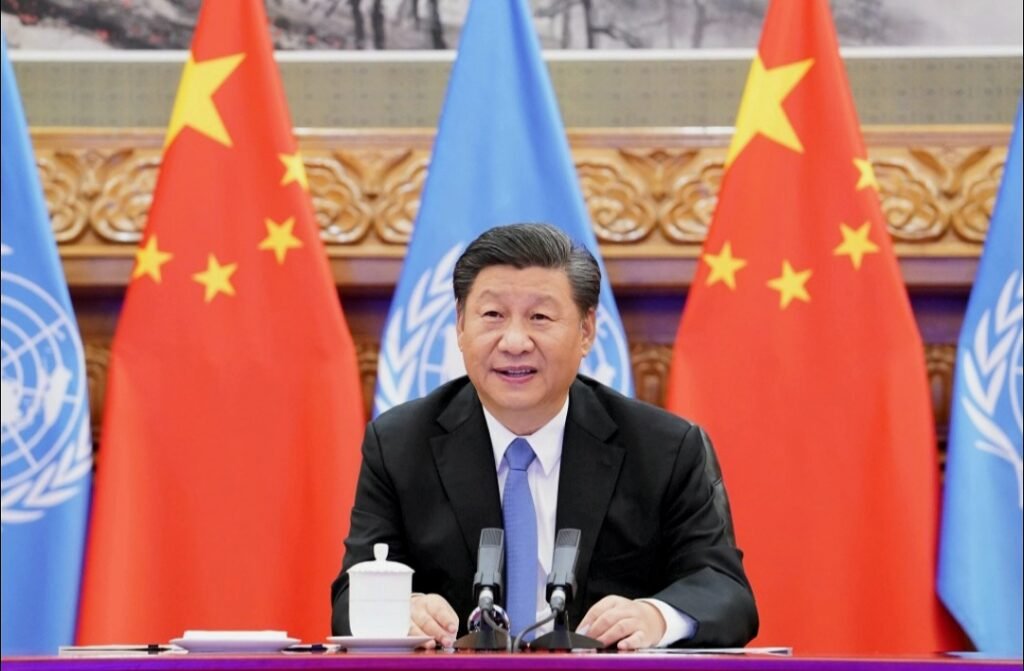
In his congratulatory message during the marking the fifth anniversary of the GDI at the United Nations in New York, President Xi Jinping emphasised the enduring importance of development, declaring that: “Development is the eternal theme of human society and is key to promoting the well-being of humankind.”
Xi’s statement was visionary and it captures the fundamental objective of GDI, that indeed, development should remain a central priority of international cooperation, particularly at a time when many developing countries face persistent challenges involving poverty, infrastructure deficits, food security, climate change and unequal access to economic opportunities.
It is also my view that for countries of the South-South, the priority should be to maximise the opportunities offered by the initiative through practical partnerships that promote industrialisation, technology transfer, skills development, agricultural productivity and economic diversification.
Ultimately, I believe the Global Development Initiative represents an important contribution to international development cooperation. Its emphasis on development, solidarity and shared prosperity offers a platform for strengthening cooperation among nations and supporting the development aspirations of the Global South.
— Sale is Abuja based
Global South Affairs Analyst (lawalmaida1@yahoo.com)
Comments