


By Yang Tao
Chinese President Xi Jinping attaches great importance to expanding imports. He said China’s initiative to expand imports is not a choice of expediency. It is a future-oriented step taken to embrace the world and promote common development.
The Outline of the 15th Five-Year Plan (2026–2030) calls for expanding high-standard opening up, promoting balanced growth in imports and exports, and enhancing the role of trade promotion platforms.
On Nov. 4, 2025, Chinese Premier Li Qiang attended the launch ceremony for the “Big Market for All: Export to China” series of events.
The initiative once again demonstrated China’s firm commitment to sharing development opportunities with the world through greater openness, pursuing mutual benefit and win-win cooperation, promoting universally beneficial and inclusive economic globalization, and building a community with a shared future for humanity.
The “Export to China” initiative represents an innovative approach in the history of global trade.
At a time when unilateralism, protectionism, and particularly high tariffs and other trade barriers are on the rise, the international trading system has come under severe strain, posing significant challenges to the development of many countries.
Against this backdrop, China launched the initiative as a proactive step to expand unilateral opening up, increase imports, and promote more balanced trade.
Designed from the perspective of China’s trading partners, the initiative seeks to expand the scope of mutually beneficial cooperation while safeguarding the multilateral trading system. It also serves as a practical measure to implement the Global Development Initiative and promote common development for all countries.
By actively expanding imports and promoting balanced trade, China offers both wisdom and solutions for addressing profound changes in the global landscape.
For China, greater imports of advanced technologies, key equipment, high-quality resources, and premium consumer goods help facilitate industrial upgrading, improve consumption, and better meet people’s growing aspirations for a better life. For trading partners, access to the Chinese market means more business opportunities, employment opportunities, and prospects for development.
For the world, China has contributed around 30 percent of global economic growth for consecutive years.
As China continues to expand imports, it will become an even stronger engine for global trade recovery and economic growth.
Achieving balanced trade requires not only platforms for cooperation but also strong policy support.
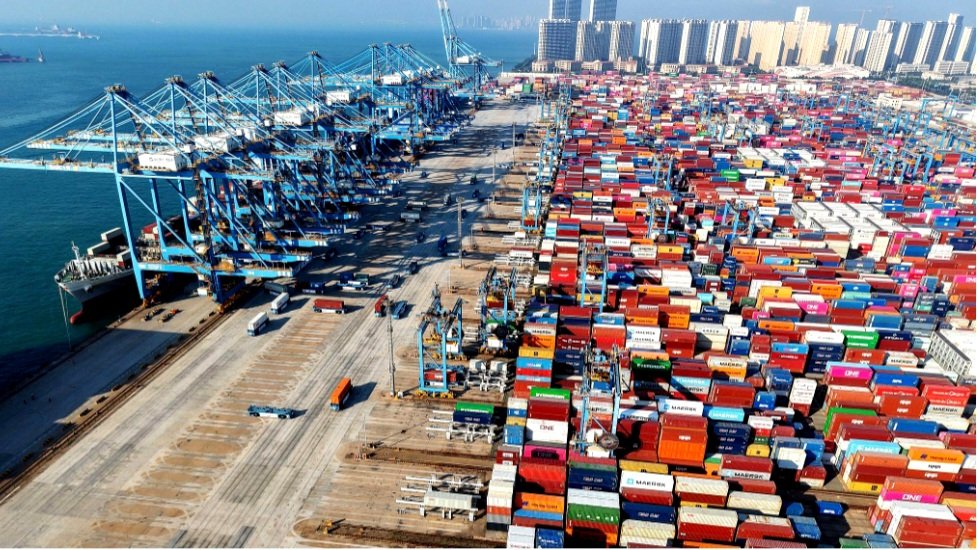
On the platform side, nearly 40 “Export to China” events had been held both in China and overseas by the end of July this year.
These events foster synergies with the “Shop in China” and “Invest in China” initiatives, coordinate with major expos including the China International Import Expo (CIIE) and the China International Consumer Products Expo, and tie in with cross‑border e‑commerce retail imports and online consumption‑driving campaigns.
Government officials, business associations, and business representatives from Africa and other regions have also participated in “Export to China” capacity-building programs in China.
On the policy front, China continues to leverage trade promotion platforms such as the CIIE to help transform exhibits into marketable products and better meet people’s growing demand for a better life.
It has established 43 import trade promotion and innovation demonstration zones and encouraged new business models such as retail imports through cross-border e-commerce.
China is also advancing the integration of trade and investment to promote positive interaction between imports and two-way investment.
In addition, China is making full use of its zero-tariff policy covering all taxable product categories for the 53 African countries with which it has diplomatic relations, while encouraging all least developed countries that maintain diplomatic ties with China to fully benefit from this preferential arrangement.
In addition, China is upgrading the “green channel” for African agricultural and food products entering the Chinese market, further expanding imports of high-quality agricultural and food products from Africa.
China’s commitment to expanding imports and promoting more balanced trade will create even greater opportunities for countries around the world. Already vast, China’s market continues to grow. With a population of more than 1.4 billion, including over 400 million middle-income earners, China has become a major export destination for around 80 countries and regions.
In the first half of 2026, China’s goods imports reached 10.74 trillion yuan ($1.59 trillion), up 22.1 percent year on year. Imports from more than 150 trading partners recorded growth, and annual imports are expected to exceed 20 trillion yuan for the first time.
Amid growing global uncertainty, the Chinese economy has provided valuable stability and certainty, serving as an important anchor for global development.
Meeting the challenges of our time requires building bridges of cooperation rather than creating divisions. Through the “Export to China” initiative, China is putting the Global Development Initiative into action by supporting countries, especially developing ones, in expanding their exports to the Chinese market.
China will continue to promote greater global openness through its own opening up, firmly uphold the multilateral trading system, and contribute to building a higher-standard open world economy.
In doing so, it aims to provide greater stability and certainty for the global economy. China welcomes all parties to seize the new opportunities created by the “Export to China” initiative, grow alongside the Chinese market, and share in the benefits of common prosperity.
(Yang Tao is the director general of the Department of Foreign Trade of the Ministry of Commerce)

Comments