

“Roads first, then prosperity,” – President Xi Jinping
A Commentary article by: Lawal Sale
The above axiom by President Xi highlights the importance of construction or reconstruction of a literal rural infrastructure and international connectivity networks for eradicating poverty, boosting livelihoods and promoting global peace and prosperity for shared future of mankind. Similarly, building roads is the first step towards achieving economic goals and well being of every nation and its people.
Succinctly, when a nation builds roads, it consequently builds the people’s lives, since figuratively, the road could be considered as an artery for the sustainability of human life.
It is, perhaps, the realization of this fact that President Xi in his wisdom and focus introduced the Belt and Road Initiative (BRI) – a programme with a particular focus on revamping the ancient Silk Road and transforming it into a modern road connectivity mechanism for the shared future of mankind.
THE ANCIENT SILK ROAD NETWORK FROM EAST TO WEST
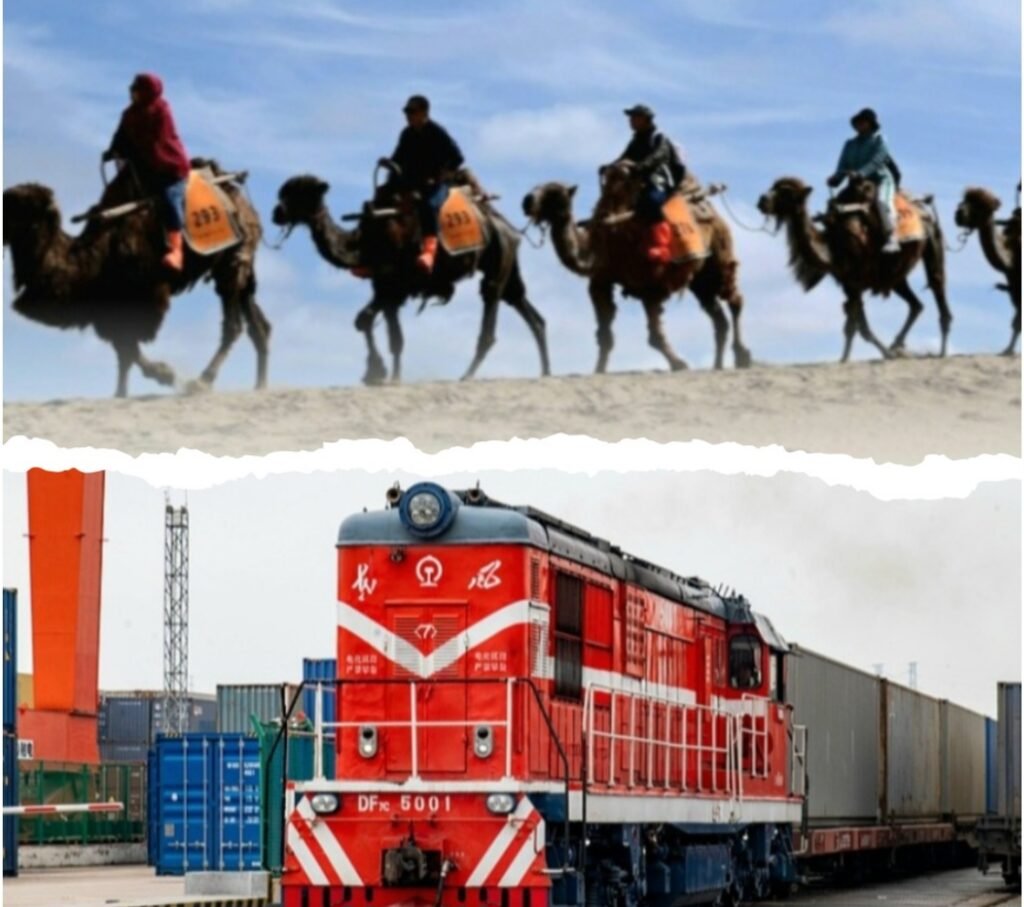
Centuries back, “the Silk Road” was a famous ancient trade route, with a starting point in the East and North-Central part of China, in Xi’an city to be specific.
The trade route from Xi’an traversed through Western China to the Central Asian cities of Samarkand and Bukhara in today’s Uzbekistan down to the Mediterranean Sea where it linked with Europe.
Historical records indicate that the prehistoric Silk Road existed between the 2nd Century BC and the 18th Century AD. It was a vital route for the movement of people, trade, arts and intellectual exchange.
In ancient times, the articles of trade ferried on the olden Chinese Silk Road included the Chinese silk, spices, gunpowder, and porcelain, among other products.
In one of his public appearances, President Xi said the ancient Silk routes thrived in peace but lost their vigor over time and in war times. In his efforts to boost global trade and economic development, has placed considerable emphasis on the need to construct roads as the first step towards alleviating poverty, connecting people and expanding the global economy for the shared future of the peoples.
BRI AS CONNECTIVITY FRAMEWORK FOR 21st CENTURY
Earlier, before unveiling BRI, President Xi, during his visit to Moscow, Russia in 2013, spoke on presentation of a new vision tagged “building a global community with a shared future for mankind” to the world, while delivering a lecture at the Moscow Institute of International Relations (MGIMO).
The underlying idea for the vision presented by Xi was to produce a new model of governance at a time when protectionism has somewhat created turbulence at an unprecedented level for the mankind.
Besides, in the same year, in September 2013, President Xi, while on another state visit to Kazakhstan, unveiled the historic, most ambitious, and human oriented initiative — the Belt and Road Initiative (BRI).
The BRI is a Chinese scheme aimed at jointly building a new “Silk Road Economic Belt” and “21st Century Maritime Silk Road”, in cooperation with related countries for the shared future of mankind.
The BRI is considered as China’s most strategic programme in contemporary times, and the initiative is recognized as the cornerstone of the foreign policy of the Communist Party of China led by President Xi.
Thirteen years on, BRI has facilitated connectivity and socio-economic development across the world. As regards revamping the New Silk Road, China has demonstrated its influence as a global power and one of the largest trade and economic hubs in modern history.
The BRI focuses on promoting policy coordination, infrastructure connectivity, facilities, unimpeded trade, financial integration, and closer people-to-people exchanges through consultative process and joint efforts; all with the overriding goal of facilitating a shared future for all.
As a component for the vision of building a community with a shared future, BRI represents a coherent and holistic strategy aimed at reshaping a global system that ensures good governance in an environment largely plagued by turbulence and uncertainties.
It also aligns with broader trends of social development that promote peaceful coexistence where all nations are treated as equals.
The BRI, as it connotes, involves both the “Belt” and the “Road.”
The “Belt” consists of countries of the ancient Silk Road, with a starting point in East and Central China, traversing through Central Asian cities of Samarkand and Bukhara, then West Asia, and Europe.
These routes form part of an economic corridor connecting the rest of the world by roads or highways, rail and maritime belt.
The “Road” concept is the aspect of the initiative that is particularly aimed at unimpeded economic collaboration among the countries of South East Asia, Central Asia, West Asia, Africa, Latin America, Oceania, and the Pacific.
GOING GLOBAL: BRI AS INSTITUTIONAL FRAMEWORK
So far, more than 150 countries and territories, as well as about 30 international organizations have signed up for participation in the BRI framework.
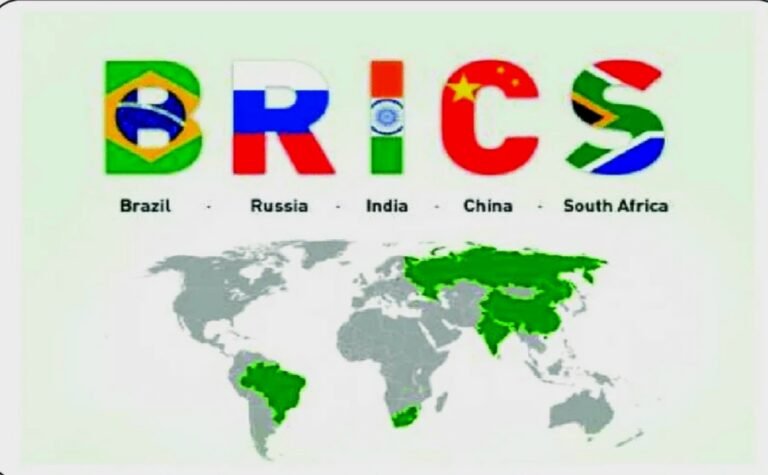
Accordingly, the BRI and its core concepts have been incorporated into the programmes of the G20, Association of South East Asian Nations (ASEAN), Asia Pacific Economic Cooperation (APEC), Shanghai Cooperation Organisation (SCO), BRICS+ nations, Forum on China-Africa Cooperation (FOCAC) and Community of Latin American and Caribbean States (CELAC).
The initiative also presents an important platform for achieving the United Nations Agenda 2030 for Sustainable Development Goals (SDGs).
Other core concepts of the initiative include fostering the vision of building common, comprehensive cooperation and sustainable security environment for the wellbeing and shared future of mankind.
In a nutshell, the BRI has, over the years, facilitated the evolution of new models of investment and financing among member-countries, while stimulating greater cooperation between governments and private capital for sustainable financial systems and a multi-tier capital market.
Since its inception, the BRI has achieved remarkable success as the largest global connectivity and infrastructure framework, accelerating development in countries across the world.
Remarkably, in its effort to build a global community with a shared future, China, through the BRI, has committed more than 1.5 trillion U.S. dollars to the BRI infrastructure projects through direct investment across the over 150 member-countries.
Through the initiative, trade volume among the BRI member-countries has increased by about 9.7 per cent, shoring up the Gross Domestic Product (GDP) of low-income countries by more than 3.5 per cent.
It is pertinent to note that the BRI member-countries account for more than 65 per cent of the world’s total population, while these countries contribute more than 45 percent of the global GDP, with countries like China, Russia, Saudi Arabia, Iran, Nigeria, Egypt, Ethiopia, United Arab Emirates, Kenya, Kazakhstan, Thailand, Singapore, Hungary and Belarus identified as the major GDP contributors.
What’s more; it has been projected that more than 50 million people would be lifted out of poverty in BRI member-countries by the year 2030.
KEY NOTABLE CONNECTIVITY PROJECTS OF THE BRI
Through the BRI cooperation framework, many completed and ongoing people-oriented BRI signature projects in the member-countries have created new opportunities for growth and shared future.
Connectivity projects such as highways, bridges, seaports and airport terminals have significantly delivered tangible benefits to various member-countries, boosting China’s commitment to safeguarding peace, development and good governance for shared future.
Other priority areas of the BRI include power grids, telecommunications infrastructure, green energy, mining, oil and gas infrastructure and industrial parks, among others.
However, the BRI goes beyond the provision of infrastructure. It is a Chinese solution to the daunting challenges affecting mankind where peace, development, and good governance are in deficit.
According to President Xi, pursuing the BRI “is not meant to reinvent the wheel”, it only aims to complement the development strategies of the member-countries by leveraging their comparative strength. “The BRI I put forward aims to achieve win-win and shared development,” Xi noted.
Sharing President Xi’s sentiments, global affairs analysts maintain that the BRI is indeed a framework for integration, facilitating closer people-to-people ties via consultative process and joint efforts with the overall goal of building a vibrant global community with a shared future.
It is pertinent to note that since its establishment, the BRI has successfully executed a number of important connectivity signature projects, under multilateral cooperation agreements, in critical infrastructure such as roads, railways and ports in its member-countries.
One notable BRI project is the Nairobi-Mombasa railway, which connects Kenya’s capital Nairobi with the port city of Mombasa. The railway is the first standard gauge rail line (SGR) in Kenya and it has since become a game changer in the movement of people and goods in the eastern part of Africa.
Besides, another project is the Lagos-Ibadan railway in the south-western part of Nigeria, and the rail line connects Lagos, the country’s commercial capital, with the ancient and cosmopolitan city of Ibadan. The project has spurred an appreciable increase in the movement of people and freight along the all-important railway corridor.
Moreover, a remarkable feat of the BRI is the completion of the Addis Ababa-Djibouti standard gauge railway project that connects the landlocked Ethiopia’s capital city, Addis Ababa, with the port city of the neighbouring Djibouti.
Since its completion and formal inauguration on Jan. 1, 2018, the modern railway has transformed the movement of goods and people between the two countries, while facilitating the shipment of Ethiopian exports to other parts of the world through the port of Djibouti.
The China-Europe freight train project is another noteworthy BRI venture. According to reports, the 10-year-old China-Europe freight train services have recorded more than 130,000 trips and ferried goods worth 520 billion U.S. dollars since its inception.
This railway project is one of the symbolic models of Silk Road/BRI connectivity infrastructure projects that connects major Chinese commercial cities and European cities by land.
For instance, the time for a trip from China’s Xi’an to Duisburg in Germany has been reduced to as short as 11 days due to the efficiency of the freight railway service. As a landmark brand, the freight train service is widely labelled as “steel camel caravan”.
Furthermore, the Lekki Deep Seaport in Nigeria is one of the Silk Road Maritime network and critical Maritime Belt and Road flagship connectivity projects in West Africa. It is one of the success stories of Nigeria’s Public-Private Partnership programme, executed under the BRI framework.
Another BRI’s maritime connectivity project is the Greek Preus Port. It is the largest maritime connectivity hub in the Mediterranean region, connecting Europe with the other parts of the world. It also links Greece with the neighbouring islands, while providing services to cruise ships and other vessels.
In fact, records have shown that the Silk maritime network has continued to expand, with hundreds of ports development projects located in about 50 countries.
The China-Pakistan Economic Corridor (CPEC) is a 3,000-kilometre BRI connectivity project, which aims to revive the ancient Silk route that connects China, Central and South Asia with Europe and Africa by land and sea.
With its starting point in Kashgar, China’s Xinjian region, the project is expected to link about three billion people along its corridor when it is completed. The CPEC is a BRI signature project that forms part of the Chinese initiative which focuses on building infrastructure as a tool for fostering bilateral cooperation for shared economic prosperity.
In Southern Asia, another landmark BRI flagship project is the 1,035-kilometre China-Laos railway that connects Kunming in China’s south-west Yunnan province with Laos’ capital, Vientiane.
The cross-border rail link offered the landlocked Laos a modern and a direct rail route to China and other south-east Asian cities. Since its launching in December 2021, the project has become a game changer for the people along its corridor. The rail line is regarded as a fundamental component of China’s vision for the development of a pan-Asian railway network.
In Indonesia, through the BRI cooperation framework, China has helped to construct the first South Asian high-speed Jakarta-Bandung railway, using the Chinese technology for the first time outside China. The train service connects the two Indonesian cities at a maximum speed of 350 kilometres per hour.
Global South experts have observed that the turbulence and uncertainties on the global stage notwithstanding, the BRI, in its 13 years of existence, has achieved remarkable feats in advancing high-quality development, anchored on infrastructure modernization, development cooperation and good governance with tangible benefits for the shared future of mankind.
— Sale is Global South Affairs Analyst based in Abuja, Nigeria (lawalmaida1@yahoo.com)

Comments