







By Okoh Aihe
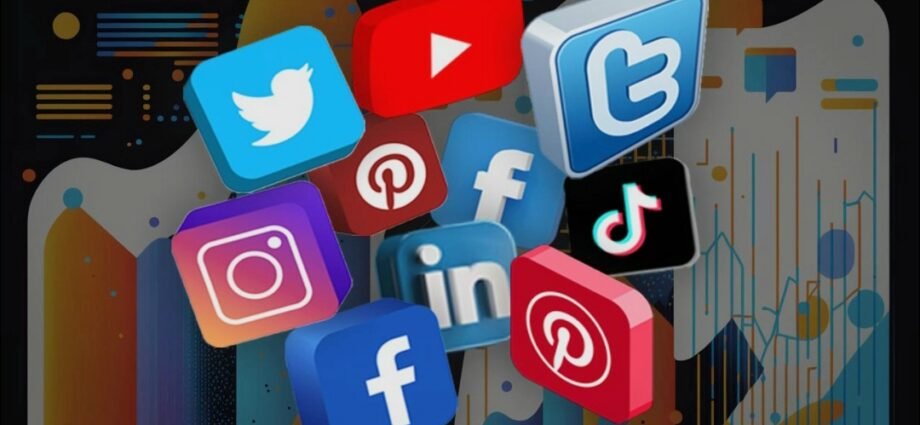
The hefty fine of $940m placed on Meta in New Mexico has retained Social Media in the centre of unwanted discourse and concerned efforts by jurisdictional authorities to deal with a menace that threatens today as well as the future of nations since the young ones are mostly affected in a world that seems to be laced with social poison.
Although Social Media has become the nexus of human interactions, including work, communications, entertainment and other social relationships, the well-being of teens who virtually live on Social Media platforms has been a cardinal concern to several nations. While some are taking proactive measures to restrict access, including placing age restrictions, quite a number have gone beyond the confines of what is possible from their end, to look at the activities of platform providers who are able to hide some sneaky details that could become harmful to young minds.
For instance, a jury ordered Meta to pay a $375m penalty for misleading the public after it found out that the organisation hid internal research about teen mental health harms and child safety risks.
In what has now come to be known as Public Nuisance Ruling, a judge ordered Meta to shell out another $567m abatement fund, declaring the organisation’s negative impact on youth mental health a “public nuisance” in the level of industrial pollution.
Nigeria has had its can of troubles with Meta. On July 19, 2024, the Federal Competition and Consumer Protection Council (FCCPC) issued a Final Order imposing a $220m administrative penalty on Meta, saying the company engaged in discriminatory and exploitative practices against Nigerians after a 38-month joint investigation with the Nigeria Data Protection Commission (NDPC).
Not satisfied with the processes leading to the fine, Meta appealed. April 25, 2025, the Competition and Consumer Protection Tribunal delivered its judgment which affirmed that the FCCPC was painstaking in their investigations and awarded the $220m fine with an administrative penalty of $35,000.
Another $32.8m by NDPC on Meta was settled out of court. There have been other penalties however. For running unapproved and unvalidated advertisements on its platforms, the Advertising Regulatory Council of Nigeria (ARCON) imposed a fine of $37.5m on Meta. While TikTok got a wack of $5m also from NDPC for failure to take care of data concerning minors, and unauthorised cross-border data transfers.
Meta, which is a behemoth in the Social Media ecosystem and, its sheer presence is intimidating and frustrating in most jurisdictions, is responsible for a number of Social Media and communication apps which include: Facebook, Instagram, WhatsApp, Messenger and Threads. It is a lead player in Artificial Intelligence (AI), and Virtual and Mixed Reality (Reality Labs).
Meta has a suite of other operations and its activities cast a troubling shadow over human activities and corporate operations globally. Meta is nearly ubiquitous and its presence in the lives of young people has attracted a palpable harmful hue in some instances.
There may be somebody somewhere who may be of the mind that some nations are hitting Meta for cash as the organisation seems to have a huge pile. For such persons, I will advise that they open a Facebook or Instagram account without stating preference of materials. The materials that will be dumped on you in the first few minutes are enough to wreck a matured mind, especially the one that has tried to remain on the good side of sanity.
There is a reason to worry about teen operations in the Social Media space as the New Mexico case has demonstrated and as the Nigerian Government also demonstrated from 2024 to 2025. It is not just about Meta but all the Social Media platforms which seem to prey on young minds to build business fortunes.
While fines could be a reasonable deterrent to the Social Media big-heads like Meta, Google, ByteDance, Tencent and Microsoft, among others, some jurisdictions are embarking on alternative actions to clip the wings of the platform providers; put them away permanently from the lives of the young ones. But is that ever possible?
Australia was the first country to take such a bold step, damning criticisms from the business community and other stray minds. The Online Safety Amendment (Social Media Minimum Age) Act is to protect youth mental health, stop exposure to dangerous online content, and reduce addictive screen habits.
That decision didn’t come from the void. A commissioned research revealed that seven out of eight children aged 10 to 15 encountered disturbing materials in the Social Media while some youngsters faced widespread exposure to cyber bullying, eating disorder promotion, suicide instructions, and misogynistic or violent media.
The Prime Minister, Anthony Albanese, said the goal was to “give kids back their childhood and parents their peace of mind.”
To me, there couldn’t be a better response to what seems like the monstrosity of Social Media. The age of innocence is fast receding into a world that exceeds the descriptive confines of ordinary words. If the Australian parents couldn’t help themselves or even the family, the state has provided an answer that looked harsh on the surface but really deserving in the long run.
Already, a number of nations are rallying to join Australia in what may turn out to be an elite group of the Social Media ban for teens. They include: Indonesia – implementing phased restrictions, France – which passed landmark legislation restricting social media access for children under 15, Malaysia – which approved and announced an under-16 account registration ban, and Brazil – which implemented the ECA Digital (Digital Statute for Children and Adolescent), a modified ban which enforces strict parental controls, design limits like infinite scroll and auto play for minors.
So many other countries are revving up and at different levels of implementation. They include: the United Kingdom, Canada, Norway, Spain, Austria, Germany and the United States, just to list a few. For instance, in America, some states have passed laws requiring age checks or parental consent, while some federal lawmakers are debating algorithm and account restrictions. But polls show generally that roughly two-thirds of US adults are in support of strict minor access bans.
But Nigeria is not missing in the line of duty concerning Social Media. The harmful nature of Social Media to children is not fable but reality; a clear and present danger. In Nigeria, the Ministry of Communications, Innovation and Digital Economy, alongside the Nigeria Data Protection Commission (NDPC), conducted a survey which shows that 83 percent of surveyed Nigerians support some form of Social Media regulation for minors.
There will always be critics and advocates who see things from a different perspective, far from the troubling content some of us see daily including those that lead very young people to take terrible decisions and actions that ruin their lives, destroy homes and wreck communities. They are advocates and want freedom without limits.
But the responsibility of the state is to impose limits on human excesses including businesses that feed fat on the weaknesses of humanity and frailties of children to make profit that pose more danger than expected good to the society. One expects Nigeria to take stricter actions rather than fines which hardly diminish the wealth of these octopal Social Media platforms.
Let me state here that it remains a classic case of irony that the children whose Social Media status is being targeted in the various jurisdictions for their good, will do everything to sidestep whatever restrictions are being put in place. I do not expect them to understand why they need to be protected from themselves.
It is the way of children. One day, they will understand. Like we did when we left the shelter of our parents only to find out that, with all the good things in the world, there is much evil lurking in the dark and waiting for who to destroy. Social Media carries so much beauty but the beast is not so far away.