







Xinhua
The 15th Five-Year Plan period (2026-2030) will be a crucial stage for China to consolidate foundations and make all-round efforts in advancing Chinese modernization, as the country moves toward its goal of basically realizing socialist modernization by 2035.
In the next five years, the country will build on the foundation laid over the past five years to further strengthen the basis of development and enhance its resilience. It will also make coordinated efforts across various economic and social fields to achieve systemic breakthroughs and an overall improvement.
The country has mapped out major projects in areas including the development of new quality productive forces, modern infrastructure, urban-rural integration, and the improvement of people’s well-being.
The 15th Five-Year Plan period (2026-2030) will be a crucial stage for China to consolidate foundations and make all-round efforts in advancing Chinese modernization, as the country moves toward its goal of basically realizing socialist modernization by 2035, experts have said.
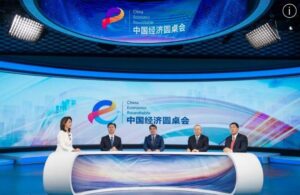
In the latest episode of China Economic Roundtable, an all-media talk show hosted by Xinhua News Agency, officials, economists and business representatives shared their views on China’s economic and social development priorities and prospects for the next five years.
CRUCIAL FIVE YEARS
“Realizing Chinese modernization is a historical process that unfolds in stages and moves forward step by step,” said Liu Rihong, an official with the Research Office of the State Council.
Liu said that in the next five years, the country will build on the foundation laid over the past five years to further strengthen the basis of development and enhance its resilience. It will also make coordinated efforts across various economic and social fields to achieve systemic breakthroughs and an overall improvement.
The country has mapped out major projects in areas including the development of new quality productive forces, modern infrastructure, urban-rural integration, and the improvement of people’s well-being, according to Hou Yongzhi, a researcher at the Development Research Center of the State Council.
Those projects cover various aspects of China’s modernization drive, balance short-term and long-term priorities, combine “hard investment” with “soft development,” and promote both material and cultural-ethical advancement, said Hou.
Some projects will focus on strengthening industrial foundations and competitiveness, fostering emerging industries and new arenas, advancing frontier technologies, and enhancing innovation capacity, said Hou.
The projects will help nurture and expand new quality productive forces and enable China to gain a stronger edge in the increasingly intense global industrial and technological competition, Hou added.
ADVANCING HIGH-QUALITY DEVELOPMENT
High-quality development will continue to be a key focus of social and economic development over the next five years, experts said.
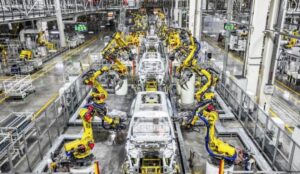
To advance high-quality development, efforts should be made to consolidate and strengthen the real economy and build a modern industrial system led by advanced manufacturing, said Liu.
It is also important to boost sci-tech self-reliance and strength through stronger innovation and breakthroughs in core technologies, advance the construction of a Digital China, and promote greener ways of production and life, Liu added.
Developing new quality productive forces is an inherent requirement for high-quality development, and strengthening innovation-driven development and fostering new quality productive forces should be prioritized, experts said.
Enterprises should strengthen their basic research and intensify efforts to achieve breakthroughs in key core technologies, aiming to develop products with fully independent intellectual property rights, said Chen Zhilie, chairman of EVOC Group.
Chen called for forming innovation consortia with universities and research institutes to accelerate the translation of scientific and technological advances from laboratories to production lines and promote deeper integration between frontier technologies and manufacturing applications.
Leading enterprises should work with upstream and downstream firms in the industrial chain to foster an open, win-win industrial ecosystem and advance the digitalization of research and development, the intelligent transformation of manufacturing, and more resilient supply chain management, Chen said.
REFORM AND OPENING UP
During the period, China will need to deepen reforms in key areas and expand high-standard opening up to inject fresh momentum into high-quality development, experts said.
Huang Hanquan, head of the Chinese Academy of Macroeconomic Research under the National Development and Reform Commission, said efforts will be made to continue fostering a unified national market and to deepen market-based reform in the allocation of production factors.
China will deepen the reform of state-owned enterprises and state capital while implementing regulations related to private-sector development, ensuring that private firms can compete fairly in the market, said Huang.
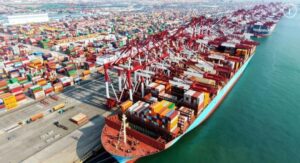
On opening up, Huang said key steps include proactively aligning with high-standard international economic and trade rules, promoting trade innovation such as digital trade, expanding two-way investment cooperation, and pursuing high-quality Belt and Road cooperation.
For private high-tech manufacturing firms long engaged in high-end equipment manufacturing and industrial artificial intelligence, high-standard opening up represents a major opportunity to further tap global markets and connect with global innovation and industrial resources, said Chen.